Pacara earpod tree
Enterolobium contortisiliquum (Vell.) Morong

Enterolobium contortisiliquum, known as the pacara earpod tree, is a flowering tree in the legume family Fabaceae. It is native to several regions across the globe, including parts of South America, Africa, and Asia. Characterized by its inermous branches, white flowers, and samara fruits, this species is notable for its thick, striated trunks and open, spreading canopy. It is often found in semi-arid and tropical environments, where it plays a role in ecological and agricultural systems.
Description
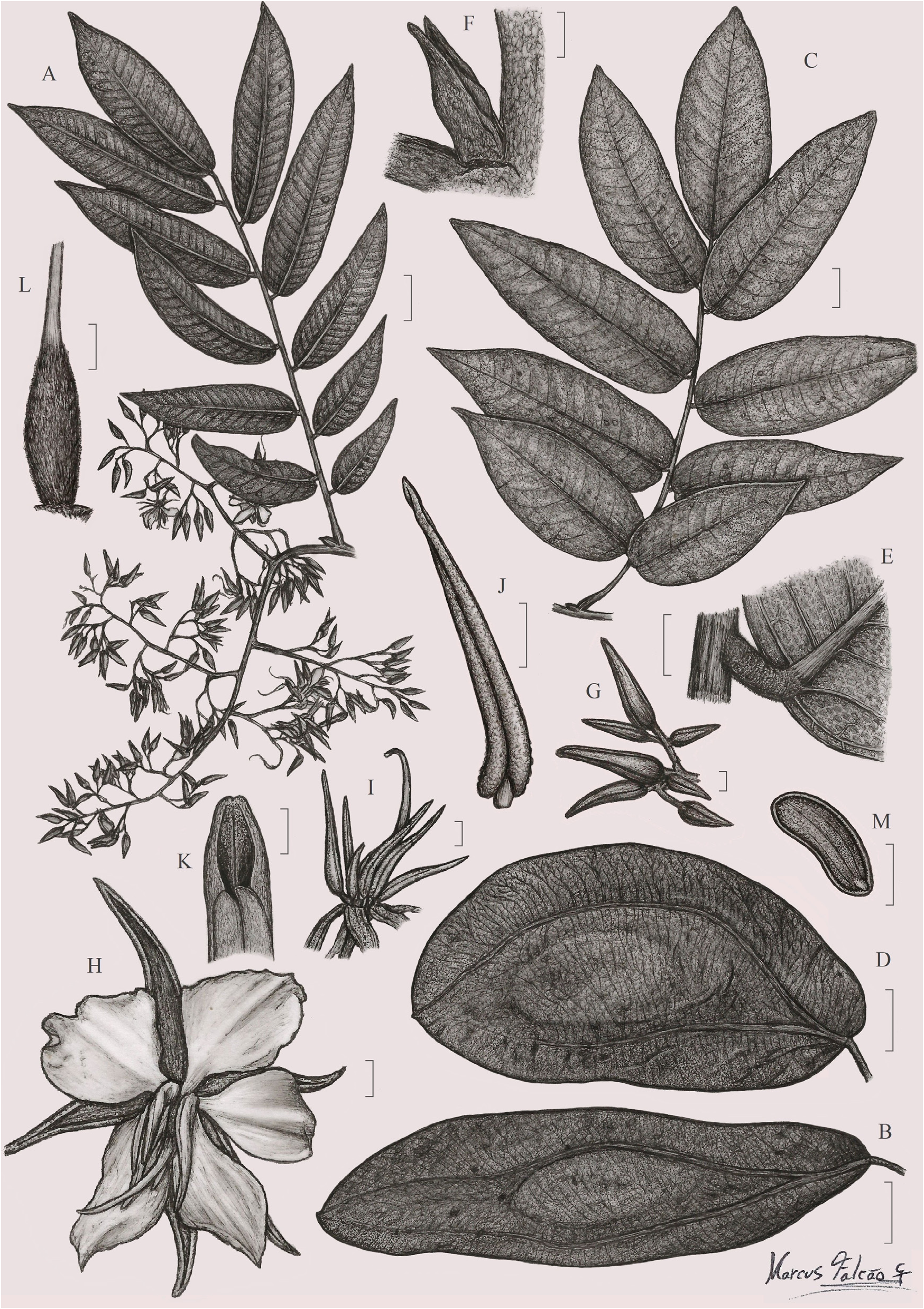
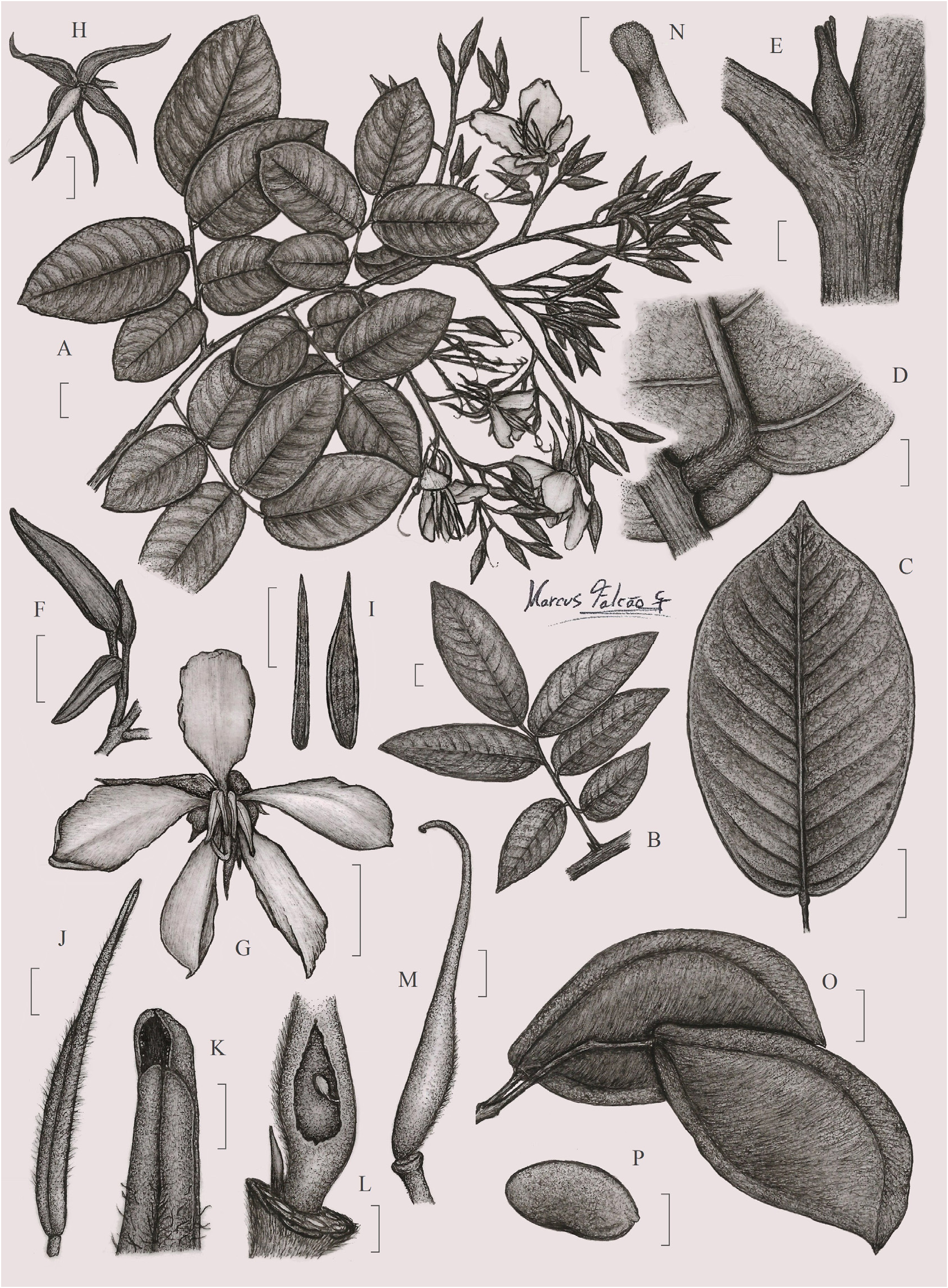
Enterolobium contortisiliquum is a tree with glabrescent, inermous branches. Its leaves are bipinnate and paripinnate, with 8 to 12 opposite, oblong leaflets. The inflorescences are glomerular and axillary, bearing sessile, actinomorphic flowers with a white, tubular corolla. The calyx is gamosepalous with five sepals, and the androecium is monadelphous with homodinamous stamens. The ovary is superior and sessile, producing a linear, plane samara fruit with a glabrous, black epicarp. The seeds are oblong, plane, with a brown coat and a basal hilum.
Habitat
This species is commonly found in semi-arid and tropical regions, including parts of Brazil, Argentina, Bolivia, Paraguay, and other South American countries. It is also present in parts of Africa and Asia. Enterolobium contortisiliquum thrives in well-drained soils and is often associated with open woodlands and savanna-like environments. Its ability to tolerate dry conditions makes it well-suited to arid and semi-arid climates.
Cultivation
Enterolobium contortisiliquum is relatively easy to cultivate in warm, tropical, and subtropical climates. It requires well-drained soil and full sun. The tree is drought-tolerant once established, making it suitable for reforestation and agroforestry projects in semi-arid regions. Propagation is typically done through seeds, which should be scarified to improve germination rates. Due to its ornamental value and ecological benefits, it is sometimes planted in urban and rural landscapes.
Uses
The pacara earpod tree has several uses. It is valued for its timber, which is used in construction and furniture-making. The tree also provides shade and is used in agroforestry systems to improve soil fertility through nitrogen fixation. Additionally, it has ornamental value and is planted in parks and along roads. In some regions, it is used for erosion control and as a windbreak. The tree's ability to thrive in semi-arid conditions makes it an important species for ecological restoration and sustainable land management.
Other common names
Pacara earpod tree
Distribution
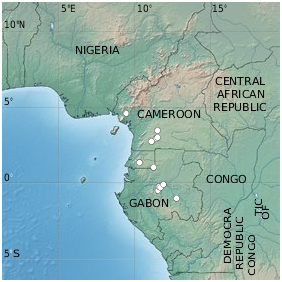
BR · ZA · IN · Global · conterminous 48 United States · Argentina Northeast · Argentina Northwest · Bolivia · Brazil Northeast · Brazil Southeast · Brazil South · Brazil West-Central · Kenya · Myanmar · Paraguay · Uruguay · Zimbabwe
Synonyms
Pithecellobium malacotrichumMimosa contortisiliquaCalliandra pacaraFeuilleea contortisiliquaFeuilleea pacaraEnterolobium glaucescensAcacia melalobiata