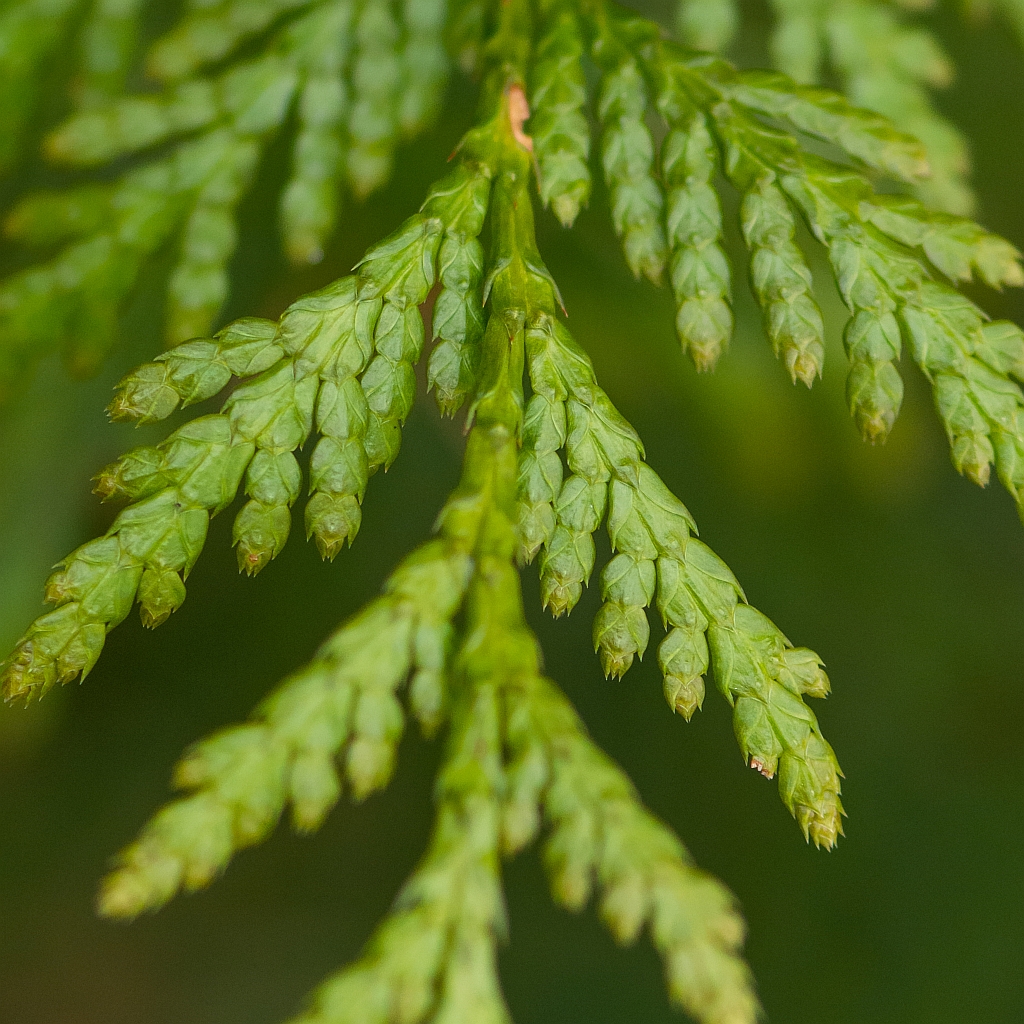
Canoe Cedar
Thuja plicata Donn ex D.Don

Thuja plicata, known as Canoe Cedar, is a large evergreen conifer in the Cupressaceae family. Native to the Pacific Northwest of North America, it grows up to 70 metres tall and 7 metres in diameter. It is not a true cedar but is the largest species in the Thuja genus. The tree is shade-tolerant and often found in moist, mild-climate regions, including forest understories. Some individuals live over 1,000 years. It has been introduced to various regions globally, including parts of Europe, North America, and New Zealand.
Description
Thuja plicata is native to the Pacific Northwest and is adapted to mild, rainy climates, though it can also be found in drier areas with consistent water sources. It is a long-lived, climax species that thrives in forest understories. Common names include western redcedar, western red cedar, and giant arborvitae. It is widely distributed beyond its native range, having been introduced to regions such as Alberta, British Columbia, and several European countries. The species was first described in 1824.
Other common names
Canoe CedarGiant Arbor-vitaeGiant CedarPacific Red-cedarShinglewoodWestern Red-cedarcanoe-cedargiant-cedarwestern arborvitaegiant arborvitaeWestern Red CedarWestern Redcedar
Distribution
Alberta · British Columbia · TR · IE · Belgium · Flemish Region · France · The Netherlands · Great Britain · GB · NO · PT · DK · SE · EE · PL · NZ · FI · BR · Global · TW · Walloon Region · Alaska · Austria · California · Denmark · Føroyar · Germany · Idaho · Ireland
Synonyms
Libocedrus craigianaLibocedrus giganteaThuja giganteaThuja douglasiiThuja flabellataThuja menziesiiThuja lobbiiThuja lobbianaThuja lycopodioidesThuja californicaThuja asplenifoliaThuja wareanaThuja plicatilisThuja occidentalis var. plicataThuja gigantea var. atrovirensThuja plicata f. atrovirensThuja menziesii var. fastigiataThuja plicata f. fastigiataThuja gigantea var. pendulaThuja plicata f. pendula