Pachyptera kerere
Pachyptera kerere (Aubl.) Sandwith

Pachyptera kerere is a woody liana species belonging to the Bignoniaceae family, native to a wide range of regions in northern and central South America, as well as parts of Central America and the Caribbean. It is characterized by its solid, tetragonal stems, discolorous or concolorous leaves, and distinctive inflorescences with white to cream-colored, funnel-shaped flowers. The species is named after the indigenous term 'kerere' or 'terere,' reflecting its traditional use as a rope material by the Galibis people of French Guiana.
Description
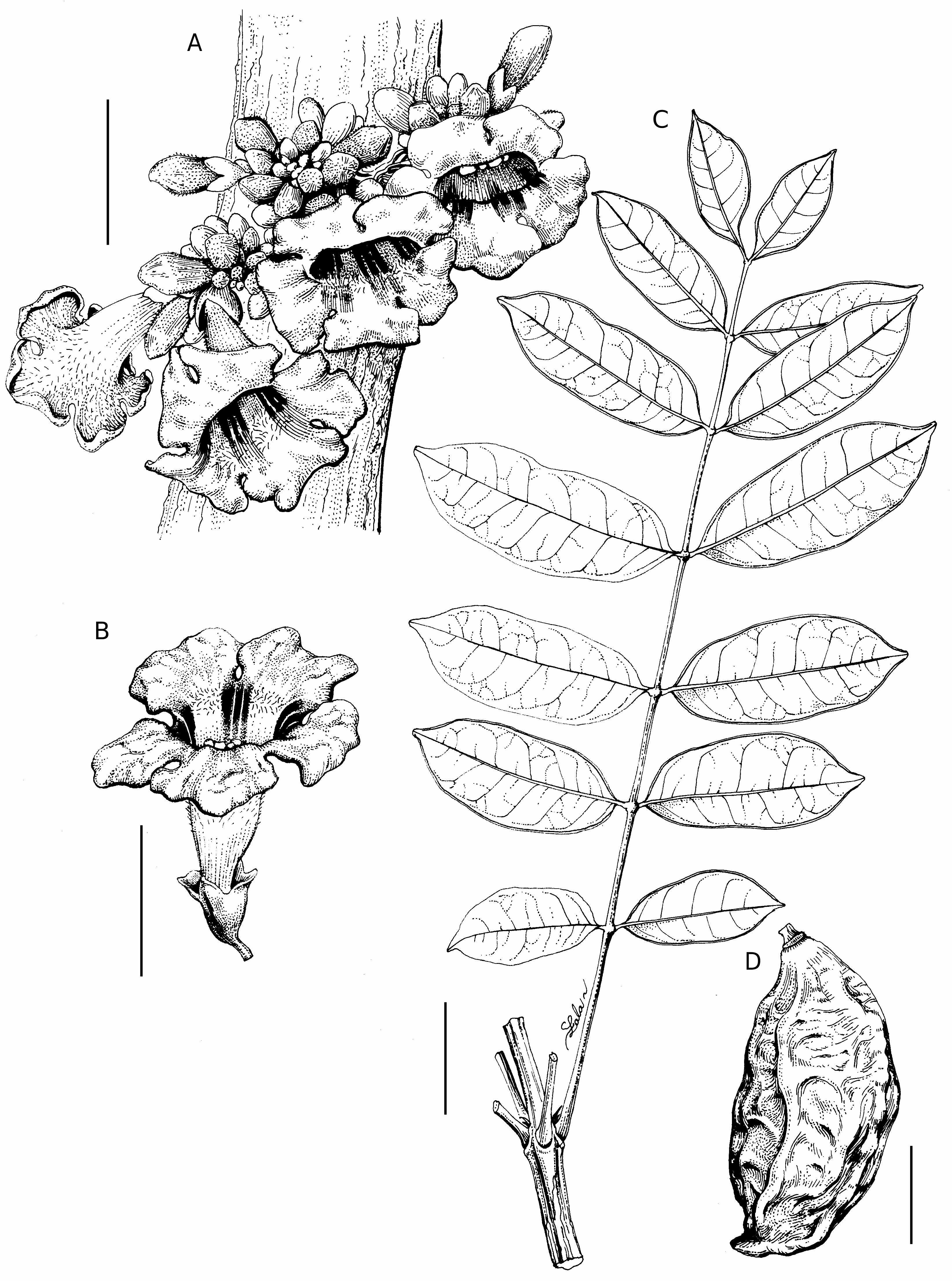
Pachyptera kerere is a climbing vine with solid, tetragonal stems that are green or brown in color and marked with greyish striations and lenticels. The leaves are typically discolorous or concolorous, ranging from membranaceous to chartaceous or coriaceous in texture, and are elliptic, obovate, or ovate-lanceolate in shape. The leaves are asymmetric, with an acute, acuminate, or caudate apex and a cordate or oblique base. The inflorescence is a compact raceme, bearing white to cream, funnel-shaped corollas that are 4.0 to 9.5 cm long. The calyx is tubular and bilabiate, with a truncate apex and five small lobes. The androecium features two pairs of stamens of different lengths, with villous anthers and 3-colpate, microreticulate pollen. The gynoecium is long and cylindrical, with a densely pubescent ovary covered in simple and dendritic trichomes.
Habitat
Pachyptera kerere is found in a variety of habitats across its wide geographic range, including tropical moist and dry forests, as well as secondary growth areas. It is commonly associated with the Atlantic coast, the Amazon Basin, and the Andean foothills, often growing as a climbing vine in forest understories and along riverbanks. The species is particularly common in protected areas such as the Parque Nacional Natural Sierra de la Macarena, Parque Nacional Natural El Tuparro, and Parque Nacional Natural Los Katíos in Colombia, as well as in other conservation zones across its distribution.
Cultivation
While not widely cultivated, Pachyptera kerere can be grown in tropical and subtropical gardens with adequate humidity and partial shade. It thrives in well-drained, fertile soils and benefits from regular watering and support structures for its climbing habit. Propagation is likely achieved through seeds or cuttings, though specific horticultural techniques for this species are not well documented. Its robust growth and attractive flowers make it a potential ornamental plant for botanical gardens and conservation projects in suitable climates.
Uses
Traditionally, the Galibis people of French Guiana have used Pachyptera kerere for its strong, fibrous stems, which are processed into rope material. Beyond this, the species is of interest for its ecological role as a climbing vine in tropical forest ecosystems, where it contributes to biodiversity and provides habitat for various insect and bird species. Its flowers, which are white to cream in color, may also serve as a nectar source for pollinators such as hummingbirds and bees. While not currently used in commercial agriculture or horticulture, its potential as a decorative or functional plant in tropical landscapes is being explored.
Distribution
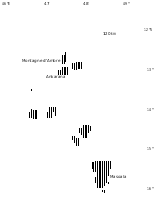
Atlántico: Vereda Luriza (Distrito de Manejo Integrado Luriza), Hacienda Río Dulce y La Gloria (Parque Natural Regional Los Rosales), Finca El Palomar, Bolívar: Hacienda El Ceibal · Atlántico, Bolívar, Santander · BR · Piojó · Parque Nacional Natural Sierra de la Macarena | Parque Nacional Natural El Tuparro | Parque Nacional Natural Tinigua | Parque Nacional Natural Los Katíos · No especificado · Amazonas, Antioquia, Bolívar, Caquetá, Casanare, Chocó, Guainía, Nariño, Santander, Vaupés, Vichada · Belize · Bolivia · Brazil Northeast · Brazil North · Brazil West-Central · Colombia · Costa Rica · Ecuador · El Salvador · French Guiana · Guatemala · Guyana · Honduras · Nicaragua · Panamá · Peru · Suriname · Trinidad-Tobago · Venezuela
Synonyms
Mansoa kerereMacfadyena lepidotaPachyptera foveolataTanaecium zetekiiPetastoma kerereSererea heterophyllaAdenocalymma brachybotrysAdenocalymma foveolatumAdenocalymma kerereAdenocalymma stridulaAdenocalymma symmetricumBignonia benensisBignonia heterophyllaBignonia kerereAdenocalymma foveolatumSererea heterophyla