Martinella obovata
Martinella obovata (Kunth) Bureau & K.Schum.

Martinella obovata is a widespread climbing vine species in the Bignoniaceae family, known for its cylindrical stems, glabrous leaflets, and racemose inflorescences. It is one of the most geographically extensive species in the genus, occurring from southern Mexico to the southern Amazon. The species exhibits some morphological variation, particularly in leaf thickness, which is influenced by local environmental conditions such as rocky outcrops. Despite its wide distribution, no clear morphological discontinuities have been identified, supporting its recognition as a single, broadly distributed species.
Description
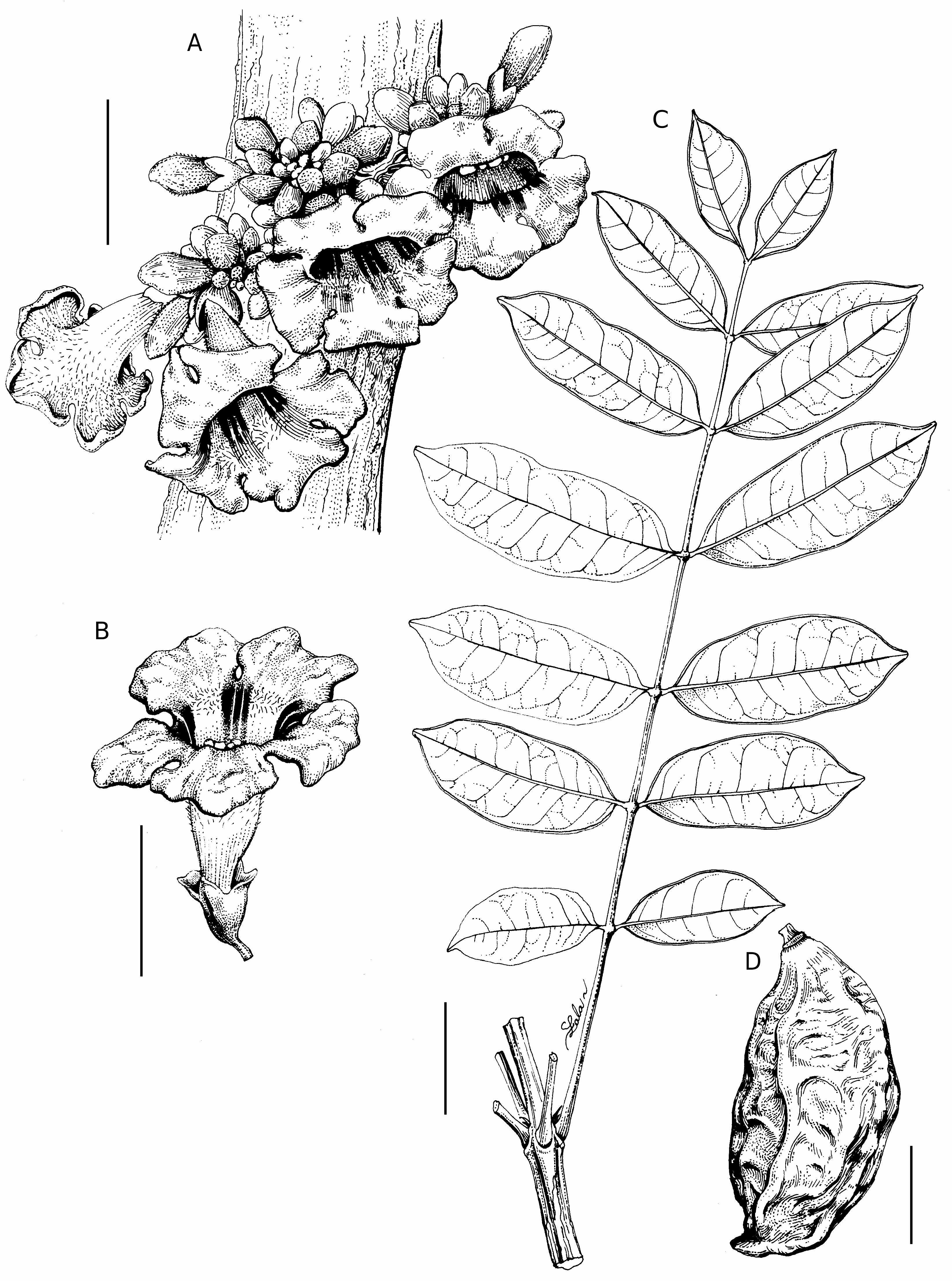
Martinella obovata is a liana with solid, cylindrical, green branches that turn brown when dry. The stems are smooth and puberulent, with scattered stipitate and patelliform glandular trichomes, especially in the interpetiolar region. The leaves are two-foliolate, with the terminal leaflet often modified into a trifid tendril. The petioles and petiolules are terete, not pulvinated, and covered with stipitate glandular trichomes. The leaflets are chartaceous, ovate, with an acuminate apex, cordate base, and entire, slightly revolute margins. The adaxial surface is glabrous, while the abaxial surface is lighter in color and glabrescent, with patelliform glandular trichomes concentrated near the base and along the midvein. The inflorescences are racemose, 11.9–15.5 cm long, and sparsely covered with trichomes. The bracts are linear and densely puberulent, while the pedicels are terete and puberulent as well.
Habitat
Martinella obovata is found in a wide range of habitats across its extensive geographic distribution, from southern Mexico to the southern Amazon. It thrives in various altitudinal zones and is particularly common in tropical and subtropical forest environments. The species is often associated with rocky outcrops, where it may exhibit thicker leaves as an adaptation to local environmental conditions. It is also found in protected areas such as the Parque Nacional Natural Tayrona and Parque Nacional Natural Los Katíos in Colombia, as well as in other conservation sites across its range.
Cultivation
While Martinella obovata is primarily a wild species, it may be cultivated in botanical gardens or as part of conservation efforts due to its ornamental potential and ecological role. It requires a warm, humid climate and well-drained soil to thrive. The plant benefits from support structures to climb, as it is a vigorous liana. Propagation can be achieved through cuttings or seeds, though specific germination requirements have not been widely documented. Care should be taken to replicate the species' natural habitat conditions, particularly in terms of light and moisture, to ensure successful growth.
Uses
Martinella obovata is primarily of ecological interest, playing a role in forest ecosystems as a climbing vine. It contributes to biodiversity and provides habitat for various organisms. While specific traditional or commercial uses of the species have not been widely reported, its presence in conservation areas highlights its importance in maintaining ecological balance. The plant's ornamental qualities, such as its attractive foliage and inflorescences, may also make it suitable for horticultural purposes in appropriate settings.
Distribution
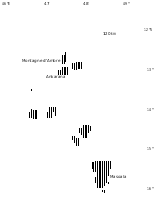
Atlántico: Finca El Palomar, Bolívar: Hacienda El Ceibal, Hacienda Santa Catalina · Amazonas, Antioquia, Atlántico, Bolívar, Boyacá, Caquetá, Chocó, Córdoba, Cundinamarca, Guainía, Guaviare, Magdalena, Nariño, Putumayo, Santander, Sucre, Valle del Cauca, Vaupés, Vichada · BR · Piojó · Reserva Nacional Natural Puinawai | ReservaNacional Natural Nukak | Santuario de Flora y Fauna Los Colorados | Parque Nacional Natural Tayrona | Parque Nacional Natural Los Katíos · Barrancabermeja | La Paz | Puerto Parra | Sabana de Torres | Sucre · Amazonas, Antioquia, Atlántico, Bolívar, Boyacá, Caquetá, Chocó, Córdoba, Cundinamarca, Guainía, Guaviare, Magdalena, Nariño, Putumayo, Santander, Sucre, Valle, Vaupés, Vichada · Cuenca de Río Claro · Parque Nacional Natural Serranía de Chiribiquete (PNNSCh) · Belize · Bolivia · Brazil North · Brazil West-Central · Colombia · Costa Rica · Ecuador · French Guiana · Guatemala · Guyana · Honduras · Mexico Gulf · Mexico Southeast · Mexico Southwest · Panamá · Peru · Suriname · Trinidad-Tobago · Venezuela · Barrancabermeja | Leticia · Colombia | Bolívar | Turbaco | Jardín Botánico de Cartagena "Guillermo Piñeres" y alrededores
Synonyms
Martinella gollmeriMartinella insculptaMartinella martiniMacfadyena fockeanaMacfadyena obovataPeriarrabidaea duckeiStenosiphanthus duckeiSpathodea obovataTabebuia cordataAnemopaegma leptosiphonArrabidaea duckeiBignonia fockeanaBignonia longisiliquaBignonia martiniBignonia obovataDoxantha longisiliquaMartinella martinii