Dinizia excelsa
Dinizia excelsa Ducke

Dinizia excelsa, a towering canopy-emergent tree in the Fabaceae family, is native to the Amazon rainforest of Brazil, Guyana, Suriname, and other parts of northern and central South America. Known for its impressive height and robust trunk, this species is a keystone tree in tropical rainforest ecosystems. Its wood is highly valued for its density and durability, making it a historically significant resource for construction and infrastructure. The species is also notable for its unique bark, which flakes off in woody plates, and its ecological role in supporting pollinators like bees.
Description
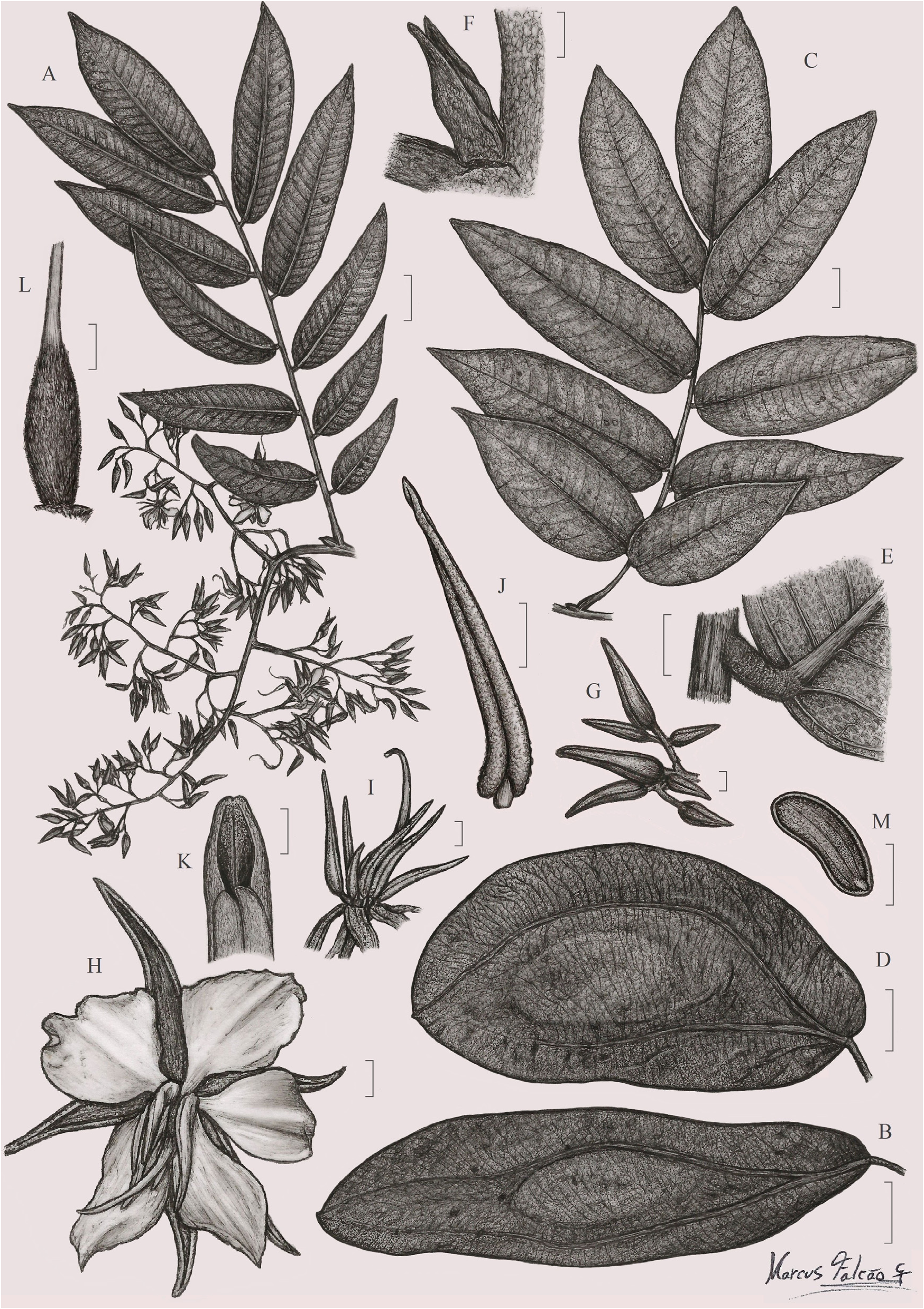
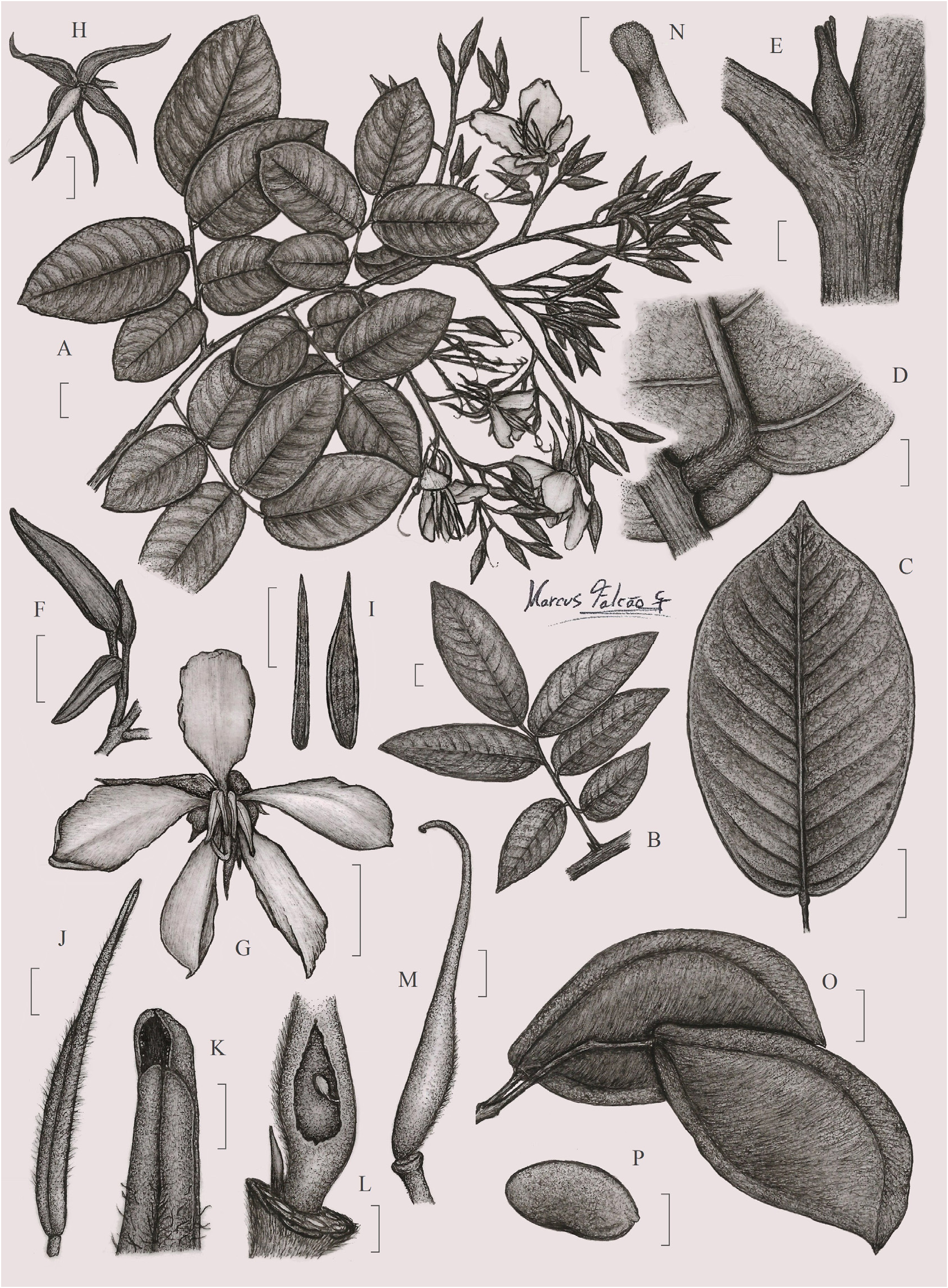
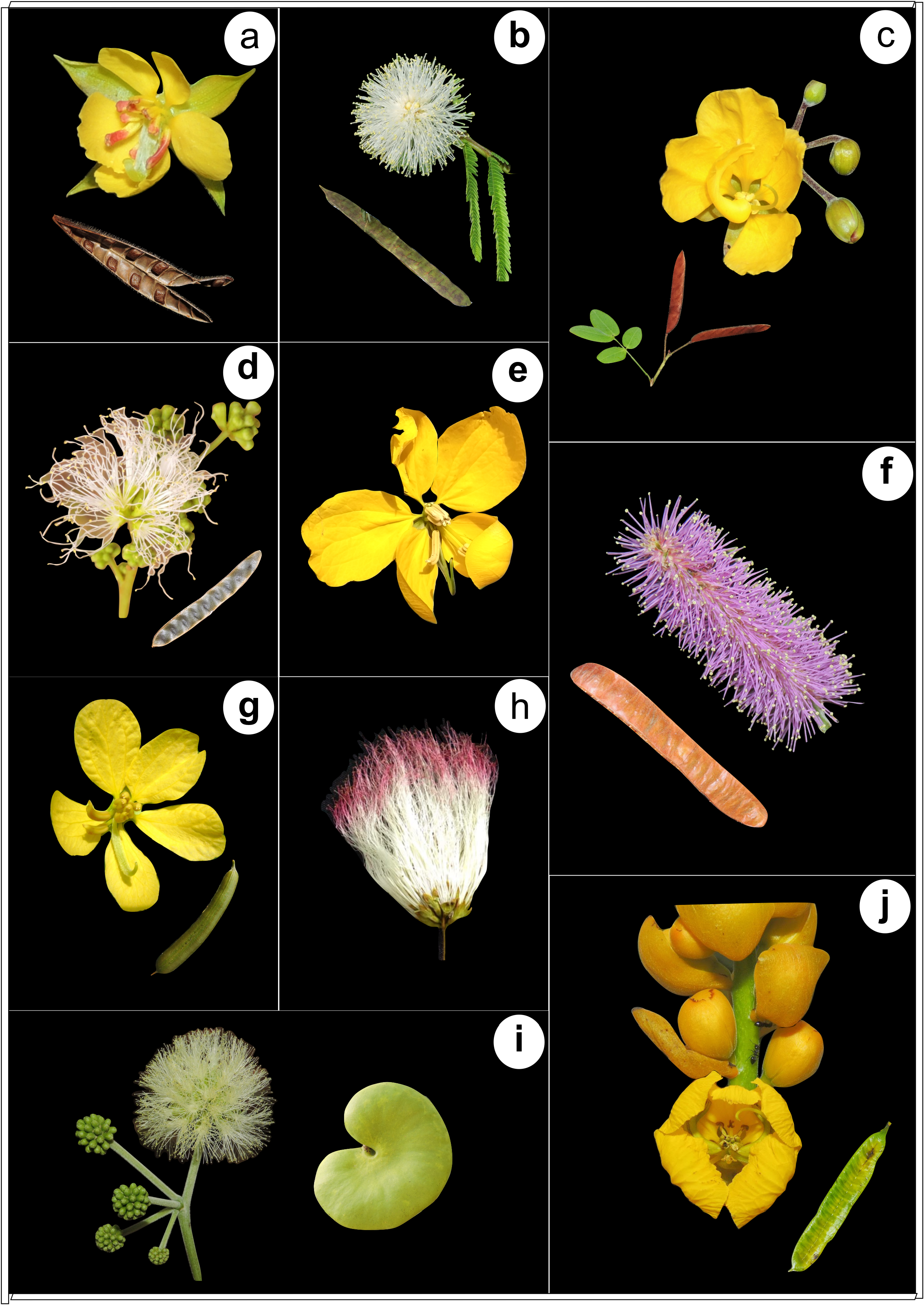
Dinizia excelsa is a towering tree that can reach heights of 30 to 60 meters, with a trunk diameter at breast height (DBH) of 80 cm to 2 meters. The trunk is cylindrical and often buttressed, with buttresses extending up to 4–5 meters and continuing into the forest as raised roots. The bark is smooth and white, peeling in woody plates to reveal a brick-red underlayer. The heartwood is red to brown, without streaks. Leaves are bipinnate, with 3–6 pairs of pinnae and 7–14 leaflets per pinna. Leaflets are oblong to trapeziform, with a retuse to rounded apex and a truncate, inequilateral base. The upper leaf surface is dark and glabrous, while the lower surface is sparsely pubescent. The flowers are fragrant and arranged in compound inflorescences, with the most terminal racemes flowering first, followed by the basal ones.
Habitat
Dinizia excelsa is found in the tropical rainforests of northern and central South America, particularly in Brazil, Guyana, and Suriname. It thrives in the dense, humid environments of the Amazon basin, where it grows as a canopy-emergent tree. This species is often associated with undisturbed, high-biodiversity forest areas and is a dominant component of the upper canopy layer. It is adapted to the nutrient-poor soils typical of Amazonian rainforests and plays a key role in maintaining the structural and ecological integrity of the forest.
Cultivation
Dinizia excelsa is not commonly cultivated outside of its native range due to its specific ecological requirements and the challenges associated with its slow growth and dense wood. It requires high humidity and consistent rainfall, making it suitable only for tropical climates. Propagation is likely through seeds, though detailed information on germination and early growth is limited. Given its ecological importance and the difficulty of working with its wood, cultivation efforts are rare and typically restricted to conservation or research programs rather than commercial horticulture.
Uses
The wood of Dinizia excelsa is highly valued for its density, strength, and resistance to decay. It has been widely used in railway sleepers, civil and naval construction, cabinetwork, and joinery. The wood is also used for battens, props, beams, girders, posts, stakes, door and window frames, floor boards, carts, wagons, and bridges. Its high density (0.83–1.2 g/cm³) makes it ideal for heavy-duty applications, though it is difficult to work with and emits a strong, unpleasant odor. The species also plays an ecological role as a food source for bees, which are its primary pollinators. Conservation of this species is important due to its ecological and economic significance in the Amazon rainforest.
Distribution
BR · CR · Global · Brazil North · Brazil West-Central · Guyana · Suriname