White ipê
Tabebuia roseoalba (Ridl.) Sandwith

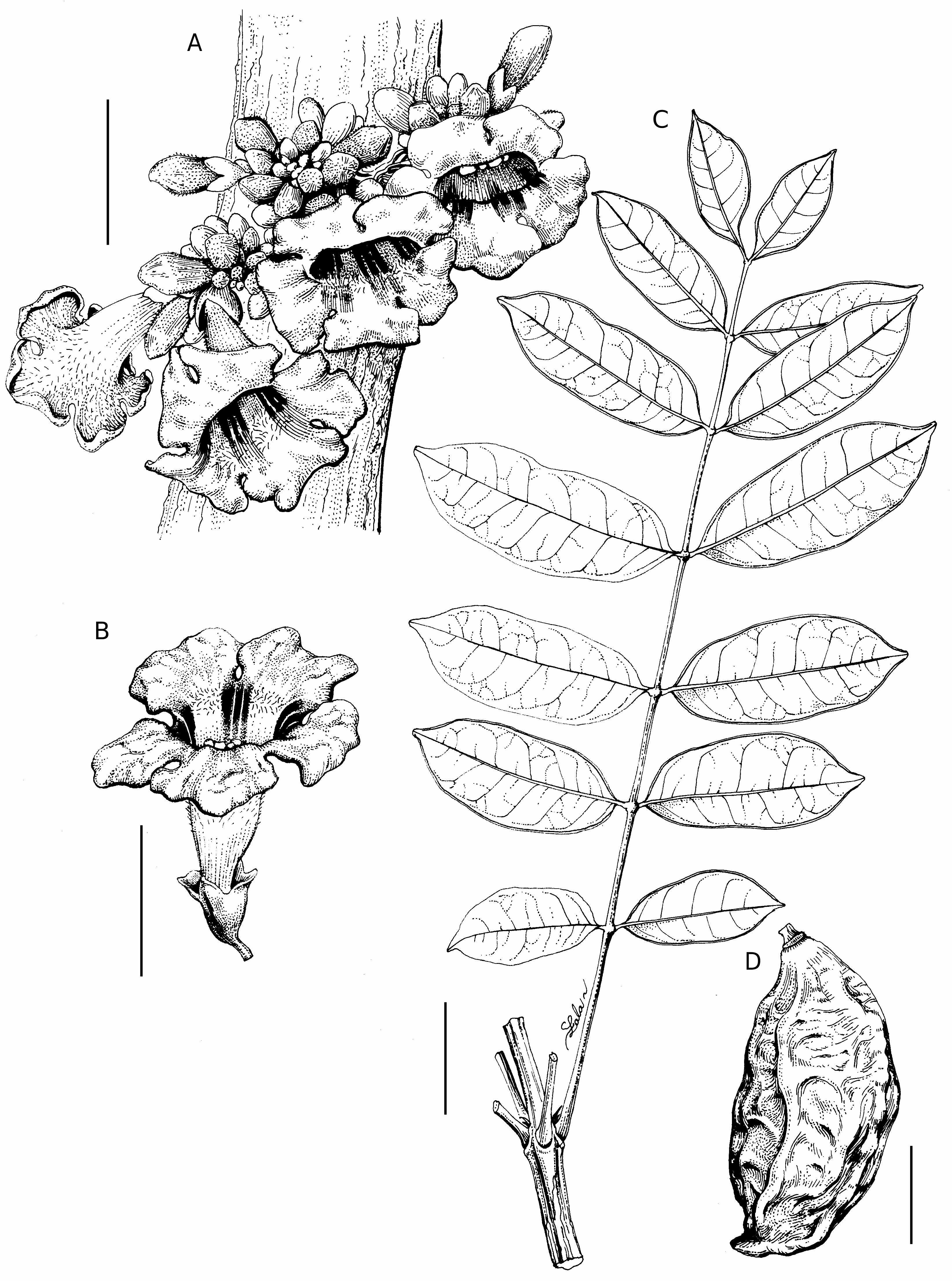
Tabebuia roseoalba, known as White ipê, is a tree species native to Brazil's Cerrado and Pantanal regions, also found in Argentina and Paraguay. It belongs to the Bignoniaceae family and is distinguished by its flaky calyx and pinkish white corolla. It is distributed across several regions in Brazil, as well as in Bolivia, Peru, and other parts of South America.
Description
Flowers of Tabebuia roseoalba have been collected in July and August, though no data on fruiting is available. The species is easily recognized by its distinctive floral features. It is part of the Bignoniaceae family and is known by several common names including ipê-branco and lapacho blanco. The species was first described in 1955.
Other common names
White ipê
Distribution
BR · Antioquia, Valle · Global · Bolivia · Brazil Northeast · Brazil North · Brazil Southeast · Brazil West-Central · Paraguay · Peru
Synonyms
Handroanthus odontodiscusHandroanthus piutingaHandroanthus roseoalbusSparattosperma neurocalyxTecoma odontodiscusTecoma papyrophloiosTecoma piutingaTecoma schumanniiTecoma mattogrossensisTabebuia odontodiscusTabebuia papyrophloiosTabebuia piutingaTecoma odontodiscus f. leucotrichaTabebuia odontodiscus var. violascensBignonia roseoalbaHandroanthus odontodiscus var. violascensTecoma odontodiscus var. paraguariensisHandroanthus roseo-albus