Tulipa turkestanica
Tulipa turkestanica (Regel) Regel

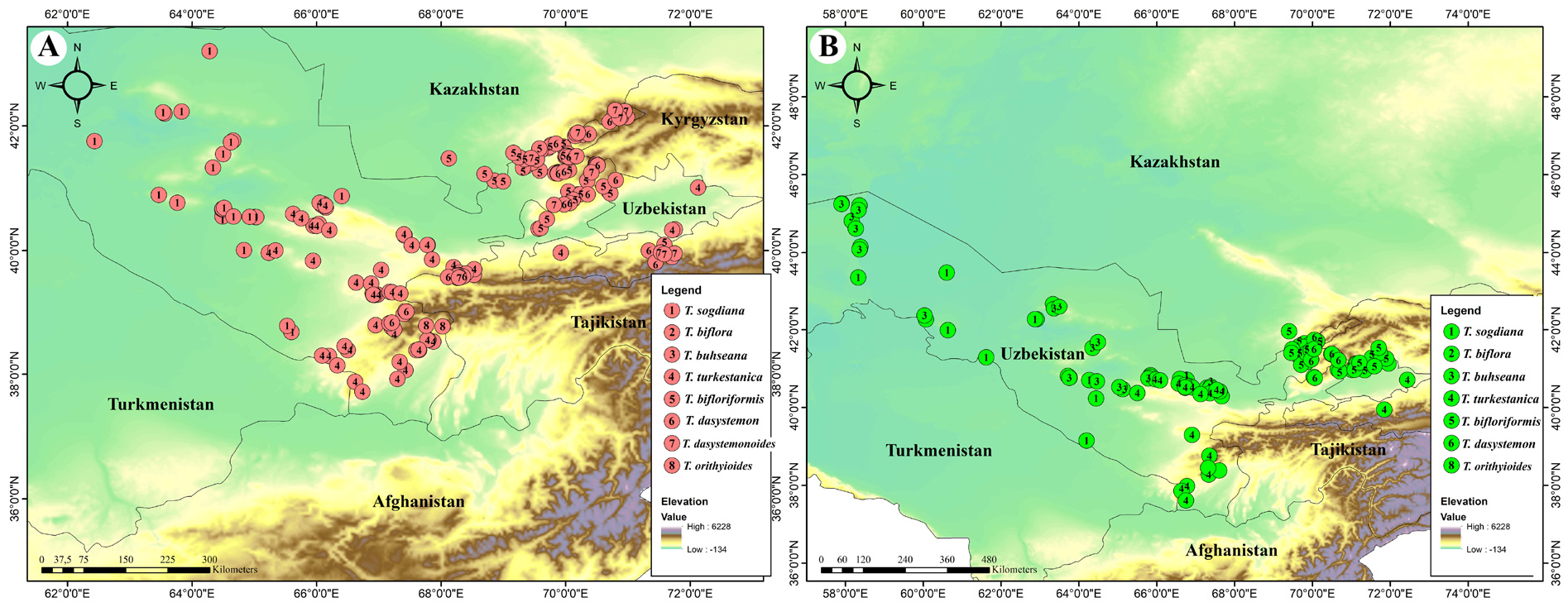
Tulipa turkestanica is a species of tulip native to Central Asia, first described in 1875 by Eduard August von Regel. It grows in fine-earth, gravelly, and stony slopes from piedmonts to upper mountain zones, at elevations between 500 and 3100 meters. The species is found in Kazakhstan, Kyrgyzstan, Tajikistan, Turkmenistan, Uzbekistan, and Xinjiang. The name refers to the historical region of Turkestan, which includes parts of Central Asia and northern Afghanistan. The plant features a bulb, 1–7 flowers with white or creamy-white perigone segments, and is distinguished by its ecological and morphological traits.
Description
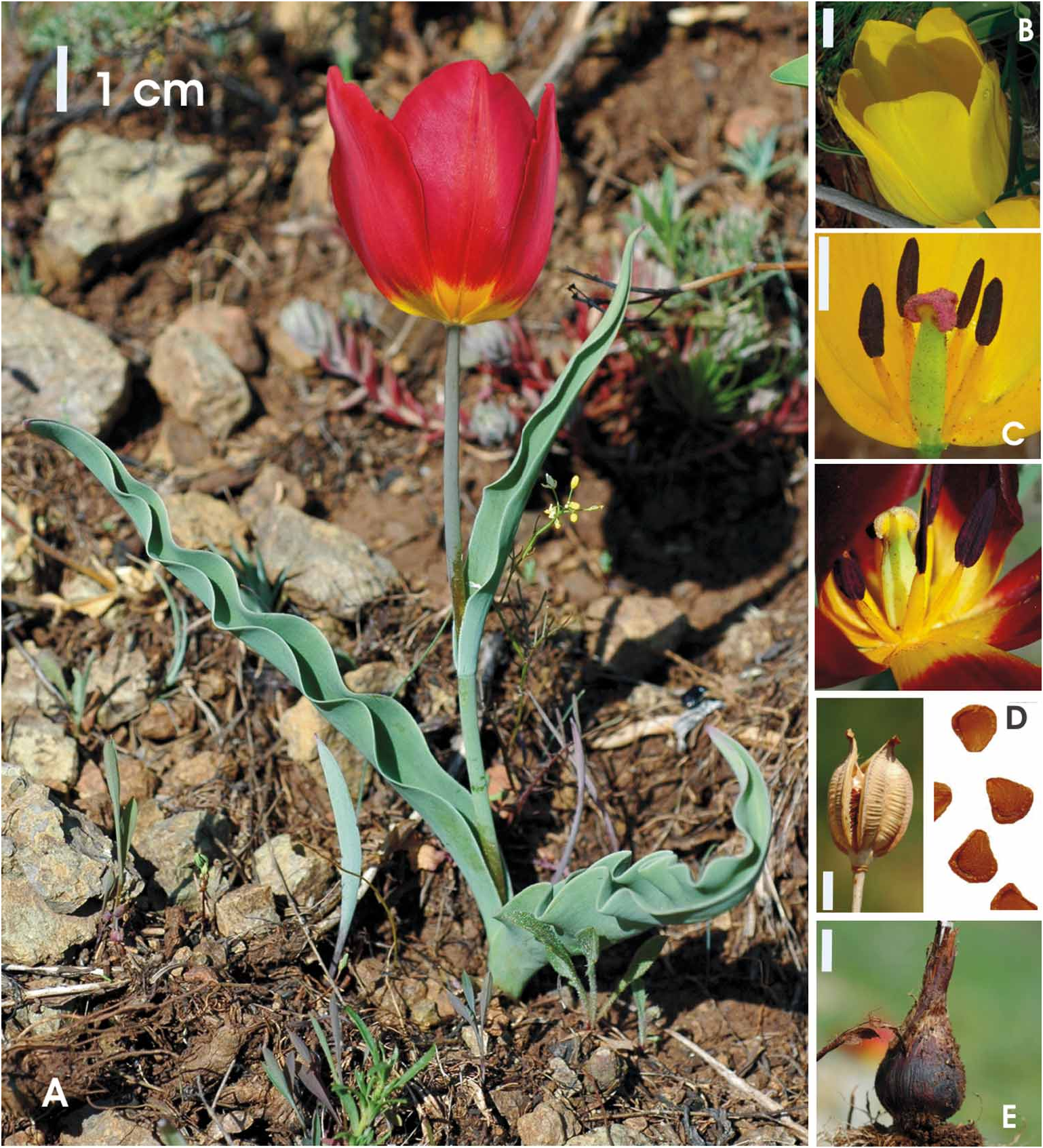
Tulipa turkestanica is a member of the Liliaceae family. It has an ovoid bulb, 1.5–2.5 cm thick, with a blackish-brown tunic and silky hairs at the apex. The stem is 10–25 mm long, often purplish-green, and may be pubescent. It has two leaves, one broader at the base, and 1–7 erect, star-shaped flowers. The perigone segments are white or creamy-white with a yellow blotch, 12–25 mm long, and the outer segments are lanceolate with a violet tinge. Stamens are half the length of the perigone, with yellow or orange-yellow filaments and linear-oblong anthers. The ovary is slightly shorter than the stamens, and the capsule is oblong or spherical. It is distributed across the Western Tian-Shan and Western Pamir-Alay regions.
Distribution
SE · NO · DK · Kirgizstan · Tadzhikistan · Uzbekistan · Xinjiang
Synonyms
Tulipa sylvestris var. turkestanica