Tulipa tschimganica
Tulipa tschimganica Botschantz.

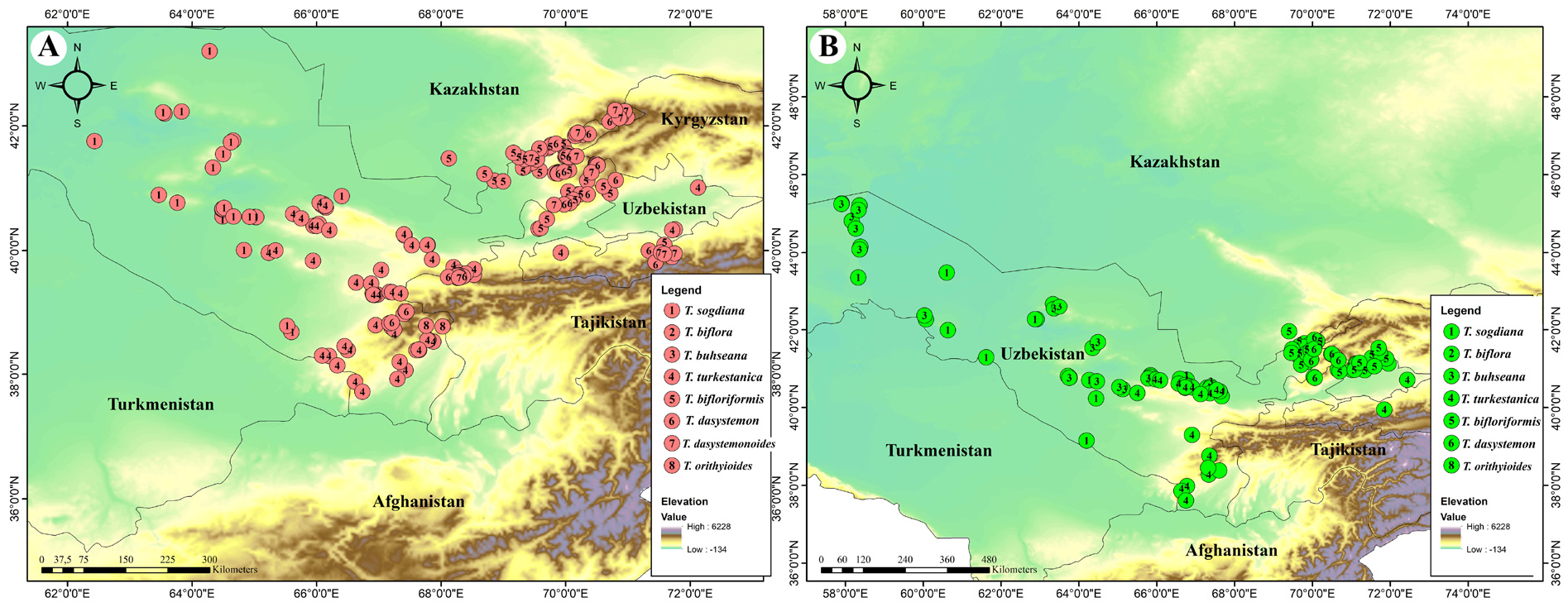
Tulipa tschimganica is a species of the Liliaceae family, native to Kirgizstan and Uzbekistan. It is found in gravelly and stony slopes, deep valleys, and the middle mountain zone at elevations of 1400–2300 m. It flowers from April to June, with fruiting occurring in May to June. The species is named after the Chimgan Mountains in Uzbekistan, where it was first discovered.
Description
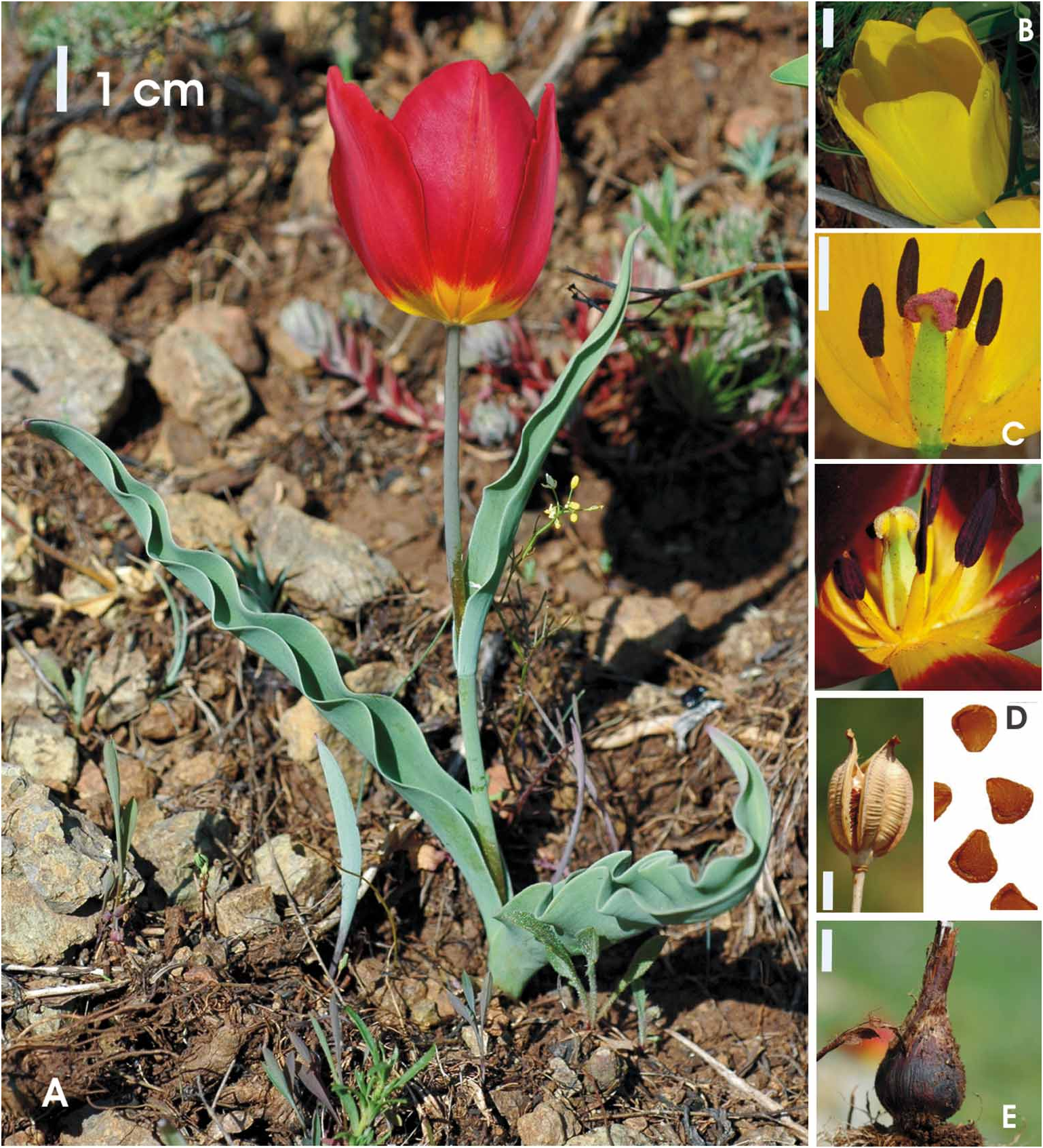
This tulip has an ovoid bulb, 1.5–3.5 cm thick, with a papery, blackish-brown tunic. The stem is 15–25 cm long, with a glaucous bloom. It has 3–4 leaves, often exceeding the flower in early stages. The flower is solitary, cup- or star-shaped, with perigone segments 5–7 cm long, colored red with a yellow basal blotch or yellow with red W-shaped blotches. The stamens are nearly half the length of the tepals, with anthers 2–4 times longer than the filaments. The capsule is conical, up to 11 cm long, with a long beak. Taxonomically, it is considered a natural hybrid between T. dubia and T. kaufmanniana by some authors.
Distribution
Kirgizstan · Uzbekistan
Synonyms
Tulipa anadromaTulipa kaufmanniana subsp. tschimganica