Tulipa lehmanniana
Tulipa lehmanniana Merckl.

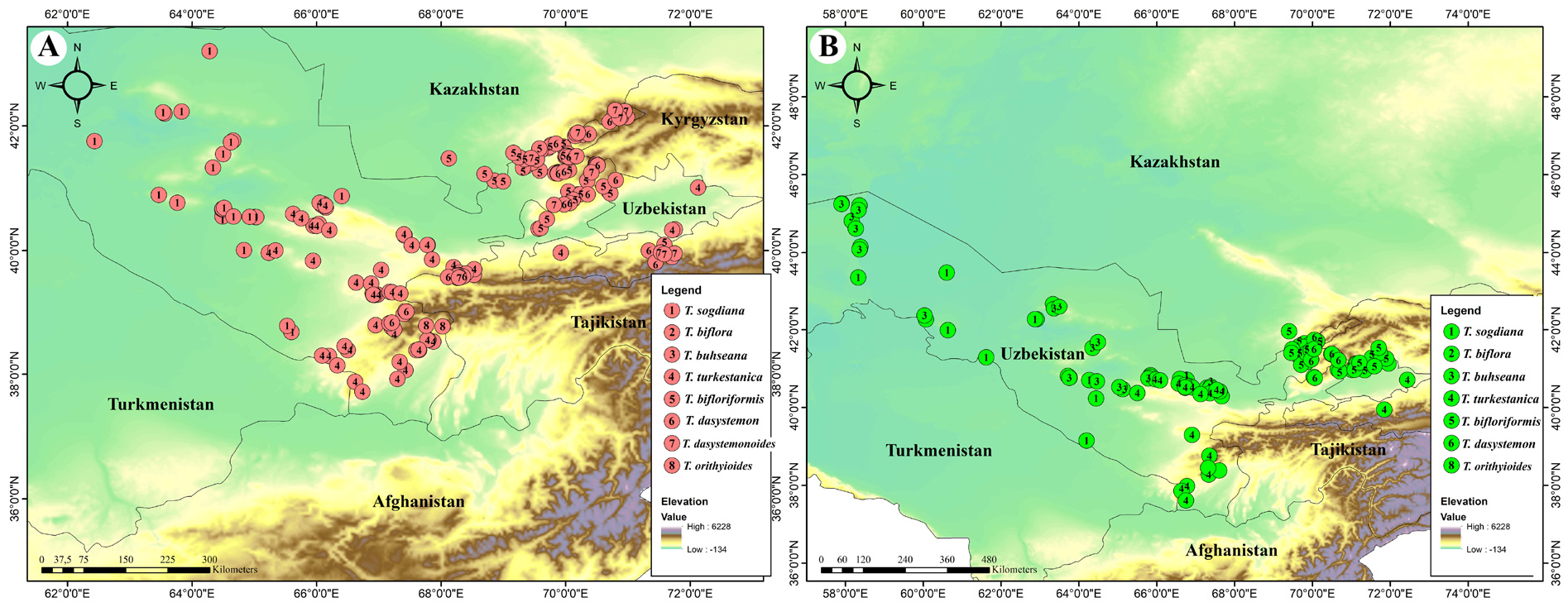
Tulipa lehmanniana is a species of tulip in the Liliaceae family, native to Central Asia. It is found in Afghanistan, Iran, Kazakhstan, Kyrgyzstan, Tajikistan, Turkmenistan, and Uzbekistan. This species was described in 1852 by K. E. von Merklin based on specimens collected by A. Lehmann, a Russian botanist who explored Central Asian flora in the 1840s. The plant grows in sandy and clayey deserts, relic mountains, and piedmonts, typically at elevations below 500 meters above sea level.
Description
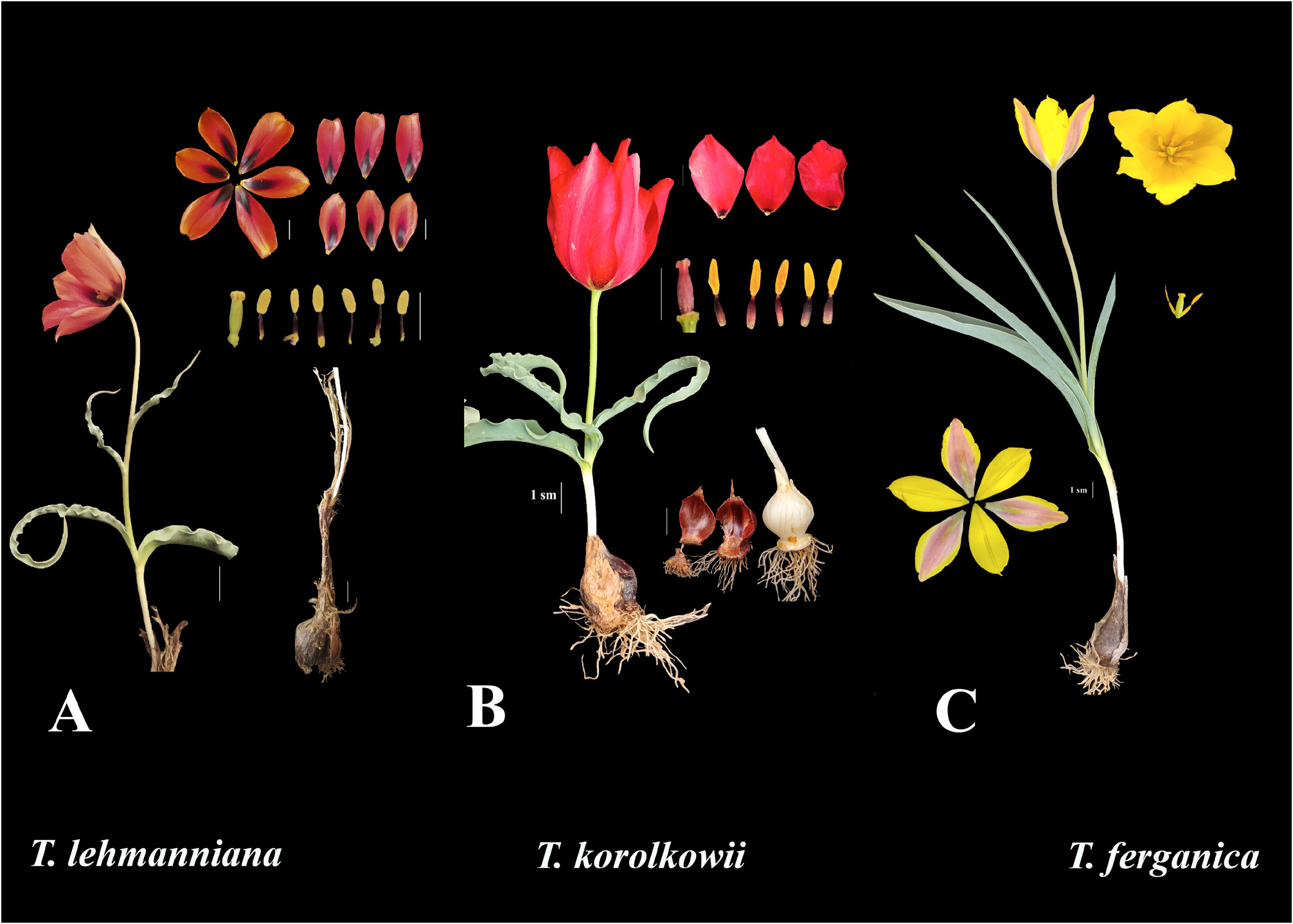
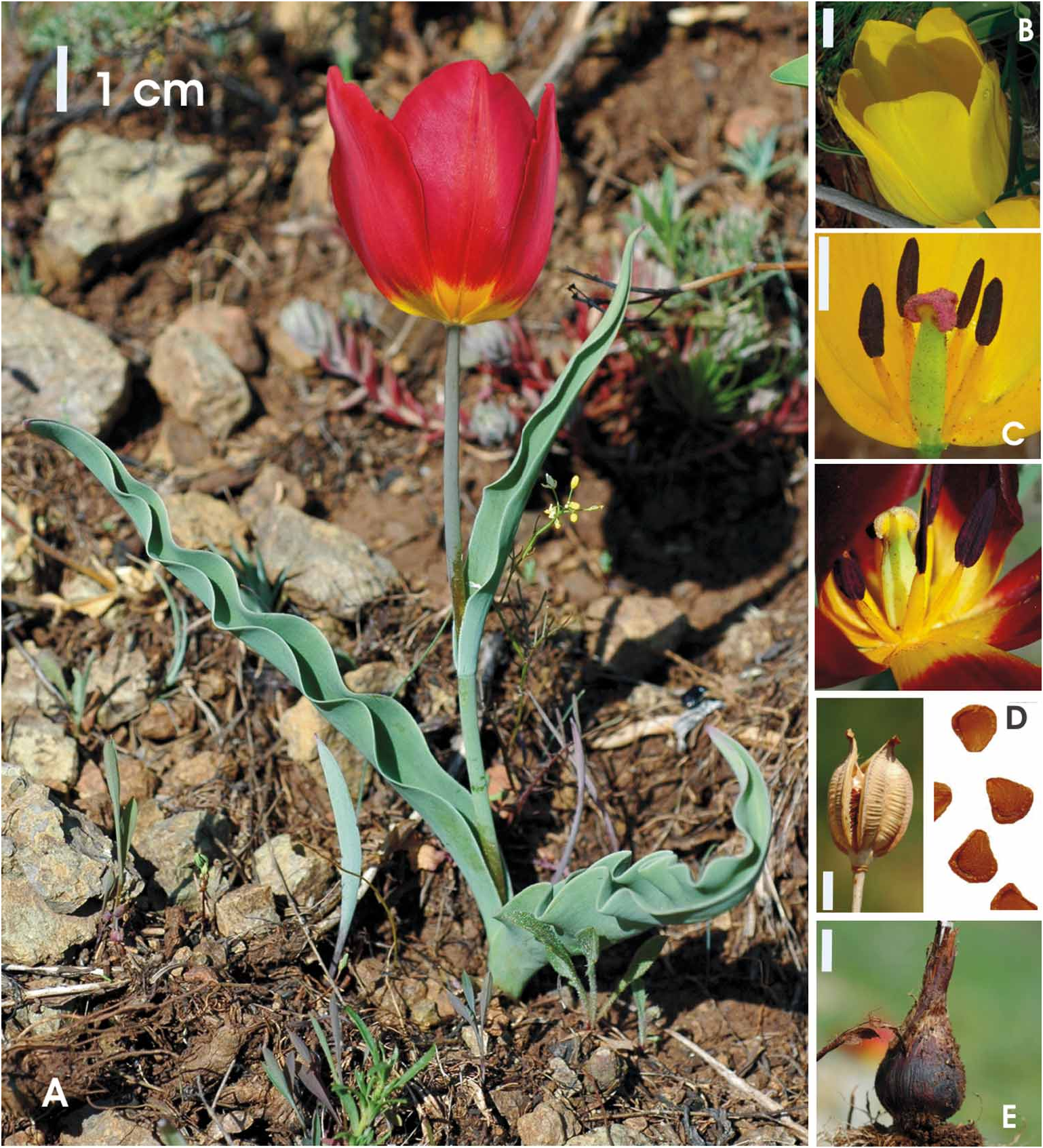
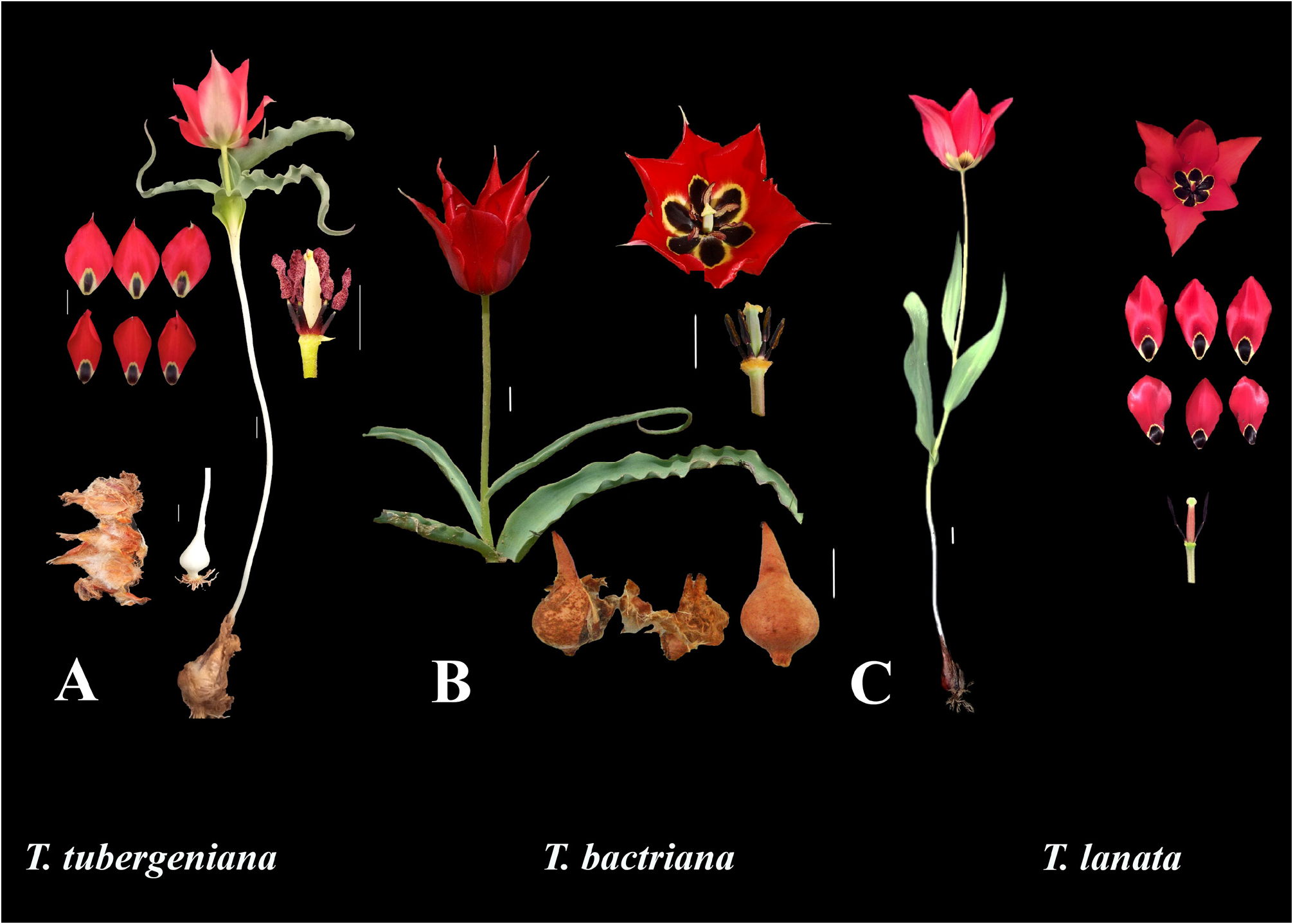
Tulipa lehmanniana has an ovoid bulb, 2–4 cm thick, with a tough, fibrous tunic that extends to the soil surface and is covered with curly woolly hairs on the inside. The stem is 20–40 cm long and glabrous. The plant has four deflexed, glaucous leaves, with the lower ones lanceolate to linear-lanceolate and the upper ones progressively smaller. The solitary flower is initially cyathiform and later opens widely, with perigone segments in yellow, orange, or red, often with a dark violet or brownish basal blotch. The stamens are one-third the length of the perigone, and the ovary is green with a sessile stigma. The capsule is 2.5–3.0 cm long and 1.0–1.5 cm in diameter.
Distribution
Afghanistan · Iran · Kazakhstan · Kirgizstan · Tadzhikistan · Turkmenistan · Uzbekistan
Synonyms
Tulipa behmianaTulipa zenaidae