Tulipa hissarica
Tulipa hissarica Popov & Vved.

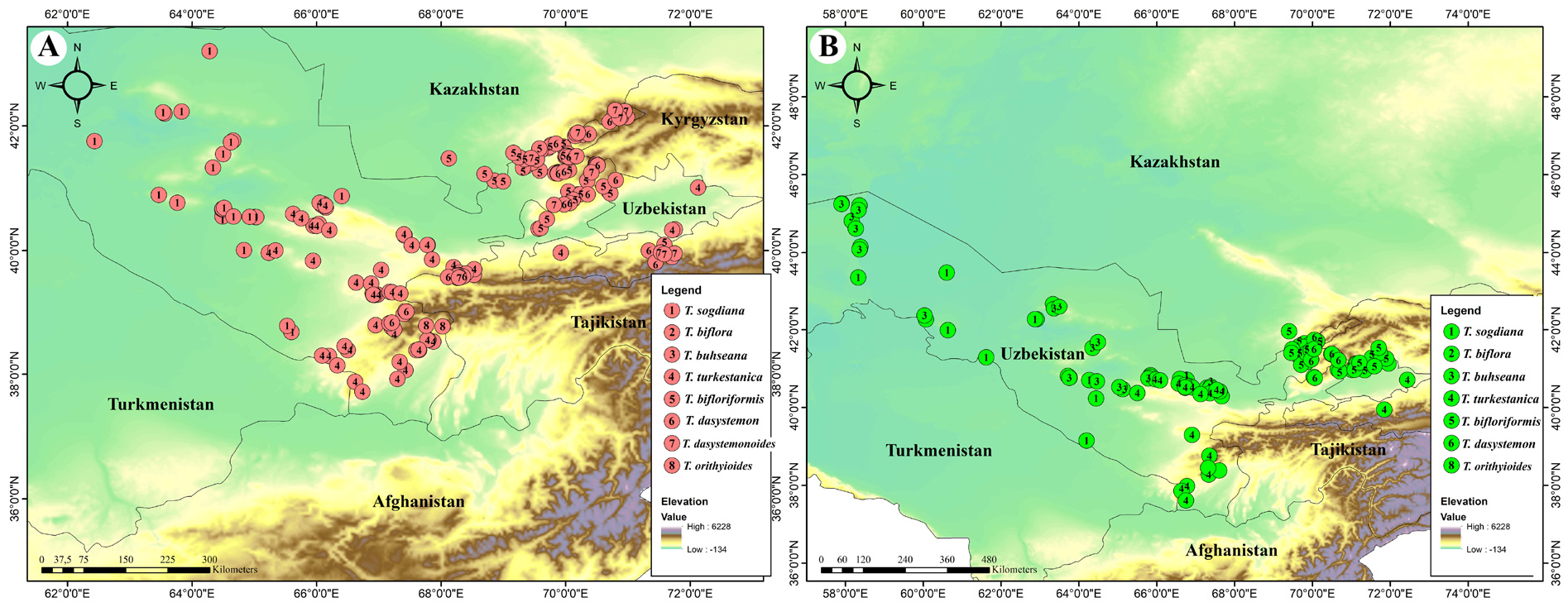
Tulipa hissarica is a species of tulip in the Liliaceae family, native to the Hissar Range in Tajikistan and Uzbekistan. It grows on stony slopes in the middle and upper mountain zones, at elevations of 1300 to 3500 meters above sea level. The species was first described in 1935 by Popov and Vvedensky.
Description
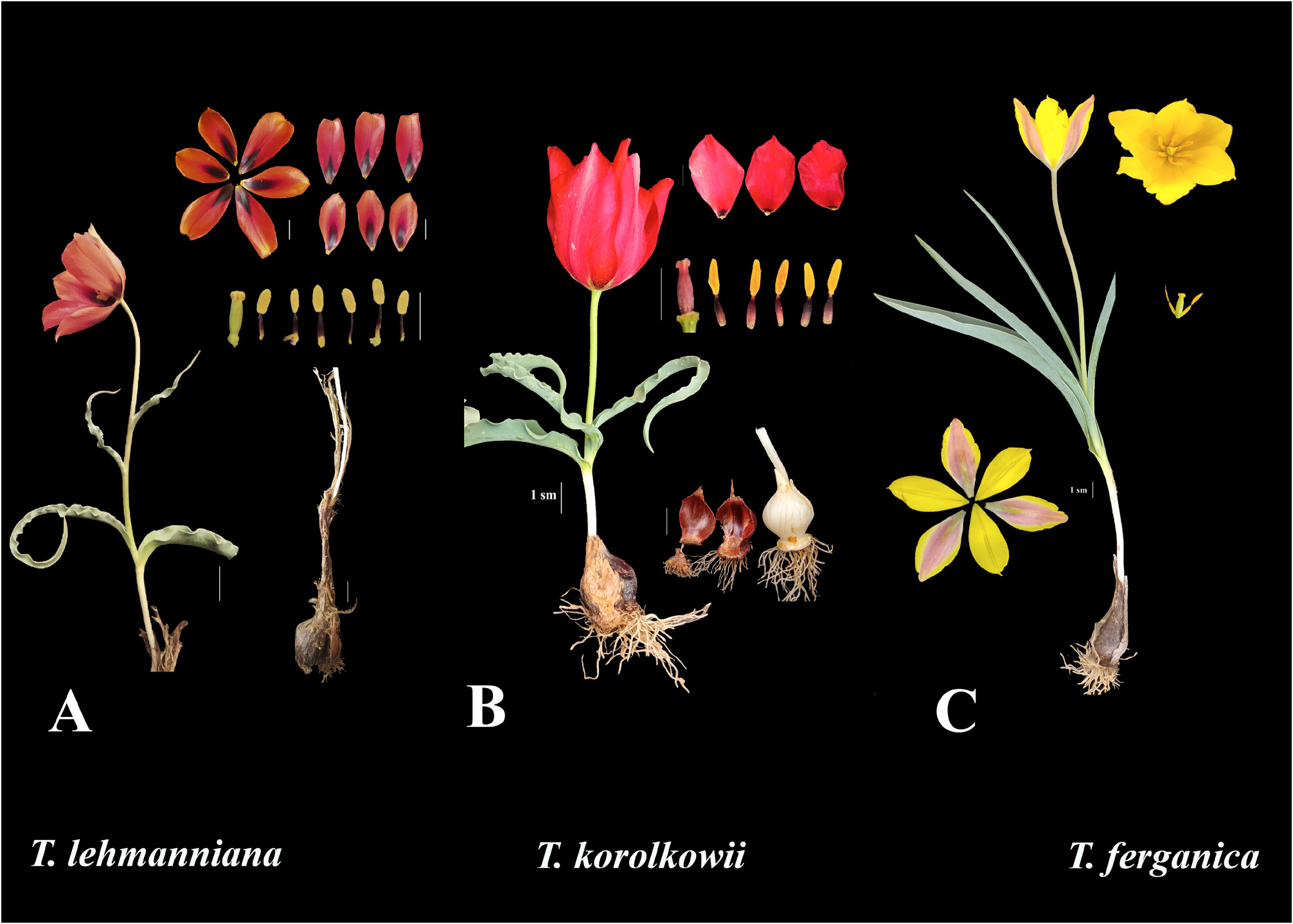
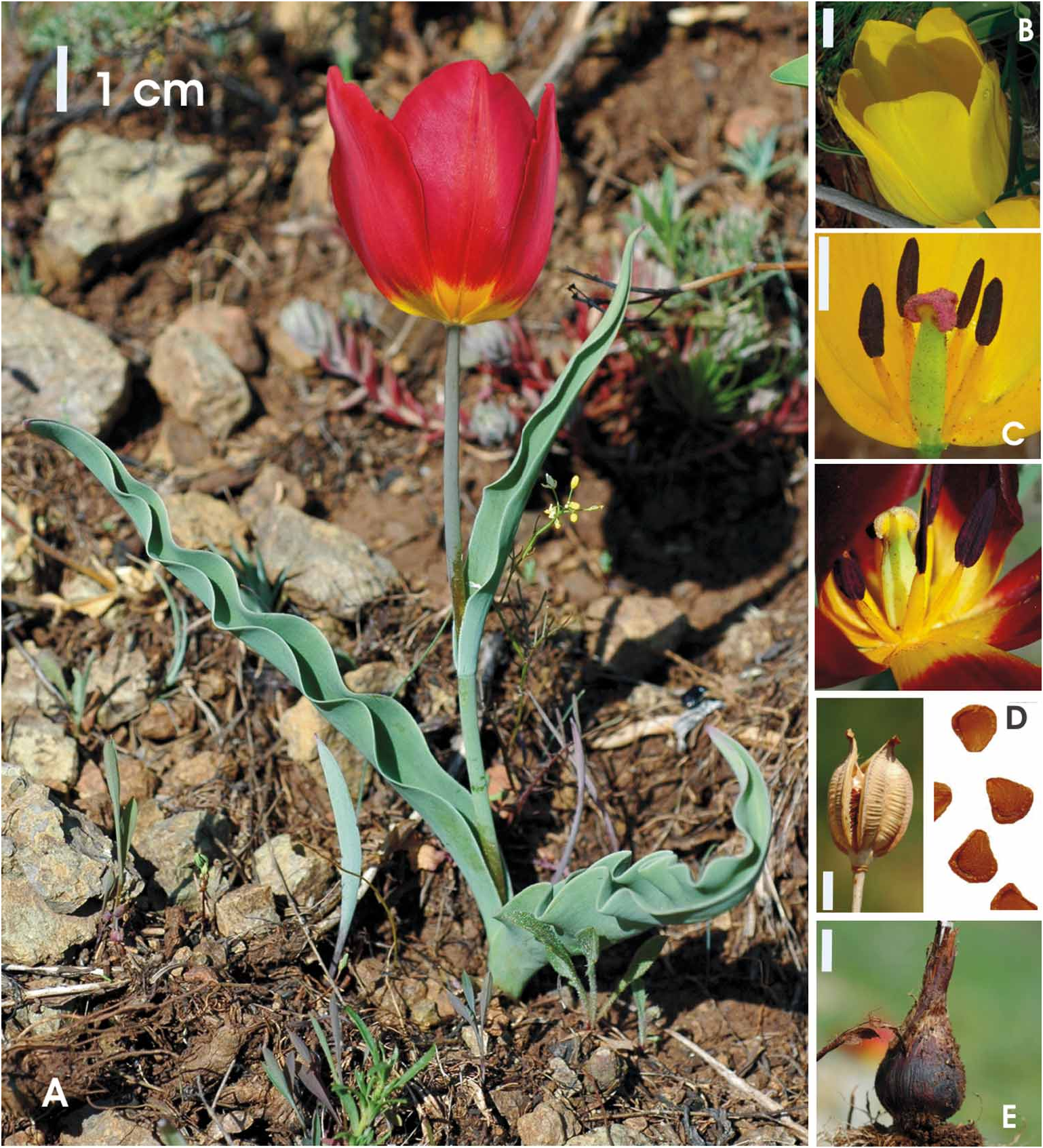
Tulipa hissarica has an oblong-ovoid bulb, 1.0–1.5 (2.0) cm thick, with a brown or grayish, papery tunic. The stem is 4–12 cm long, bluish-green, and initially hidden in a rosette of leaves. The leaves are 4–5, linear or lorate, 0.5–1.0 (2.0) cm broad. The flower is solitary, star-shaped, with yellowish perigone segments, 2–3 cm long, and a saffron-like scent. The outer segments are lanceolate and violet-tinged on the back, while the inner segments are oblong and obtuse. The stamens are 1.5–2 times shorter than the perigone, with yellow filaments and yellow or orange anthers. The ovary is green, and the capsule is cylindrical, straw-colored or purplish. This species is primarily found in the Hissar Range, with specimens collected in Uzbekistan and Tajikistan.
Distribution
Tadzhikistan · Uzbekistan