Tulipa greigii
Tulipa greigii Regel

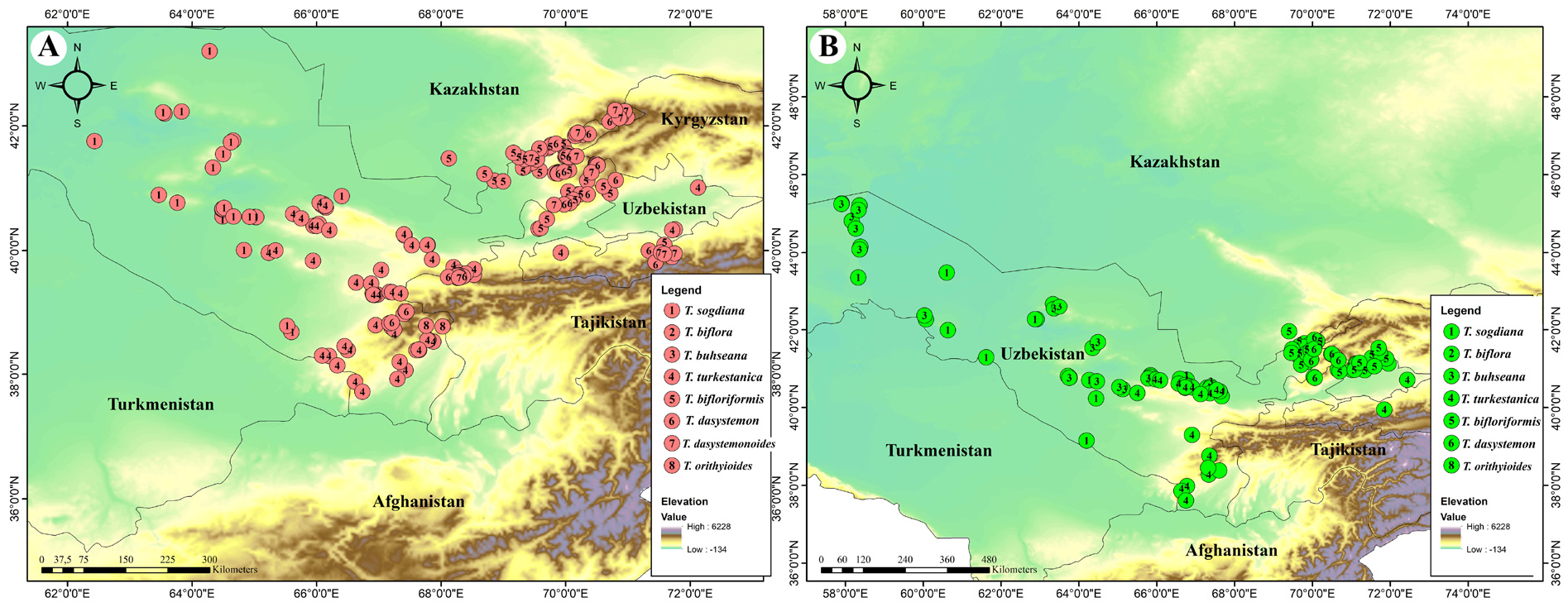
Tulipa greigii Regel is a member of the Liliaceae family, native to southeastern and northern regions of Uzbekistan, as well as parts of Iran, Kazakhstan, Kyrgyzstan, Tajikistan, and Uzbekistan. It thrives in clayey and stony slopes in foothills and lower mountain zones, at elevations between 500 and 2000 meters above sea level. The species was named after S. Greig, a Russian admiral of Scottish origin, and was described in 1873 by Regel based on specimens collected in the Karatau Mountains. This tulip is highly valued for its ornamental qualities and is considered one of the most beautiful wild relatives of cultivated garden tulips.
Description
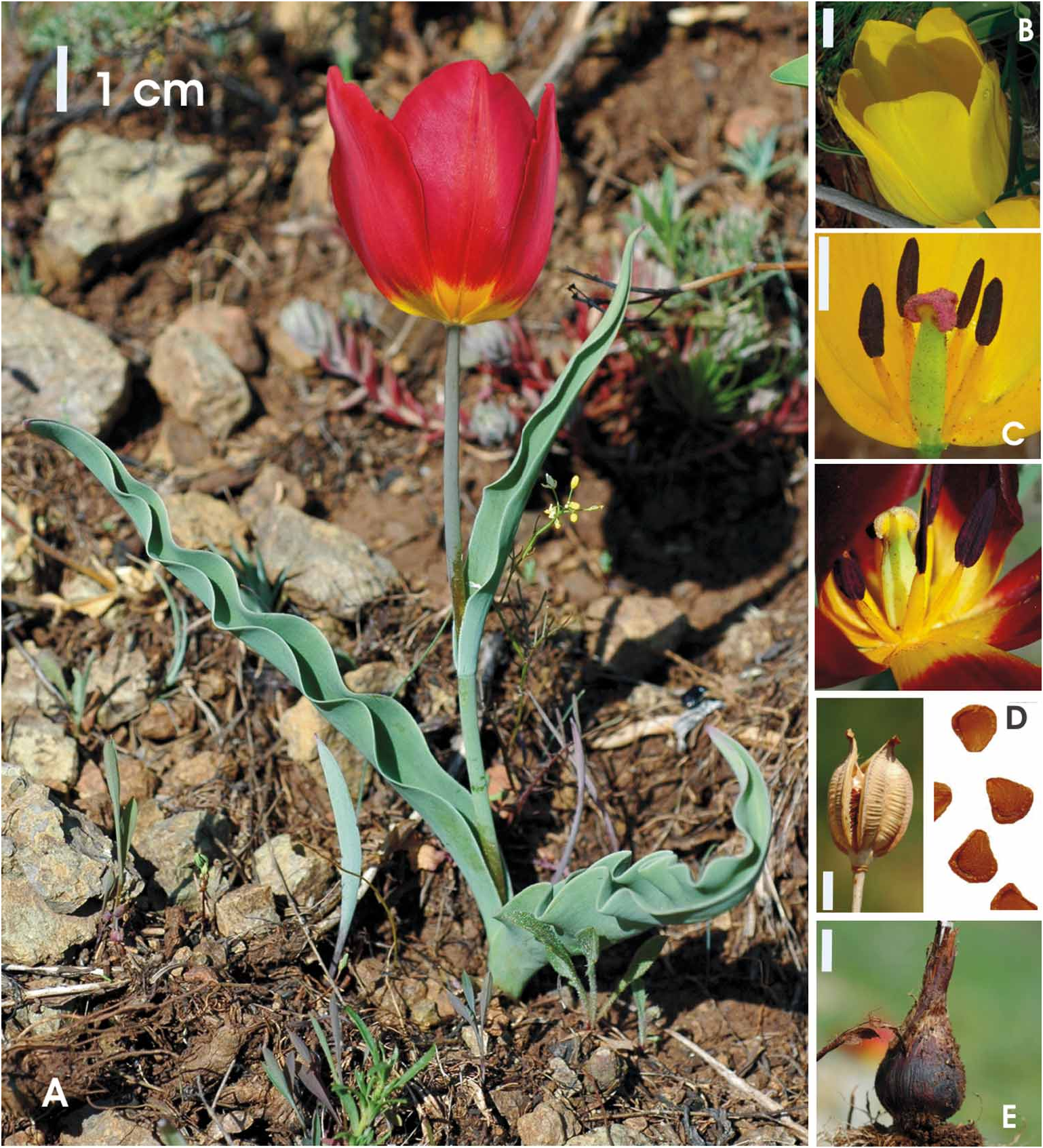
Tulipa greigii Regel features an ovoid bulb, 2.5–4.0 cm thick, with a coriaceous, blackish-brown tunic lined with silky hairs. The stem is 20–40 cm long, with pubescent upper parts and peduncle. It has 3–5 leaves, glaucous with violet markings, and a solitary, elegant, cup-shaped or goblet-shaped flower, typically light red or orange-red. The perigone segments are yellow at the base with a violet blotch, 3–12 cm long, and reflexed outward. Stamens are one-third the length of the perigone, with yellow or violet anthers. The ovary is cylindrical and greenish, and the capsule is 2–3 cm broad and 4–6 cm long. This species is of significant horticultural importance and is recognized in international classifications as 'Greig’s Tulips.'
Distribution
SE · NO · Iran · Kazakhstan · Kirgizstan · Tadzhikistan · Uzbekistan
Synonyms
Tulipa krauseanaTulipa karatavicaTulipa mogoltavicaTulipa altaica var. karatavicaTulipa greigii var. flavaTulipa greigii var. campanulataTulipa greigii var. typicaTulipa greigii unranked aurea