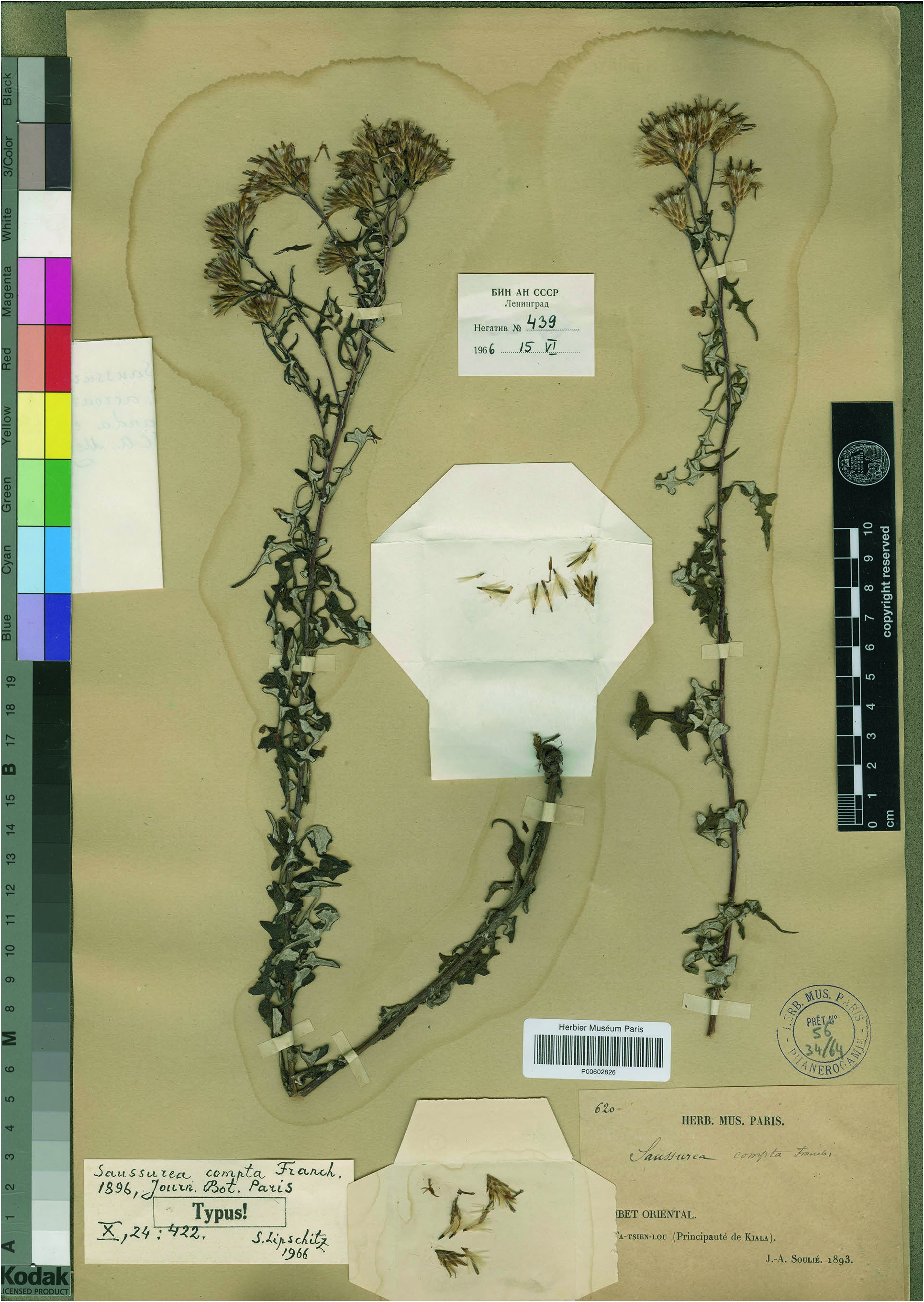
tufted wirelettuce
Stephanomeria paniculata Nutt.

Stephanomeria paniculata, known as tufted wirelettuce, is an annual herb in the Asteraceae family. Native to the northwestern United States and Mexico, it grows in various habitats, including disturbed areas. The plant has a single, branched stem with stiff, spreading upper branches and is glabrous. Leaves are primarily basal, up to 10 cm long, with smaller, linear leaves on the stem. Flower heads, with 4–6 pinkish or lavender ray florets, occur singly or in clusters. The fruit is an achene with a pappus of white bristles.
Description
Stephanomeria paniculata is an annual herb in the Asteraceae family, native to Oregon, Idaho, Washington, California, and Mexico. It has a single, stiffly branched stem and glabrous surfaces. Basal leaves are oblanceolate, up to 10 cm long, while cauline leaves are reduced and bract-like. Flower heads are borne singly or in paniculiform arrays, with peduncles 2–10 mm long. The involucres measure 6–9 mm, and each head contains 5 florets. The cypselae are 3.8–4.2 mm, tan to dark tan, with a slightly bumpy or tuberculate surface and a pappus of 15–18 tan bristles. The plant flowers with pinkish or lavender ligules up to 1.4 cm long. It is typically found in disturbed habitats and has a chromosome count of 2n = 16.
Other common names
tufted wirelettuce
Distribution
Oregon · Idaho · Washington · California · Mexico Northwest
Synonyms
Stephanomeria suksdorfiiPtiloria paniculata