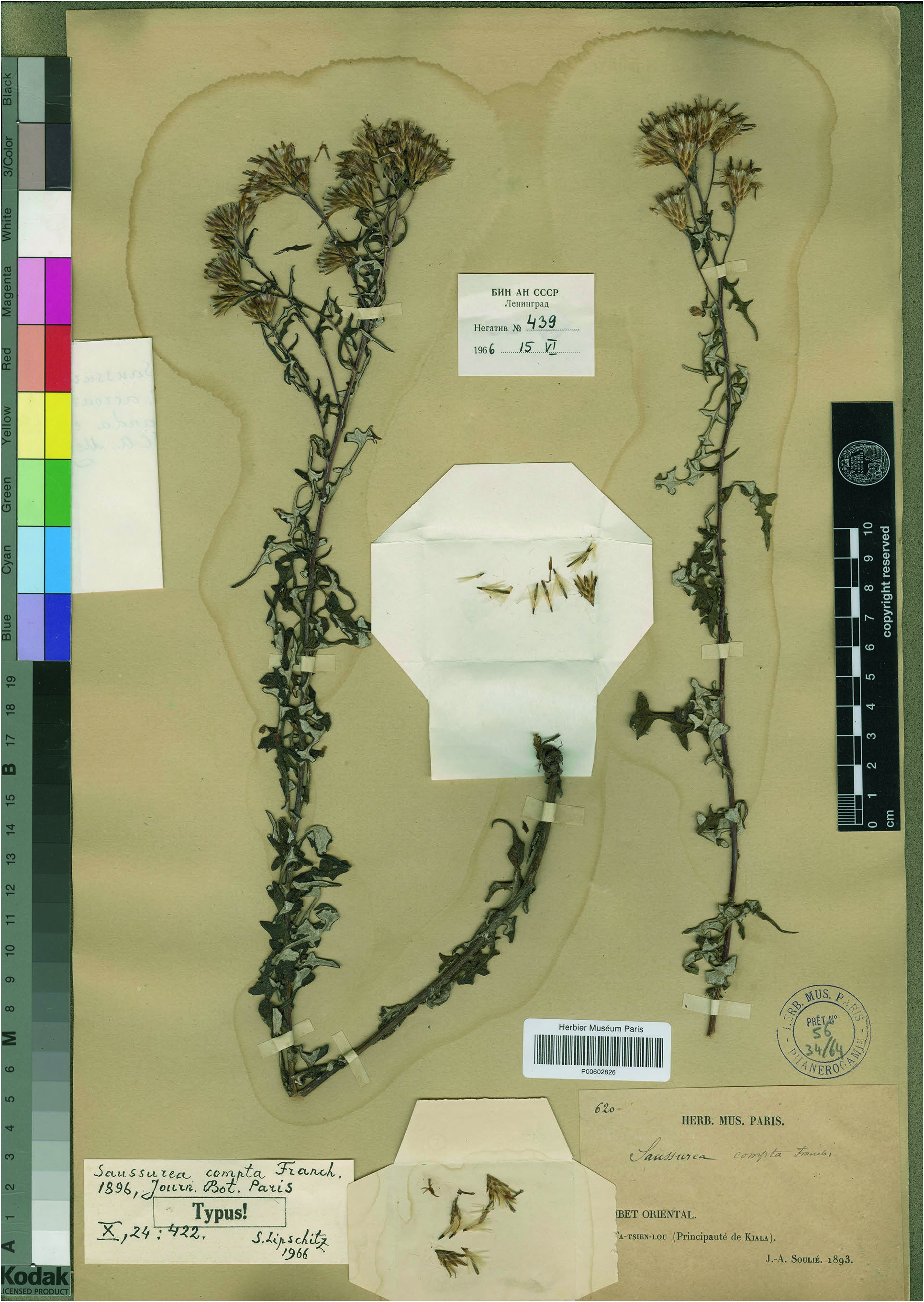
Tragopogon tanaiticus
Tragopogon tanaiticus Artemczuk

Tragopogon tanaiticus is a perennial species in the Asteraceae family, native to regions in Russia, Kazakhstan, Krym, and Ukraine. It was first described by Artemczuk in 1937. The plant can grow up to 75 cm tall, with a robust, vertical root system and a root collar covered in old leaf remnants. Its stems are solitary or few, branched, and densely leafy. The leaves vary in shape, with basal leaves being narrow and whitish-lilac in color. The capitula are medium-sized, with yellow florets, and the achenes are five-angled, thin, and have a grayish pappus.
Description
Tragopogon tanaiticus is characterized by its perennial growth habit and a root system that is robust and vertical. The plant is 15-75 cm tall, with a flocculose-arachnoid texture, particularly below the capitula. Stems are solitary or few, branched, and densely leafy. Upper leaves are 1.5-5 cm long, not convolute, and have a linear lamina. Basal leaves are narrower, narrowly linear, and whitish-lilac in color. Involucral bracts are eight in number, narrowly lanceolate, and pubescent. The capitula are medium-sized with yellow florets. Achenes are five-angled, 2.5 cm long with pappus, and finely squamose. The pappus is grayish and shorter than the achene. Inner achenes are smooth with a pappus about 2.8 cm long.
Distribution
East European Russia · South European Russia · Central European Russia · Kazakhstan · Krym · Ukraine · Central European Rus · South European Russi
Synonyms
Tragopogon donetzicusTragopogon ruthenicus subsp. tanaiticusTragopogon ruthenicus subsp. donetzicus