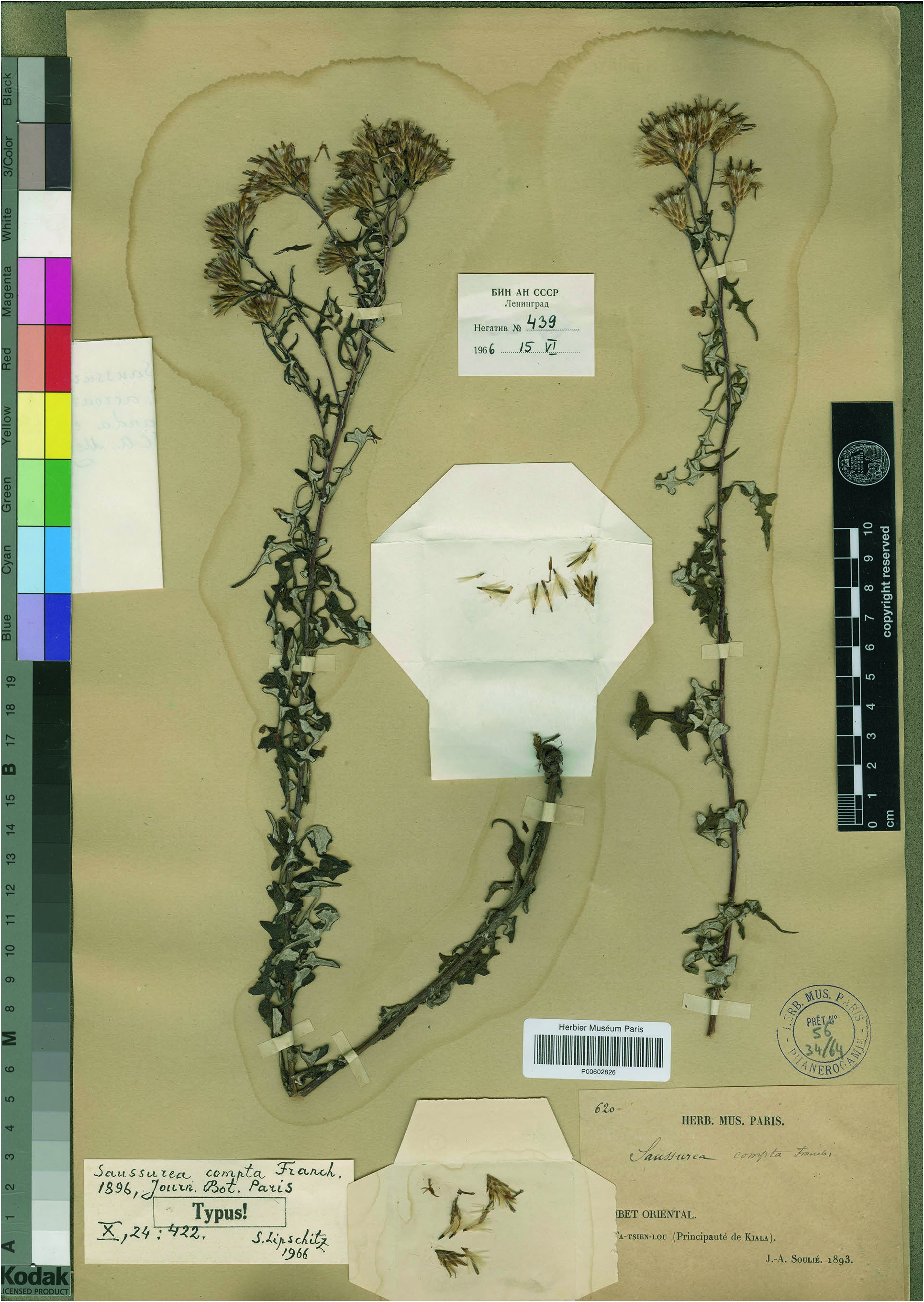
Tragopogon ruber
Tragopogon ruber S.G.Gmel.

Tragopogon ruber is a perennial plant in the Asteraceae family, native to regions including South European Russia, Xinjiang, Kazakhstan, Mongolia, the North Caucasus, and Kirgizstan. It was described by S.G. Gmelin in 1774. The plant grows 8–25 (up to 40) cm tall, with a robust, cylindrical, vertical root. It has glaucous stems that are either simple or branched, and covered with flocculose-tomentose hairs in leaf axils and below the capitula. Leaves are linear to lanceolate, with varying widths and shapes.
Description
Tragopogon ruber is a perennial herb with a vertical, cylindrical root and a root collar covered by old leaves. Plants range from 8 to 25 (up to 40) cm in height, with glaucous stems that are either simple or branched. Young plants are arachnoid, becoming glabrous and dark glaucous with age. The stems are flocculose-tomentose in leaf axils and below the capitula. Basal and lower leaves are linear, 10–20 cm long, 5–20 mm wide, and expanded at the base. Cauline leaves are lanceolate, with middle leaves broader and shorter than lower ones. The plant produces solitary, large capitula (4.5–6 cm long at fruiting) at the tips of stems and branches. Involucral bracts are lanceolate, 25–30 mm long, and arachnoid-flocculose. Florets are pink-violet, purple, or light violet, with peripheral achenes having a pappus 4–5 cm long and a body 1.4–1.6 cm long, covered in white, obtuse scales.
Distribution
South European Russia · Xinjiang · Kazakhstan · Mongolia · North Caucasus · Kirgizstan · South European Russi
Synonyms
Tragopogon kasahstanicusTragopogon roseusTragopogon kasahstanicusTragopogon ruber var. leucocarpus