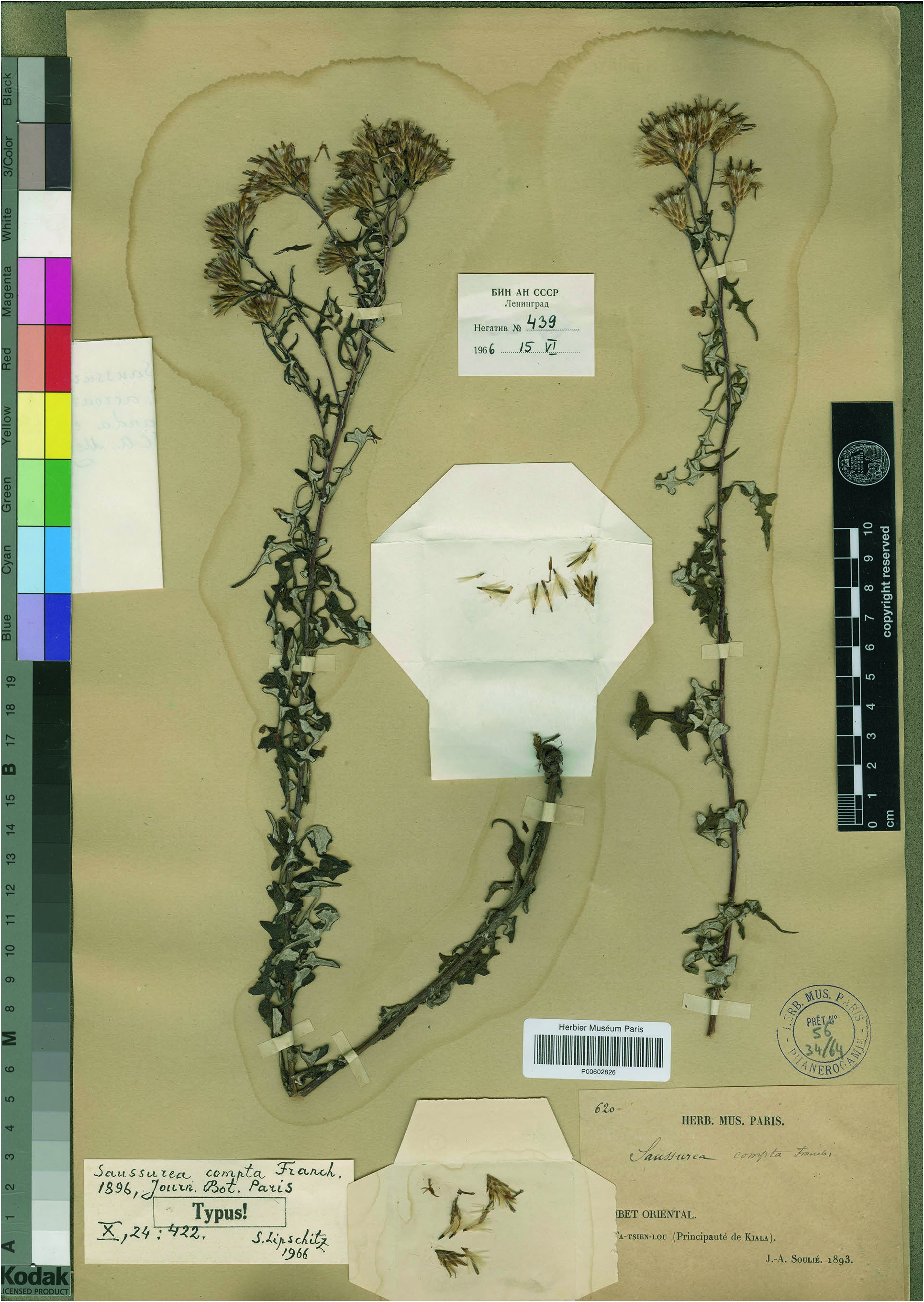
Tragopogon buphthalmoides
Tragopogon buphthalmoides (DC.) Boiss.

Tragopogon buphthalmoides is a perennial or biennial plant in the Asteraceae family, native to regions including Iraq, Azerbaijan, Israel, Jordan, Turkey, and Iran. It typically grows 40-70 cm tall with a vertical, cylindrical root and a root collar often covered by previous year's leaves. The plant has yellow florets and distinctive achenes with a beak up to 5.3 cm long. The species was described in 1875.
Description
Tragopogon buphthalmoides is a member of the tribe Cichorieae in the Asteraceae family. It is found in the Middle East and Transcaucasus regions. The plant has a vertical root and a stem that is densely leafy, erect, and may branch from the base. Basal leaves are linear or lanceolate, up to 25 cm long, and often wither during flowering. The involucral bracts are 8-10(12), tomentose at the base, and shorter than the achenes and florets. The peripheral achenes are deeply five-furrowed, with a long beak and a pappus about 3 cm long. Inner achenes are smooth and gradually narrowed into a beak.
Distribution
Iraq · Azerbaijan · Israel · Jordan · Nakhichevan · Turkey · Armenia · Syria · Iran · Lebanon · Lebanon-Syria · Palestine · Transcaucasus
Synonyms
Tragopogon persicusTragopogon palaestinusTragopogon tasch-kalaTragopogon buphthalmoides var. stenophyllusTragopogon buphthalmoides var. humilisTragopogon nervulosusScorzonera buphthalmoidesTragopogon brevifoliusTragopogon plantagineusTragopogon buphthalmoides var. latifolius