Thalictrum reniforme
Thalictrum reniforme Wall.

Thalictrum reniforme is a perennial herb native to the Himalayan region, including Assam, East and West Himalaya, Nepal, Tibet, and parts of China. It is a member of the Ranunculaceae family, known for its complex leaf structures and showy inflorescences. This species is characterized by its triangular, pinnate-ternate leaves, glandular-pubescent stems, and drooping, bisexual flowers with purple sepals. It flowers from July to October and fruits from August to November. Thalictrum reniforme is often confused with T. neurocarpum, a closely related Himalayan species, but can be distinguished by specific morphological features such as stipule shape and sepal size.
Description
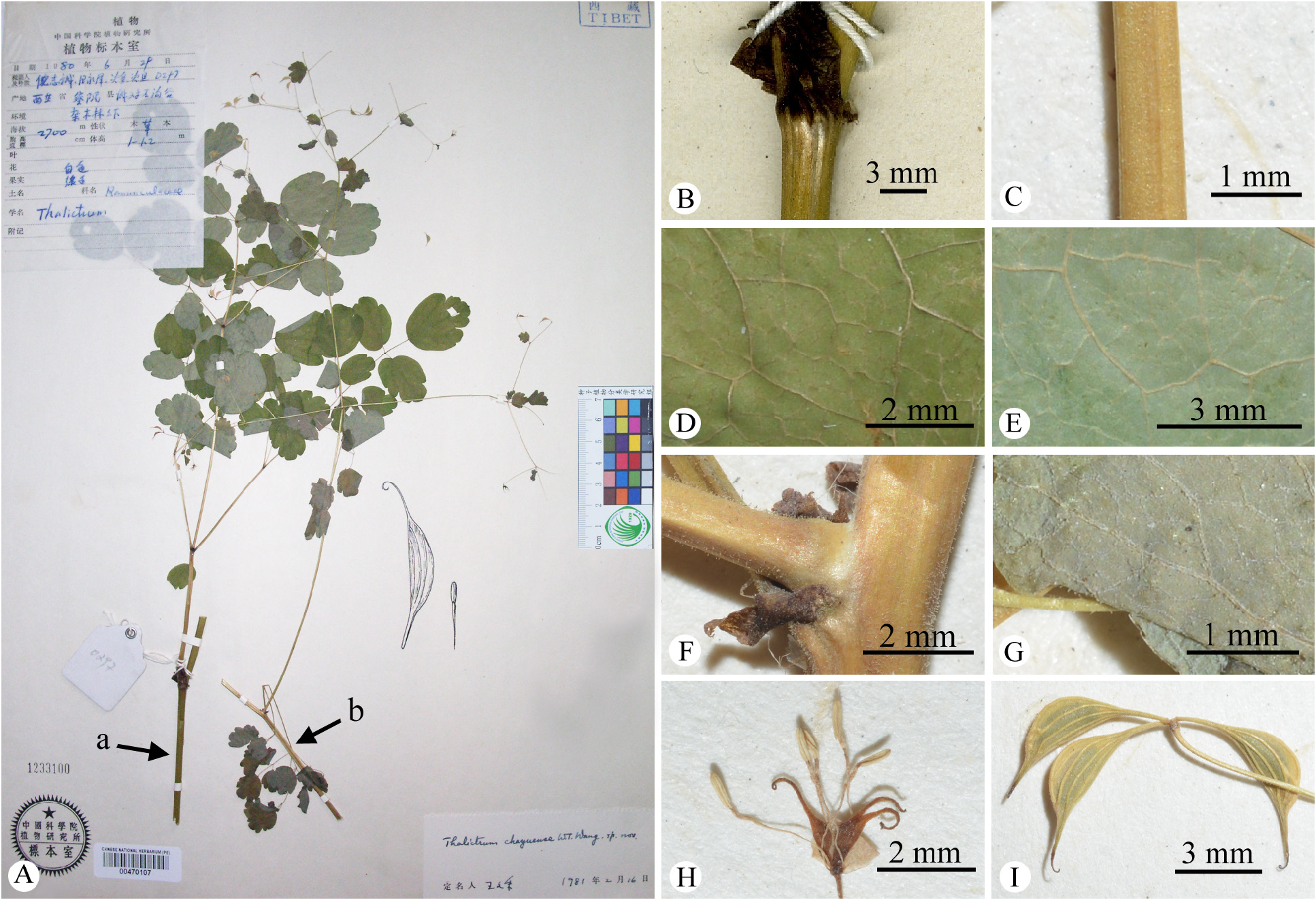
Thalictrum reniforme is a perennial herb with fibrous roots and stems that can reach up to 150 cm in height. The stems are distally branched and glandular-pubescent, while the proximal portions are glabrous or subglabrous. Leaves are 2-3 pinnate-ternate, with triangular blades measuring 5-20 cm long and 4-18 cm broad. The leaflets are suborbicular, broadly ovate, or broadly rhombic-obovate, ranging from 1-2.5 cm in length and 1-3.2 cm in width. They are herbaceous, with a green adaxial surface and pale green abaxial surface, and are subglabrous to densely glandular-pubescent on both sides. The leaf base is rounded or subcordate, and the apex is obtuse or acute, with 3-lobed margins. Inflorescences are paniculate and many-flowered, with rachises that are subglabrous to densely glandular-pubescent. Pedicels are about 2 cm long and similarly pubescent. Flowers are bisexual and drooping, with four broadly elliptic or ovate sepals that are typically purple, occasionally white. The sepals measure 7-17 mm in length and 4.5-10 mm in width. Stamens number 20-30, with filaments 3-6 mm long and anthers 3-6 mm in length. Carpels are 10-20 in number, 3 mm long, and subglabrous to densely glandular-pubescent, with sessile to conspicuously stipitate styles and greenish ovaries.
Habitat
Thalictrum reniforme is found in the high-altitude regions of the Himalayas, including parts of Assam, East and West Himalaya, Nepal, Tibet, and adjacent areas in China. It typically grows in moist, well-drained soils in alpine meadows, forest margins, and rocky slopes. The species is adapted to temperate to subalpine climates and is often associated with montane ecosystems where it can thrive in partial shade to full sun.
Cultivation
Thalictrum reniforme is not commonly cultivated outside its native range, but it can be grown in alpine or rock gardens that mimic its natural habitat. It prefers well-drained, fertile soils and partial shade to full sun. The plant requires consistent moisture during the growing season but should not be overwatered to prevent root rot. Propagation can be done through division of the rhizomes or by seed sown in a cold frame. Care should be taken to maintain the plant's natural growing conditions, including cool temperatures and adequate humidity, to encourage flowering and healthy growth.
Uses
Thalictrum reniforme is primarily of botanical and ecological interest, with no widely documented traditional or commercial uses. It is occasionally cultivated in specialized gardens for ornamental purposes due to its attractive foliage and showy inflorescences. The species may also serve as a food source for certain herbivorous insects and animals in its native habitat. Its role in alpine ecosystems, particularly in stabilizing soil and contributing to biodiversity, is significant but not well quantified.
Distribution
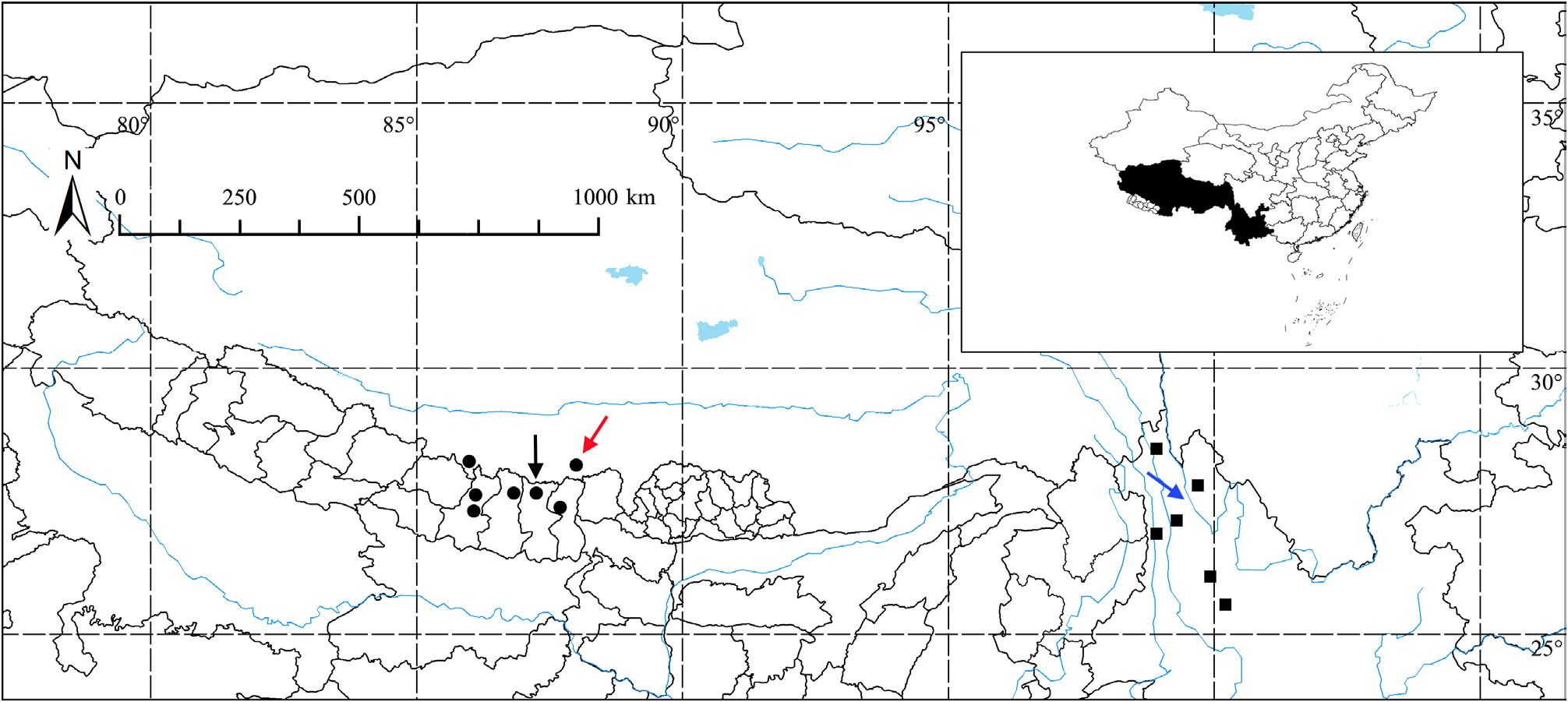
Assam · East Himalaya · Nepal · Tibet · West Himalaya
Synonyms
Thalictrum menthosma