Stryphnodendron polyphyllum
Stryphnodendron polyphyllum Mart.

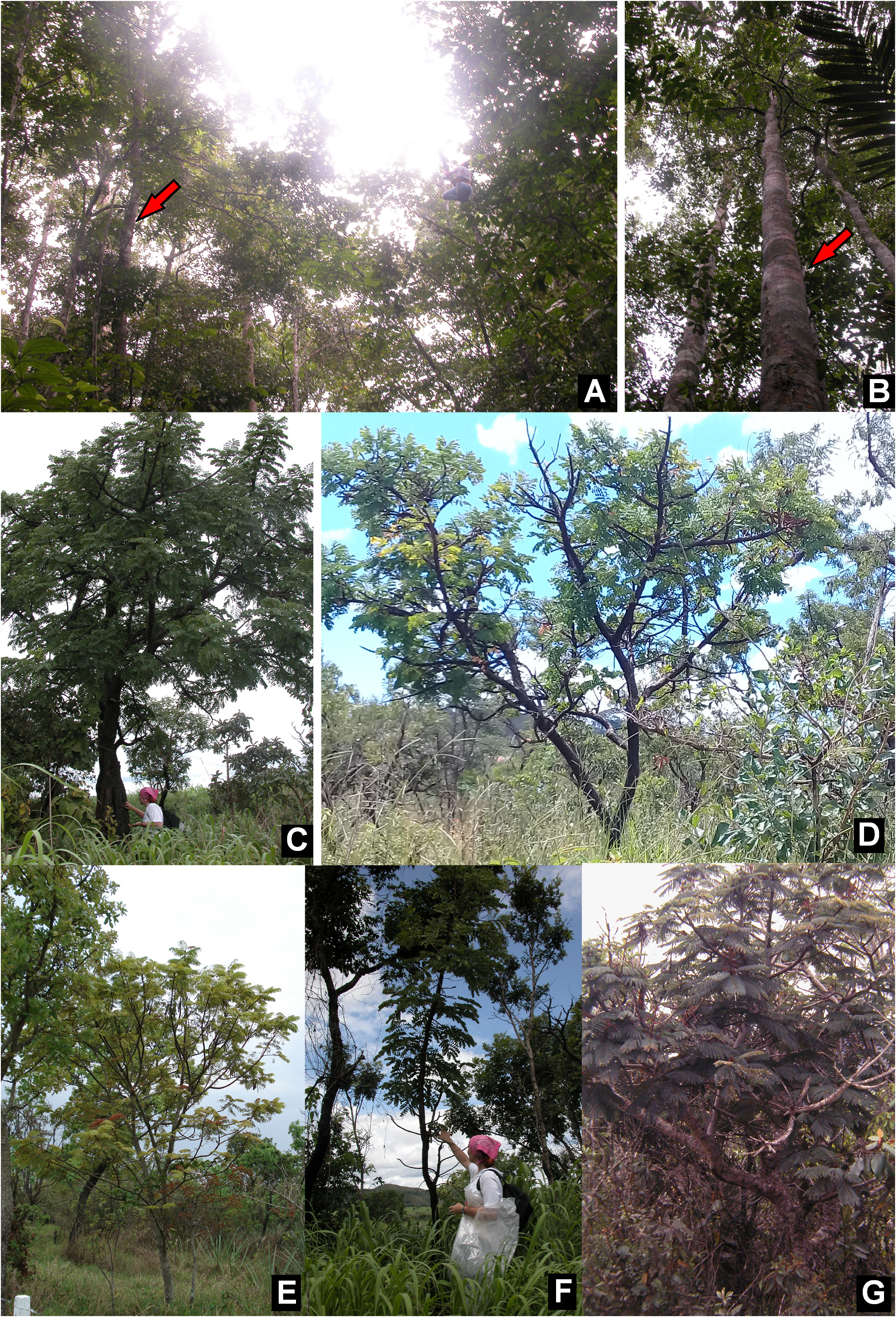
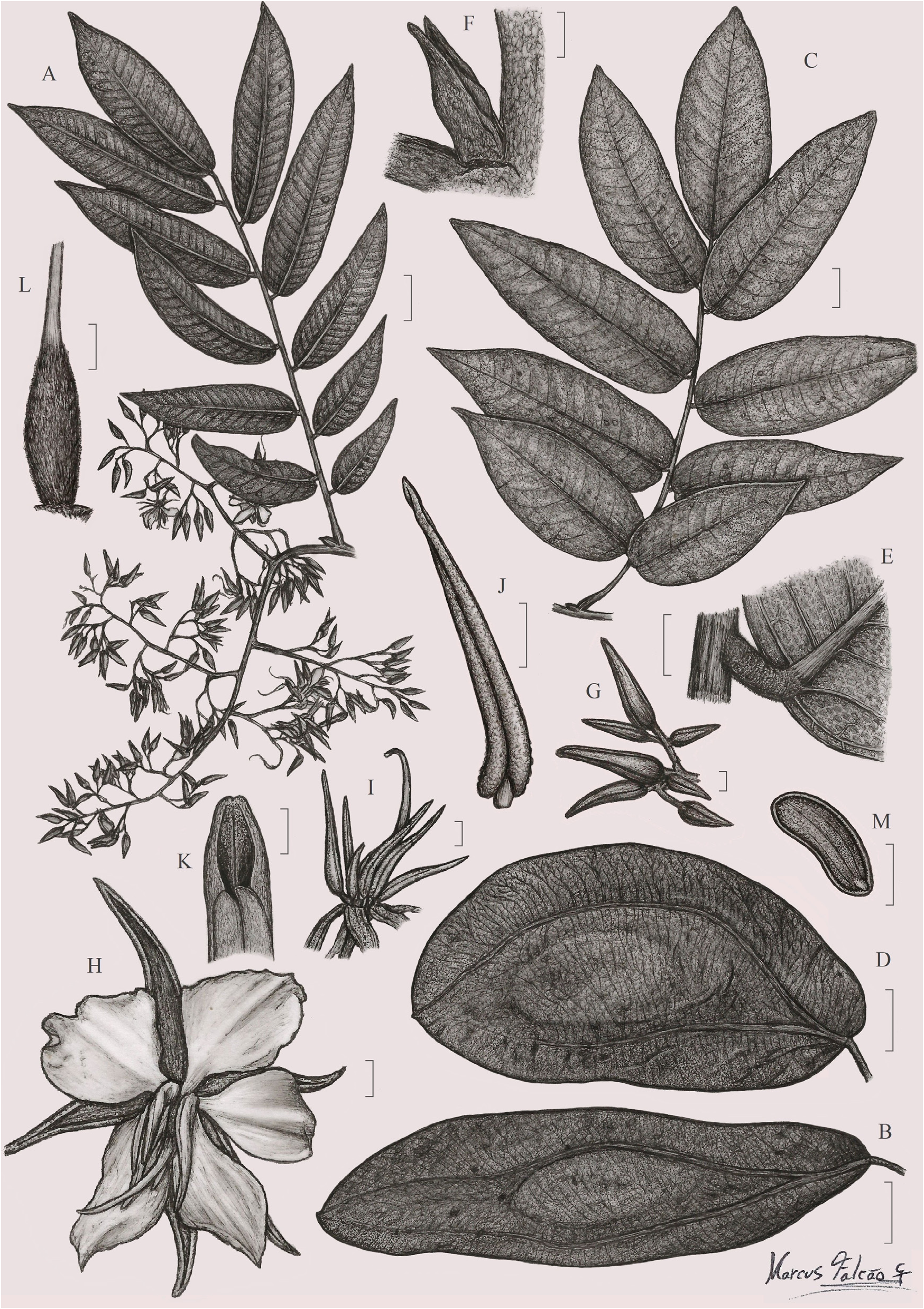
Stryphnodendron polyphyllum is a tree species in the Fabaceae family, native to Brazil. It was first described in 1837 by Martius. The species is found in the Northeast and Southeast regions of Brazil. It grows to a height of 4–7 m and has leaves with 11–18 pairs of pinnae and 14–23 pairs of leaflets. The leaflets are small, oblong, and sparsely to densely pubescent. The inflorescences are reddish to vinaceous thyrsi with spikes up to 12.5 cm long. Flowers are monoclinous with glabrous, atrovinaceous corollas. The fruit is a nucoid legume with coriaceous valves and slightly prominent seeds. Phenologically, it flowers from September to June, produces immature fruits from March to June, and mature fruits from July to August.
Description
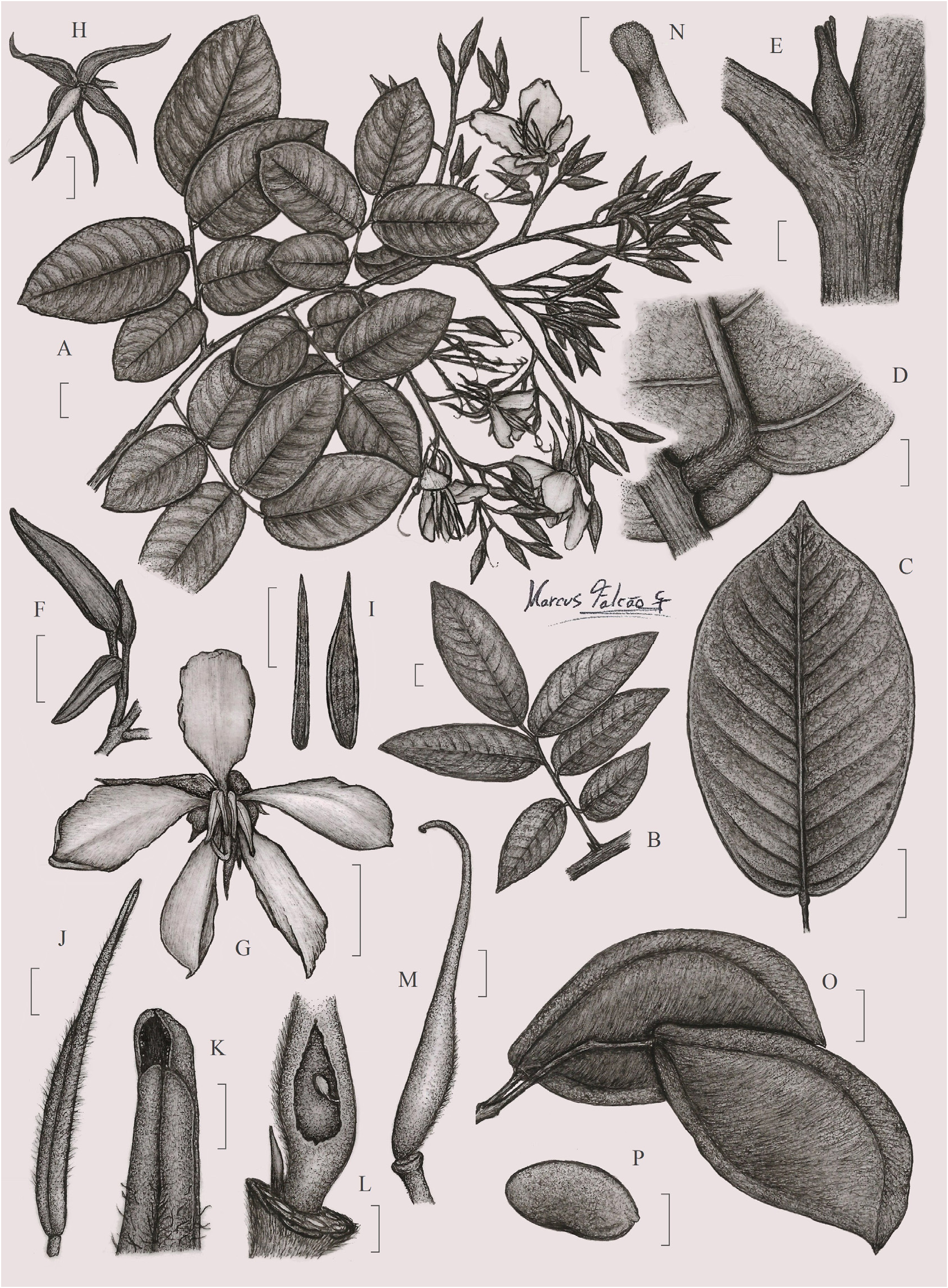
Stryphnodendron polyphyllum is a member of the Fabaceae family, specifically the Caesalpinioideae subfamily and mimosoid clade. It is a tree reaching 4–7 m in height. The leaves are bipinnate, with 11–18 pairs of pinnae and 14–23 pairs of leaflets. Leaflets are 3–8 mm long, mostly oblong, with a chartaceous texture and subconcolor surfaces. The upper leaflet surface is sparsely to densely pubescent, while the lower surface is typically pubescent, with unilateral trichomes usually absent. The inflorescences are simple thyrsi, colored reddish to vinaceous, with cymulae of solitary or geminate spikes. Flowers are monoclinous, with glabrous, atrovinaceous corollas. The legume fruit is straight to slightly curved, with coriaceous valves and inconspicuously nerved, subturgid to rarely turgid. Phenologically, flowering occurs from September to June, immature fruits from March to June, and mature fruits are concentrated in July and August.
Distribution
BR · Global · Brazil Northeast · Brazil Southeast