Stryphnodendron guianense
Stryphnodendron guianense (Aubl.) Benth.

Stryphnodendron guianense is a species of tree or treelet in the Fabaceae family, native to the tropical regions of northern South America. It is found in Brazil, French Guiana, Guyana, Suriname, and Venezuela, often in forested habitats. The species is characterized by its compound leaves with numerous leaflets, pinkish inflorescences, and flat legumes. It is known locally in Brazil as 'talapirinria'.
Description
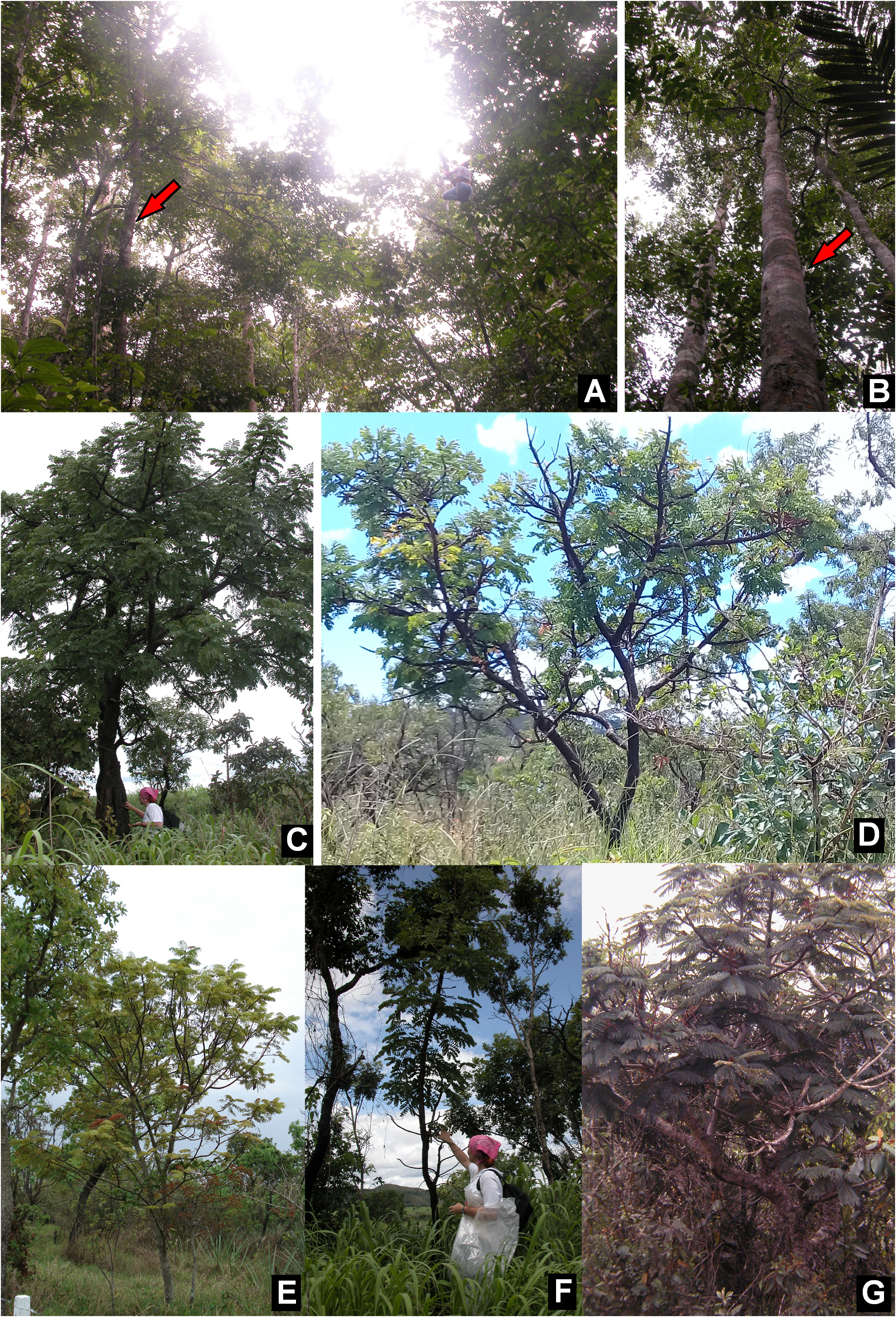
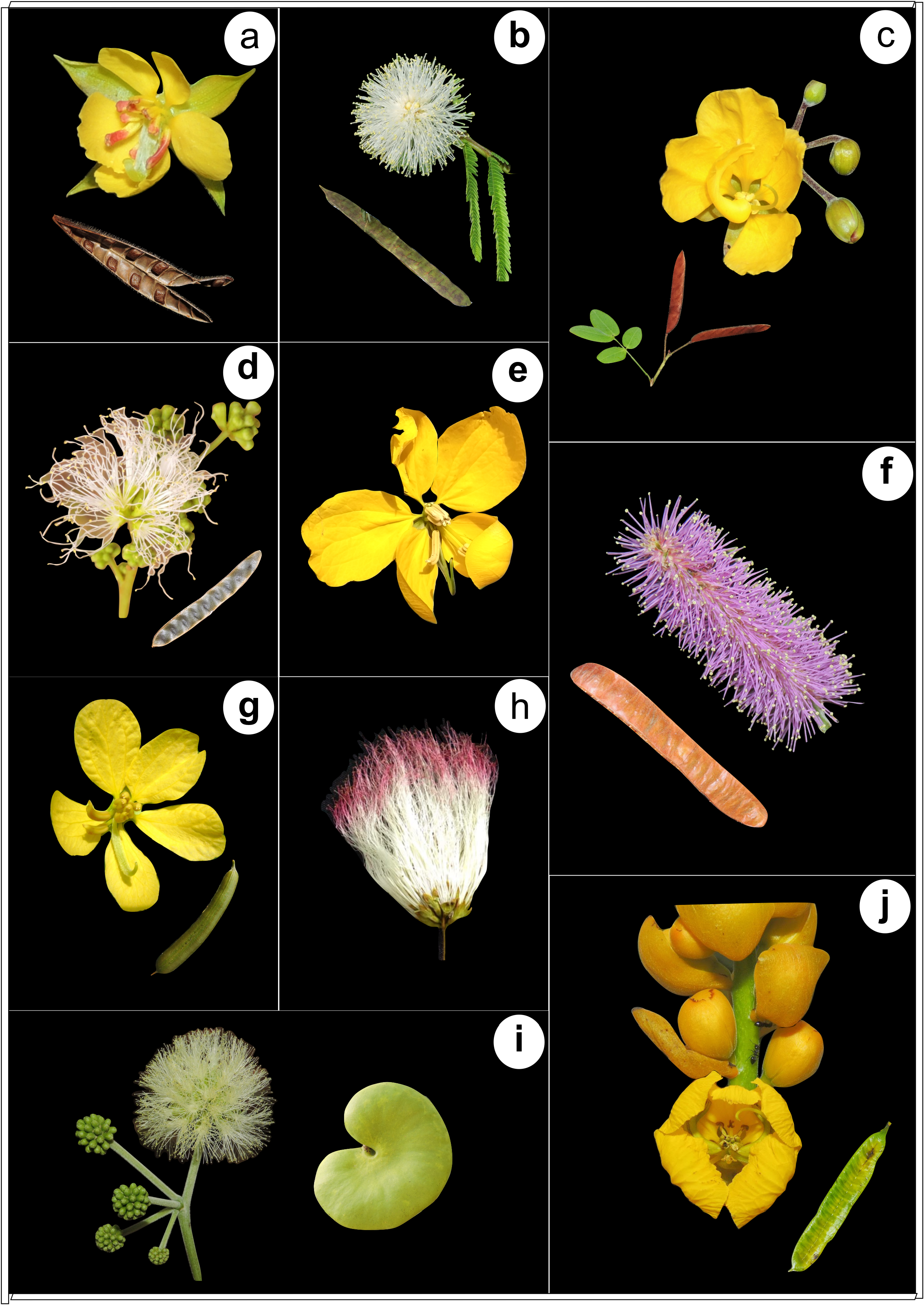
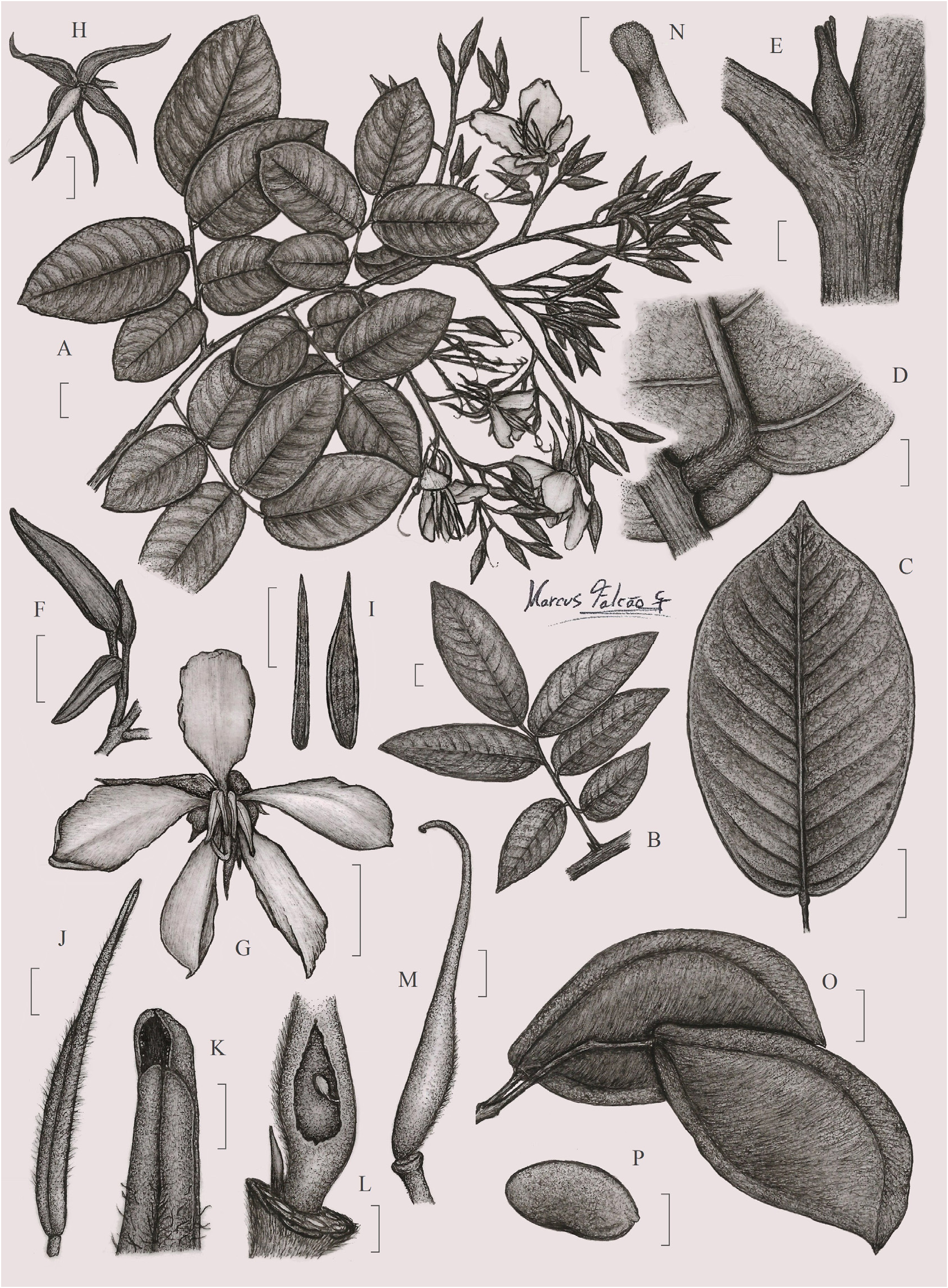
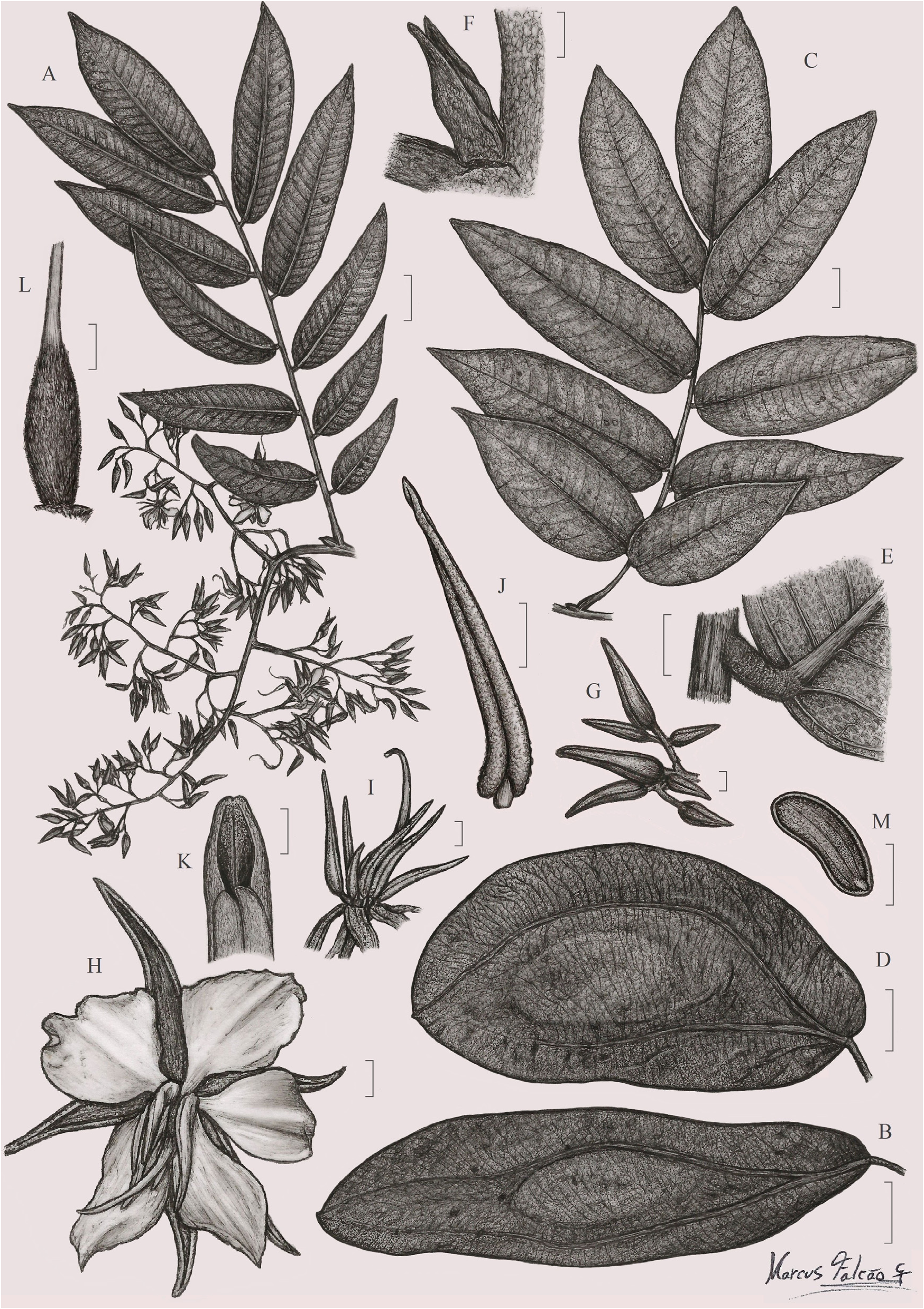
Stryphnodendron guianense is a medium-sized tree or treelet that can grow up to 20 meters in height. Its leaves are bipinnate, with 8 to 11 pairs of pinnae and 8 to 18 pairs of leaflets. The leaflets are typically oblong to oblong-rhombic, with the distal ones often obovate and the proximal sometimes elliptic. The leaves are chartaceous to subcoriaceous in texture and show a distinct discoloration between the upper and lower surfaces. The lower surface often has a unilateral tuft of trichomes, which can be inconspicuous. The inflorescences are simple thyrsi, pinkish in color, and composed of cymulae with solitary to 4-ternate spikes. The flowers are either monoclinous or diclinous, with glabrous, pinkish corollas. The fruit is a nucoid legume that is straight to slightly curved, flat-compressed, and has subcoriaceous valves with inconspicuous nerves. The seeds are slightly prominent.
Habitat
Stryphnodendron guianense is native to the tropical forests of northern South America. It is commonly found in Brazil, particularly in the northeastern and northern regions, as well as in French Guiana, Guyana, Suriname, and Venezuela. The species is associated with humid forest environments, including those within protected areas such as the Parque Nacional Natural Los Katíos, Parque Nacional Natural Tinigua, and the Meta and Vaupés regions in Brazil. It thrives in areas with high rainfall and is often part of the understory or mid-canopy layers of the forest.
Cultivation
Stryphnodendron guianense is not widely cultivated outside of its native range. It is adapted to the warm, humid conditions of tropical forests and requires well-drained, nutrient-rich soils. Propagation is likely through seeds, though specific details on germination and seedling care are not well documented. The species may benefit from partial shade during early growth stages, as it is often found in the understory of dense forests. Due to its native habitat and ecological niche, it is best suited for cultivation in botanical gardens or research settings with access to tropical conditions.
Uses
Stryphnodendron guianense is primarily of ecological and ethnobotanical interest. It contributes to the biodiversity of tropical forests and may play a role in local ecosystems by providing habitat and food for various organisms. The species is known by the local name 'talapirinria' in the Brazilian state of Maranhão, suggesting it may have traditional uses in the region. However, specific details on its use in medicine, construction, or other applications are not widely documented. Research into its potential applications in agroforestry or conservation efforts may be warranted due to its adaptability and ecological value.
Distribution
BR · Parque Nacional Natural Los Katíos · Zona oriental · Parque Nacional Natural Tinigua · Meta, Vaupés · Global · Brazil Northeast · Brazil North · French Guiana · Guyana · Suriname · Venezuela
Synonyms
Stryphnodendron guianense subsp. guianenseMimosa guianensisAcacia guianensisPiptadenia guianensisStryphnodendron purpureumFolianthera guianensis