Stryphnodendron foreroi
Stryphnodendron foreroi E.M.O.Martins
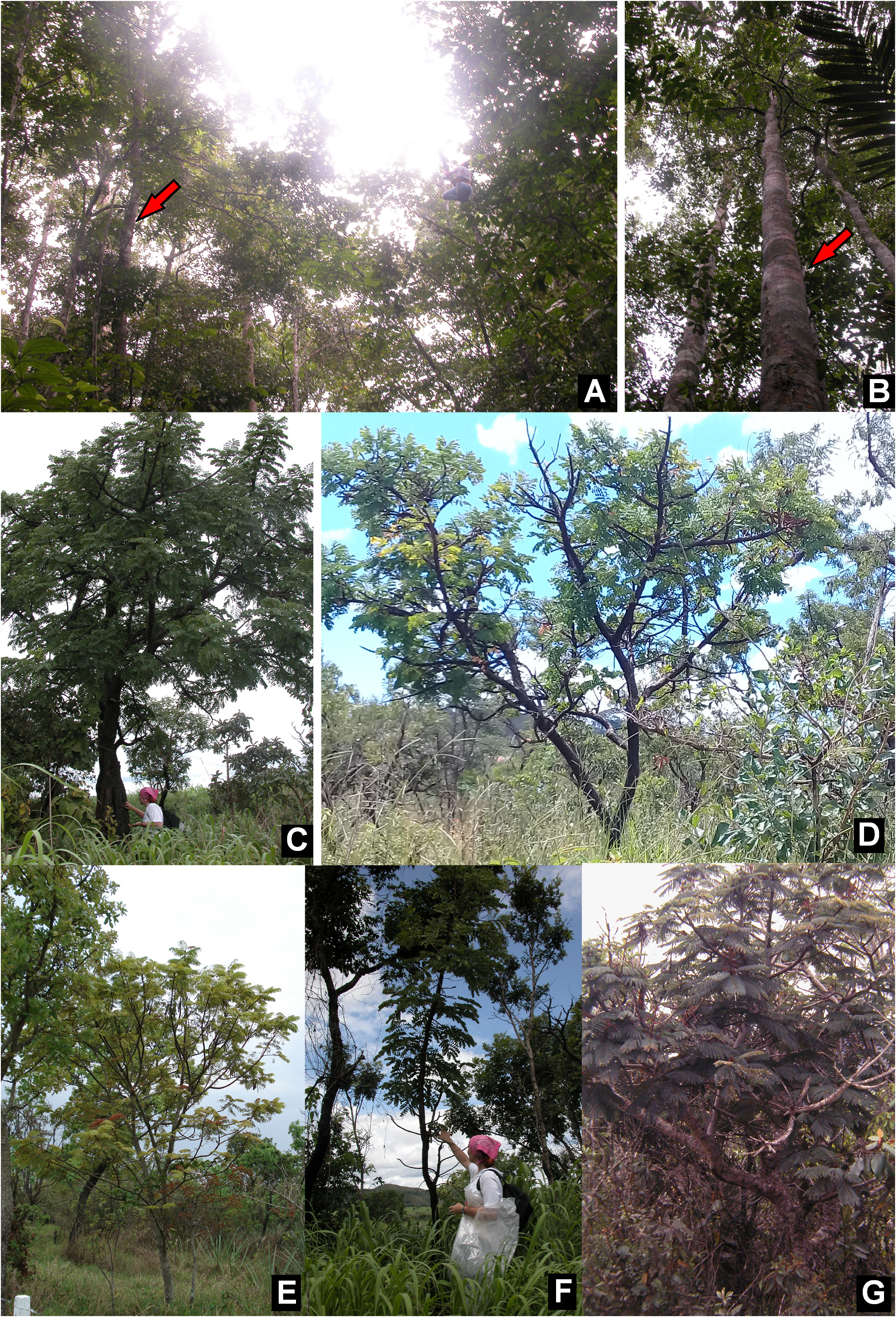
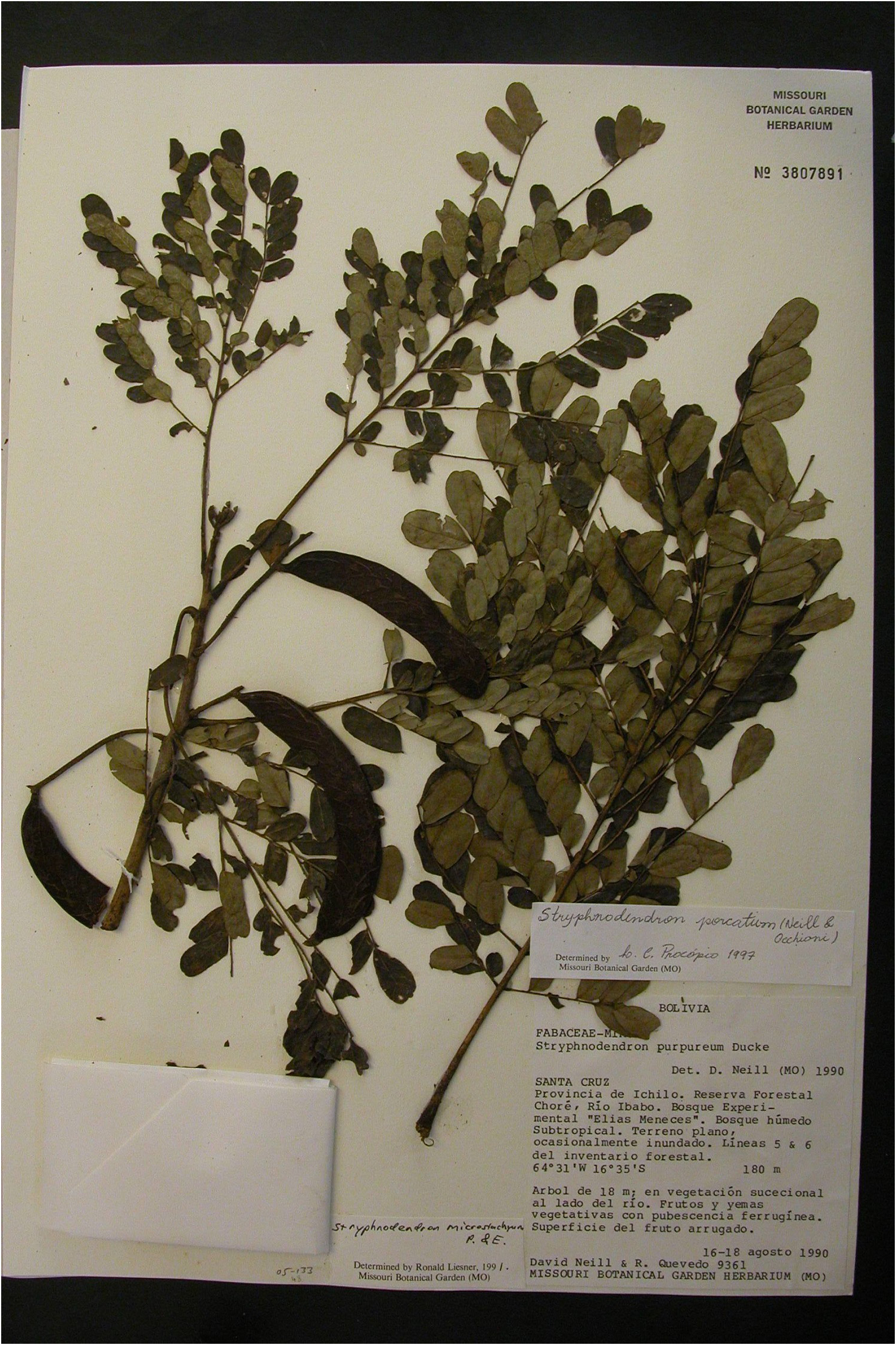
Stryphnodendron foreroi is a tree species in the Fabaceae family, native to Brazil, Bolivia, and Peru. It was first described in 1980 by E.M.O. Martins. The species is known for its compound leaves with 6–8 pairs of pinnae and 5–12 pairs of leaflets, and it produces pinkish to yellowish inflorescences. It is commonly called 'Paricarana' in Amazonas, Brazil.
Description
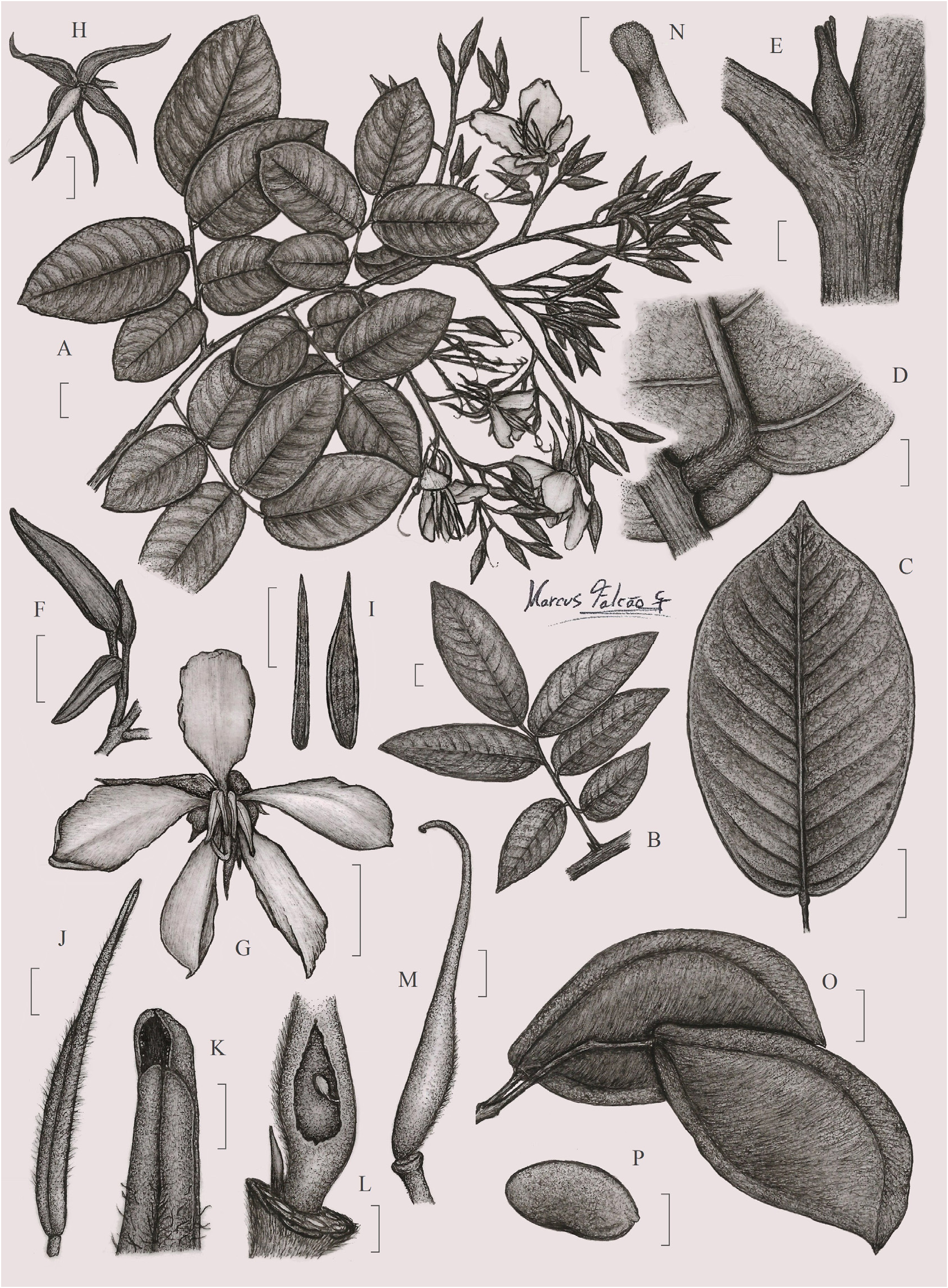
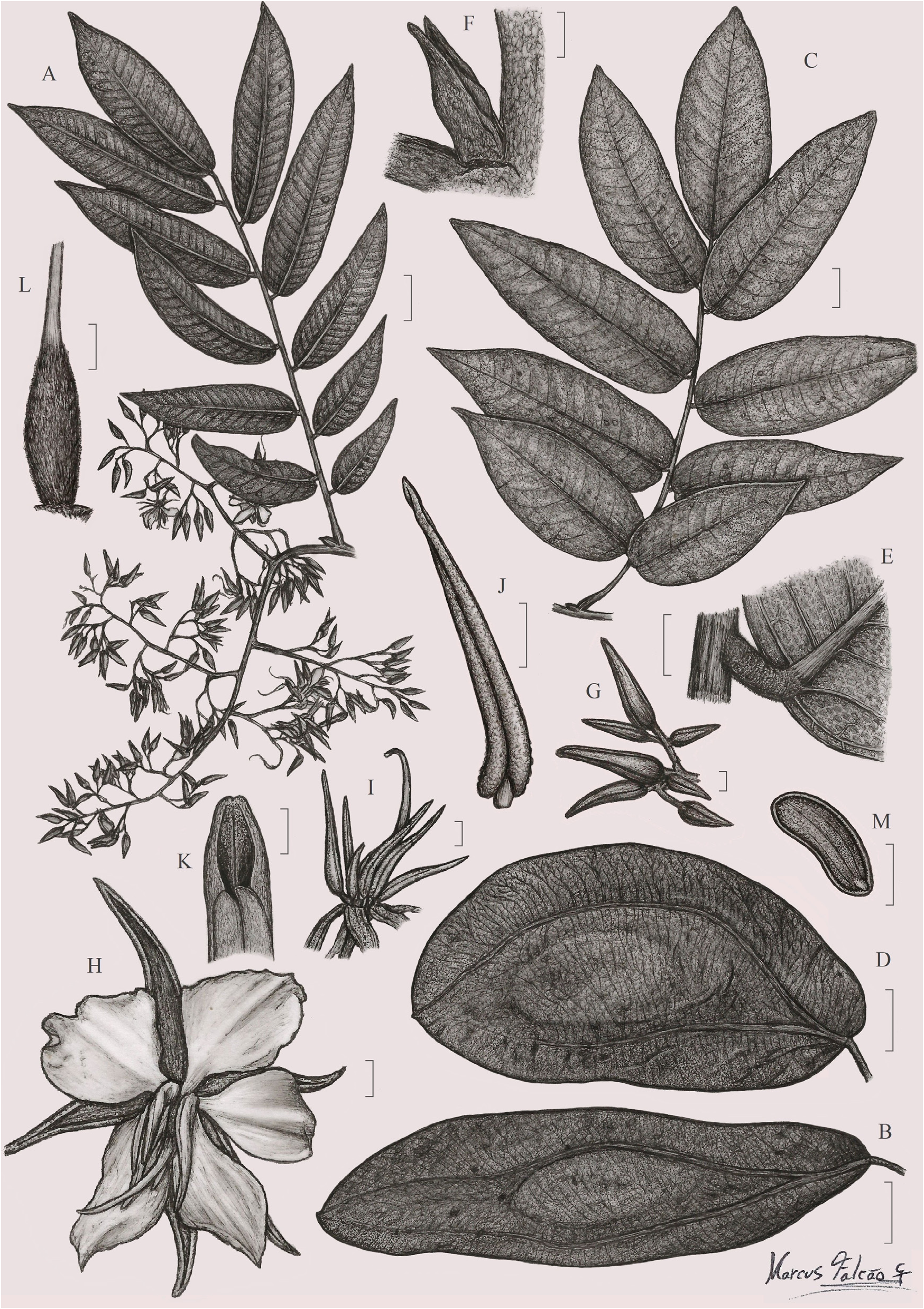
Stryphnodendron foreroi is a tree reaching 6–12 (–15) m in height. Its leaves have 6–8 pairs of pinnae and 5–12 (–14) pairs of leaflets, with a single conical nectary on the petiole. Leaflets are typically oblong-rhombic, measuring 11–15 (–37) mm in length, with a chartaceous to subcoriaceous texture. The lower leaf surface is pubescent and has unilateral tufts of trichomes. Inflorescences are simple thyrsi with cymulae of solitary to ternate spikes, 4–6.5 cm long. Flowers are monoclinous with glabrous or subglabrous corollas. The fruit is a slightly curved nucoid legume with subcoriaceous valves and inconspicuous nerves. The species flowers in November and January, and fruits from May to July.
Distribution
BR · Bolivia · Brazil North · Brazil West-Central · Peru