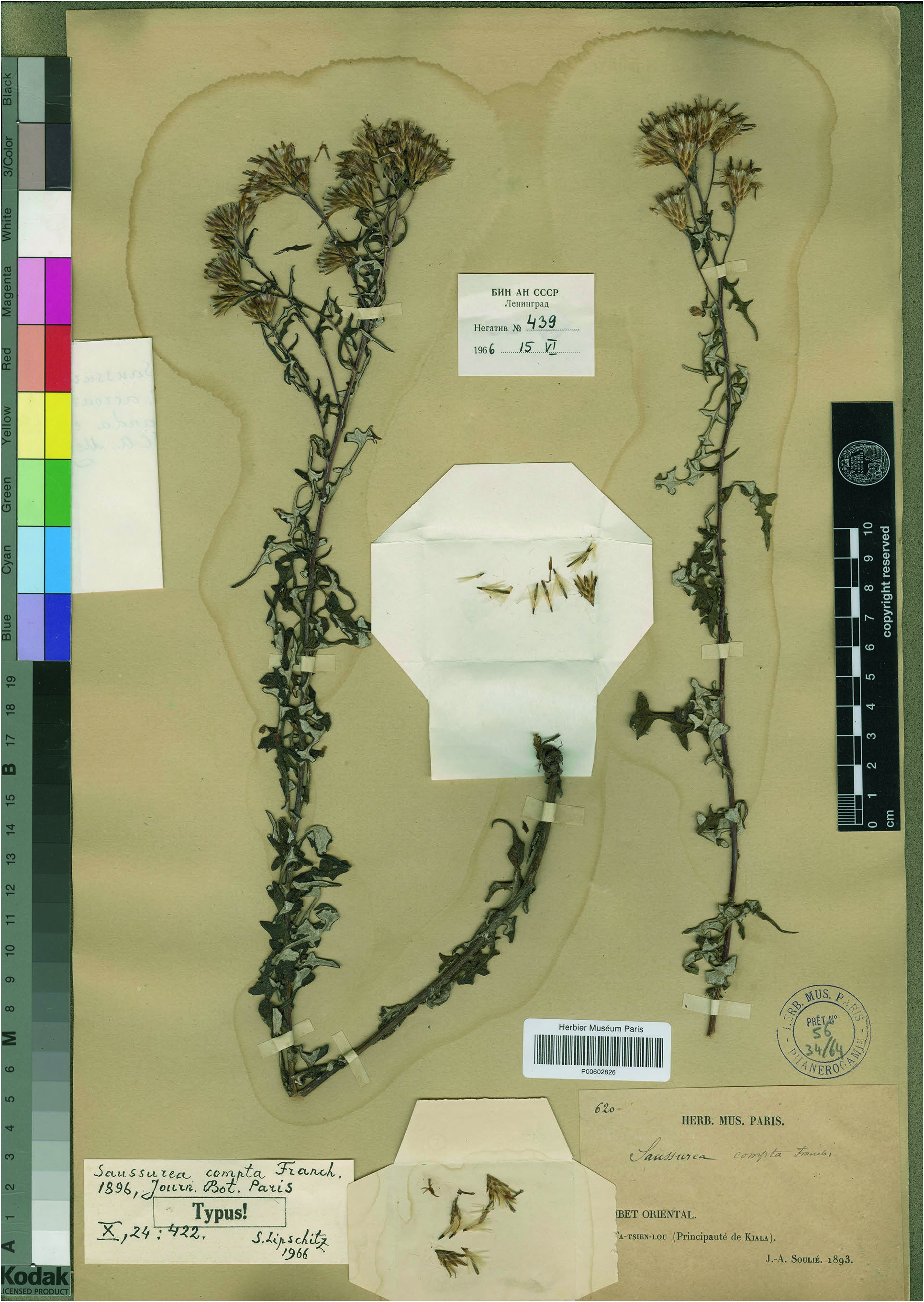
Taraxacum scanicum, commonly known as Skåne Dandelion, is a species of the Asteraceae family. It is distributed across several European countries, including Great Britain, Belgium, Latvia, France, Moldova, Liechtenstein, Ukraine, Lithuania, Germany, Norway, Netherlands, Estonia, Sweden, Austria, Croatia, Denmark, Poland, Switzerland, Finland, and Hungary. This species was first described in 1911 by Dahlst. The plant is small to medium-sized, with dark green, almost hairless leaves that are narrowly oblanceolate in shape and typically 7-12 cm long. The leaves have 4-6 pairs of lateral lobes, with the inner leaves having dissected and toothed distal margins. The outer leaves have triangular lobes with toothed or incised edges. The petioles are purple, and the scapes are often purple-brownish and hairy.
Description
Taraxacum scanicum is characterized by its small to medium size, with plants typically 10-20 cm tall. The leaves are dark green, almost glabrous, and 7-12 cm long, with a narrow oblanceolate shape. The leaves are usually 6-7 times longer than wide and have 4-6 pairs of lateral lobes. The inner leaves have dissected and toothed distal margins, while the outer leaves have triangular lobes with toothed or incised edges. The petioles are purple and unwinged. The scapes are as long as or longer than the leaves, hairy, and often suffused with a purple-brownish color. The capitulum is convex, 3.0-3.5 cm in diameter, with a yellow color and red-grey outer strips. The achenes are brown-red, with slender features.
Other common names
Skåne Dandelion
Distribution
Great Britain · Belgium · Latvia · France · Moldova · Liechtenstein · Ukraine · Lithuania · Germany · Norway · Netherlands · Estonia · Sweden · Austria · Croatia · Denmark · Poland · Switzerland · Finland · Hungary · Czech Republic · Channel Is. · Northwest European Russia · Luxembourg · Krym · Italy · Central European Russia · SE · NO · DK