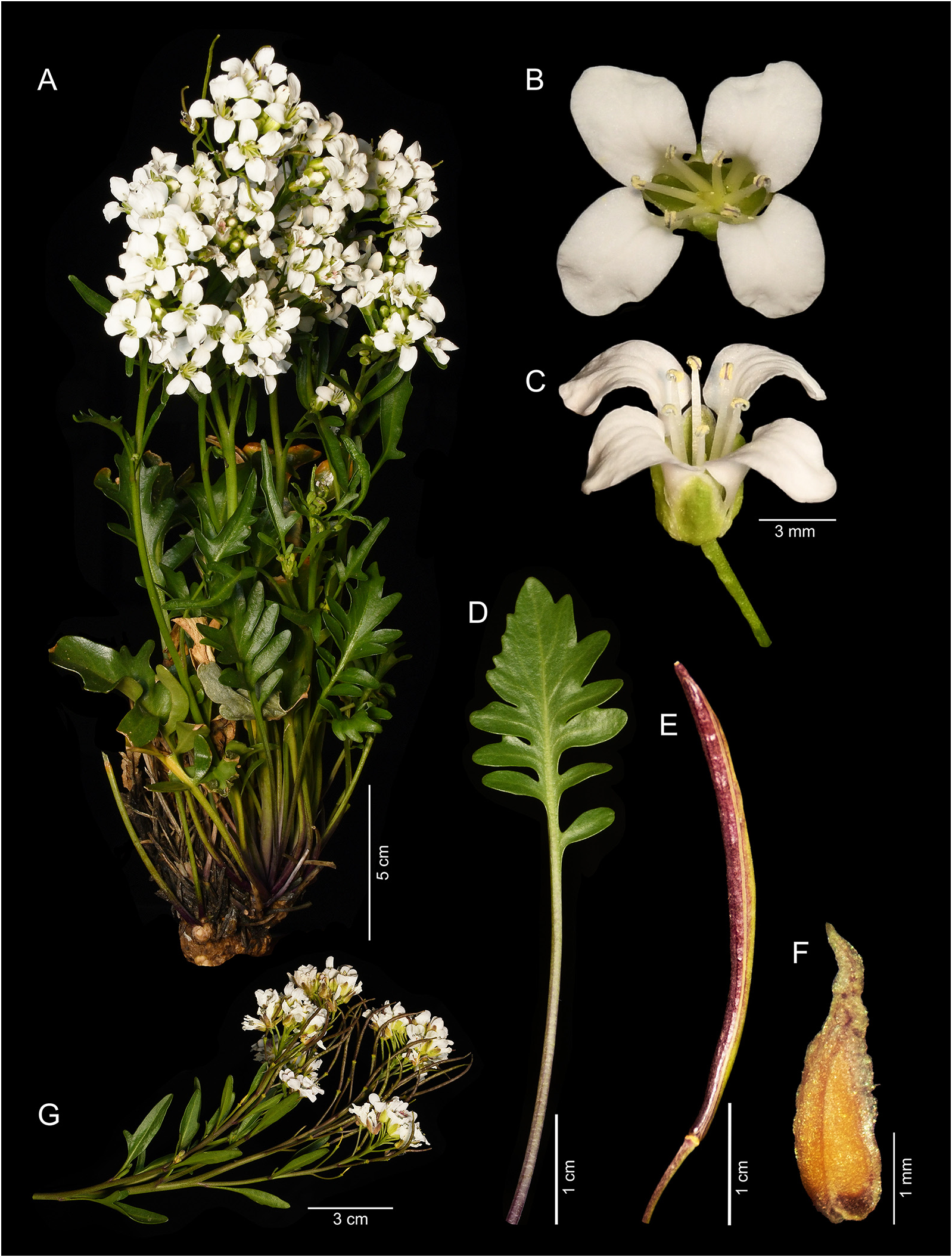
Sisymbrium luteum
Sisymbrium luteum (Maxim.) O.E.Schulz

Sisymbrium luteum is a species in the Brassicaceae family, first described in 1919 by O.E. Schulz, based on earlier work by Maxim. It is distributed across Norway, Sweden, parts of China including North-Central and Qinghai regions, as well as Japan, Korea, Manchuria, and Primorye.
Description
Sisymbrium luteum belongs to the Brassicaceae, a family commonly known as the mustard family. The species is native to several regions in Europe and Asia, including Norway, Sweden, parts of China, Japan, Korea, Manchuria, and Primorye. It was first formally described in 1919 by O.E. Schulz, building upon the earlier taxonomic work of Maxim. This plant is part of the genus Sisymbrium, which includes several species of flowering plants known for their distinctive seed pods and yellow or white flowers. The species is documented in a range of temperate climates, reflecting its adaptability to various environmental conditions across its native range.
Distribution
Norway · Sweden · SE · NO · China North-Central · Japan · Korea · Manchuria · Primorye · Qinghai
Synonyms
Sisymbrium brassicoidesHesperis luteaSisymbrium luteum var. luteum