silverleaf desmodium
Desmodium uncinatum (Jacq.) DC.

Desmodium uncinatum, commonly known as silverleaf desmodium, is a flowering plant in the Fabaceae family, native to Latin America. It has been introduced as a forage crop in various regions of Africa, India, New Guinea, Australia, and Hawaii. While primarily used as fodder, it also serves in pasture management, deferred feeding, cut-and-carry systems, hay production, ground cover, and mulching. However, it is regarded as invasive in Australia and Hawaii due to its aggressive growth and potential to outcompete native vegetation.
Description
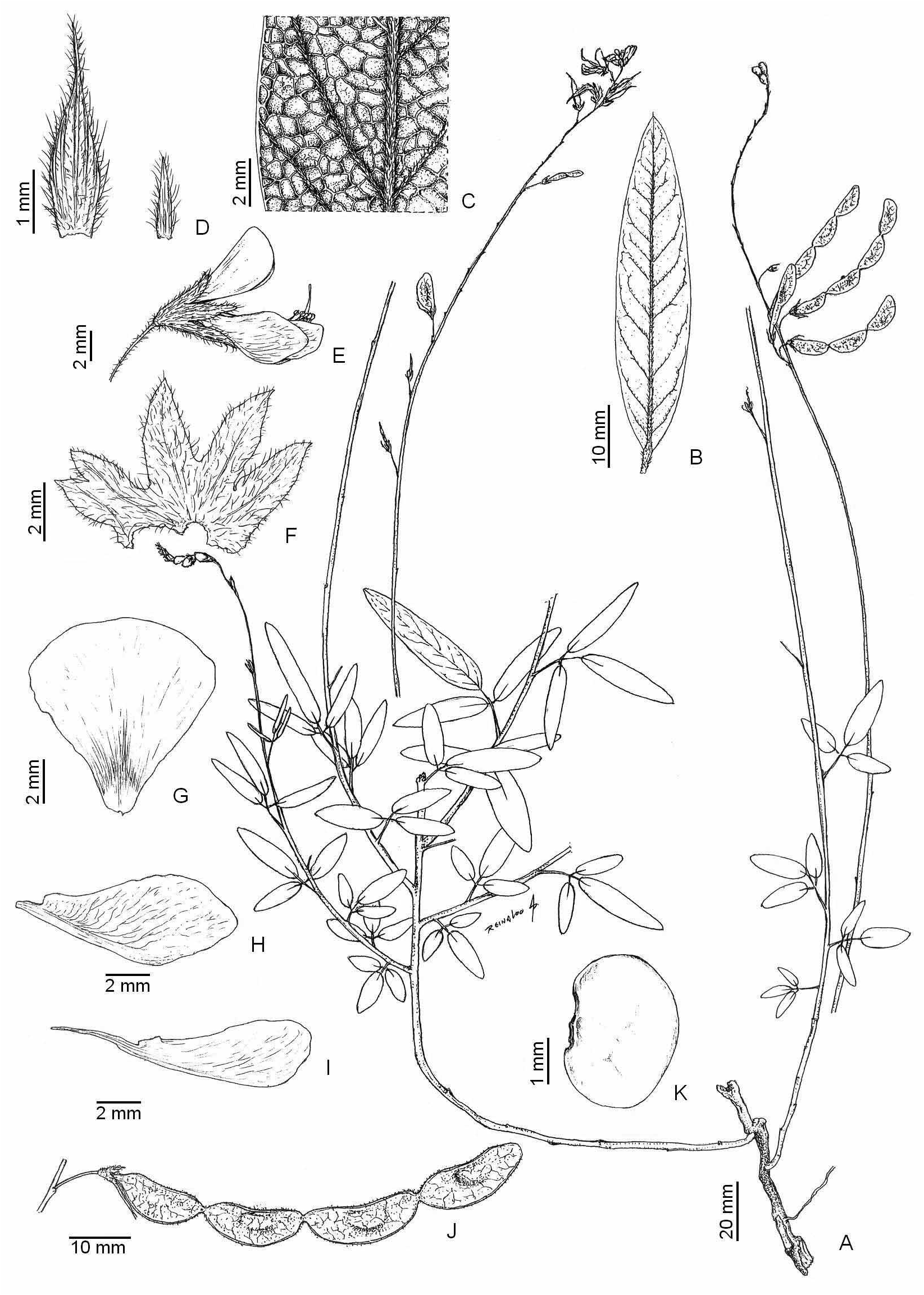
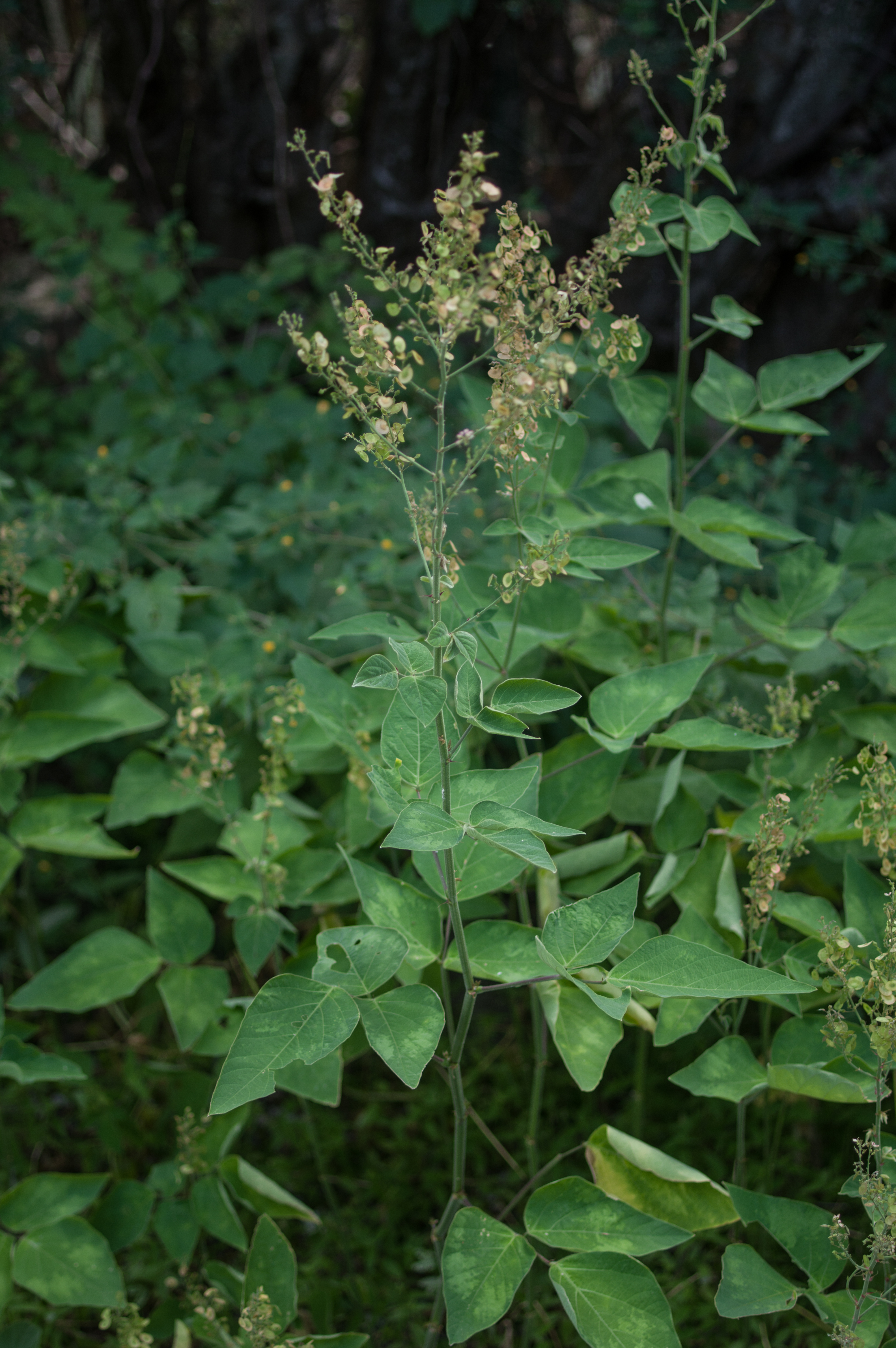
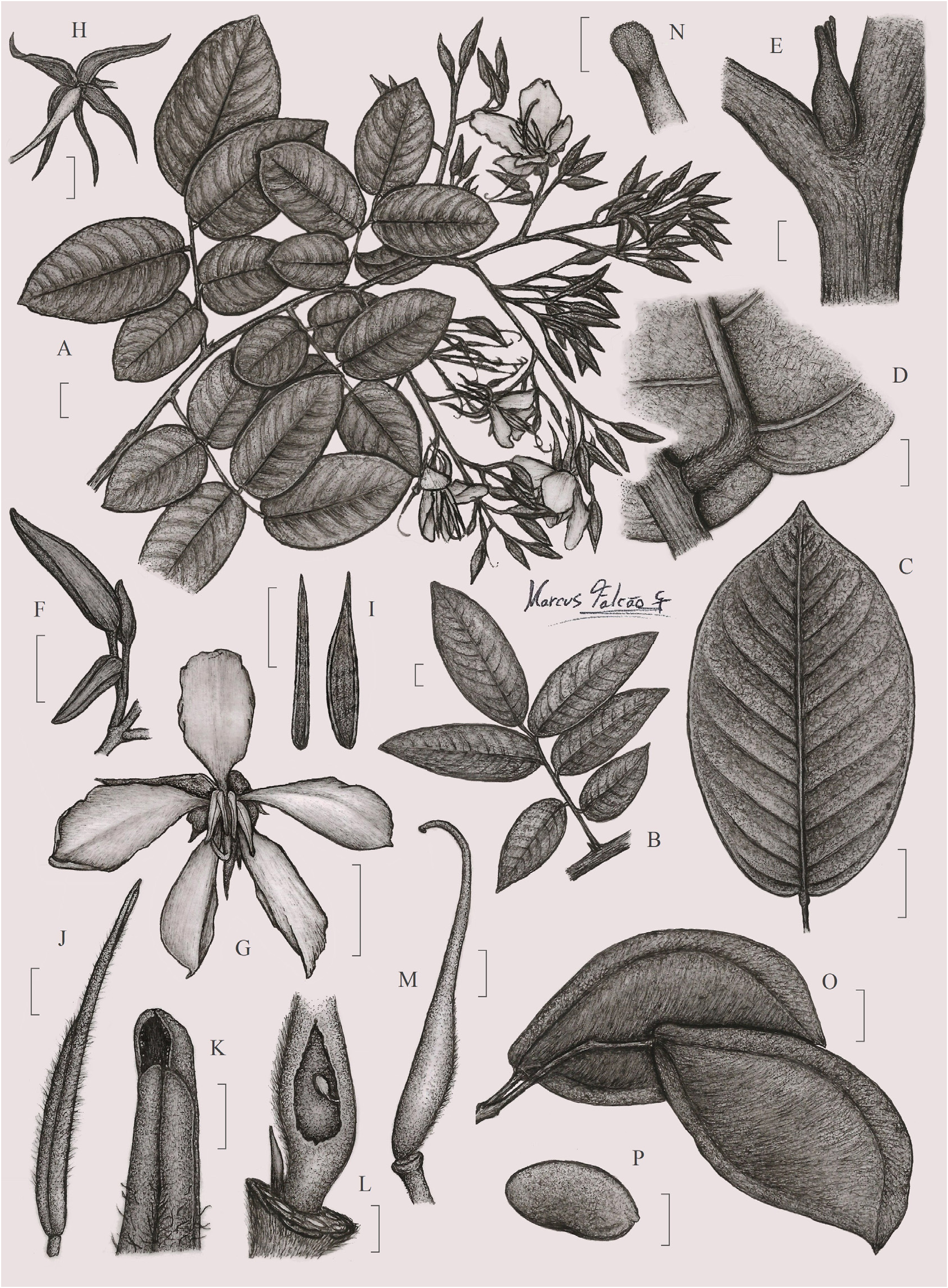
Desmodium uncinatum is a subshrub that grows prostrate to semi-climbing, with a slender, striated stem densely covered in hooked hairs. The leaves are trifoliolate, with the terminal leaflet lanceolate, acute, and mucronate, and a silvery stripe along the midvein on the upper surface. The lower surface is light green and densely hairy. The inflorescence is a pseudoraceme, with pink flowers and a bilabiate calyx. The standard petal is obovate with two light green nectar guides at the base, while the keel and wing petals are narrower and falcate. The plant flowers from October to December and fruits in December.
Habitat
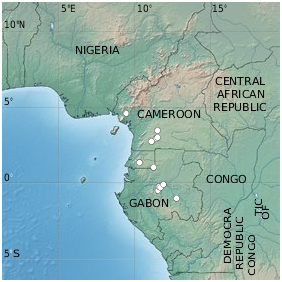
Silverleaf desmodium is native to regions in South America, including Brazil, Colombia, and surrounding areas, and has been introduced to parts of Africa, India, New Guinea, and Australia. It thrives in a range of habitats, often in disturbed areas, pastures, and along roadsides. It is adapted to tropical and subtropical climates and can tolerate a variety of soil conditions, though it prefers well-drained soils.
Cultivation
Desmodium uncinatum is cultivated as a forage crop due to its high nutritional value and ability to fix nitrogen in the soil. It is often used in pasture systems, particularly in tropical and subtropical regions, and can be grown in cut-and-carry systems for livestock feeding. It is propagated through seeds and can be established in pastures or mixed with other forage species. The plant requires moderate to high rainfall and thrives in warm climates. However, it is important to manage its growth to prevent it from becoming invasive in non-native regions.
Uses
The primary use of Desmodium uncinatum is as a forage crop for livestock, providing high-quality feed in pastures and cut-and-carry systems. It is also used for deferred feeding, hay production, and as a ground cover to prevent soil erosion. In some regions, it is used as mulch to improve soil fertility. However, due to its invasive potential in areas like Australia and Hawaii, its use is often regulated or discouraged in these regions to prevent ecological disruption.
Other common names
silverleaf desmodiumSpanish tick-clover
Distribution
BR · Parque Nacional Natural Puracé | Parque Nacional Natural Los Nevados | Parque Nacional Natural Tayrona | Parque Nacional Natural Sierra de la Macarena · TW · ZA · NU · WS · KM · FM · Rionegro | Suaita · MW · ZW · TZ · IN · AO · MG · PG · ZM · KE · AU · Antioquia, Boyacá, Caldas, Cauca, Chocó, Cundinamarca, Huila, Magdalena, Nariño, Quindío, Santander, Tolima, Valle, Vichada · SV · HN · MZ · TO · Eua · Angola · Argentina Northeast · Argentina Northwest · Bolivia · Brazil Northeast
Synonyms
Desmodium pilosiusculumDesmodium hjalmarsoniiMeibomia hjalmarsoniiMeibomia uncinataHedysarum uncinatumDesmodium sandwicenseDesmodium intortum var. pilosiusculumMeibomia limensis var. pilosiusculaMeibomia pilosiusculaHedysarum adhaerensHedysarum mexicanumMeibomia sinclairiiDesmodium sinclairiiDesmodium uncinatum var. gracileDesmodium uncinatum var. uncinatumHedysarum virgatum