Senegal date palm
Phoenix reclinata Jacq.

Phoenix reclinata, commonly known as the Senegal date palm or wild date palm, is a species of palm tree in the Arecaceae family. It is native to tropical Africa, the Arabian Peninsula, and Madagascar, and has been introduced to various regions, including Florida, Puerto Rico, Bermuda, Trinidad and Tobago, the Leeward Islands, Tunisia, and Vietnam. The species is adaptable, growing at elevations from sea level to 3000 m in diverse habitats such as rain forest clearings, monsoonal forests, and rocky mountainsides. It is a versatile palm with multiple uses and is currently listed as Least Concern (LC) by the IUCN.
Description
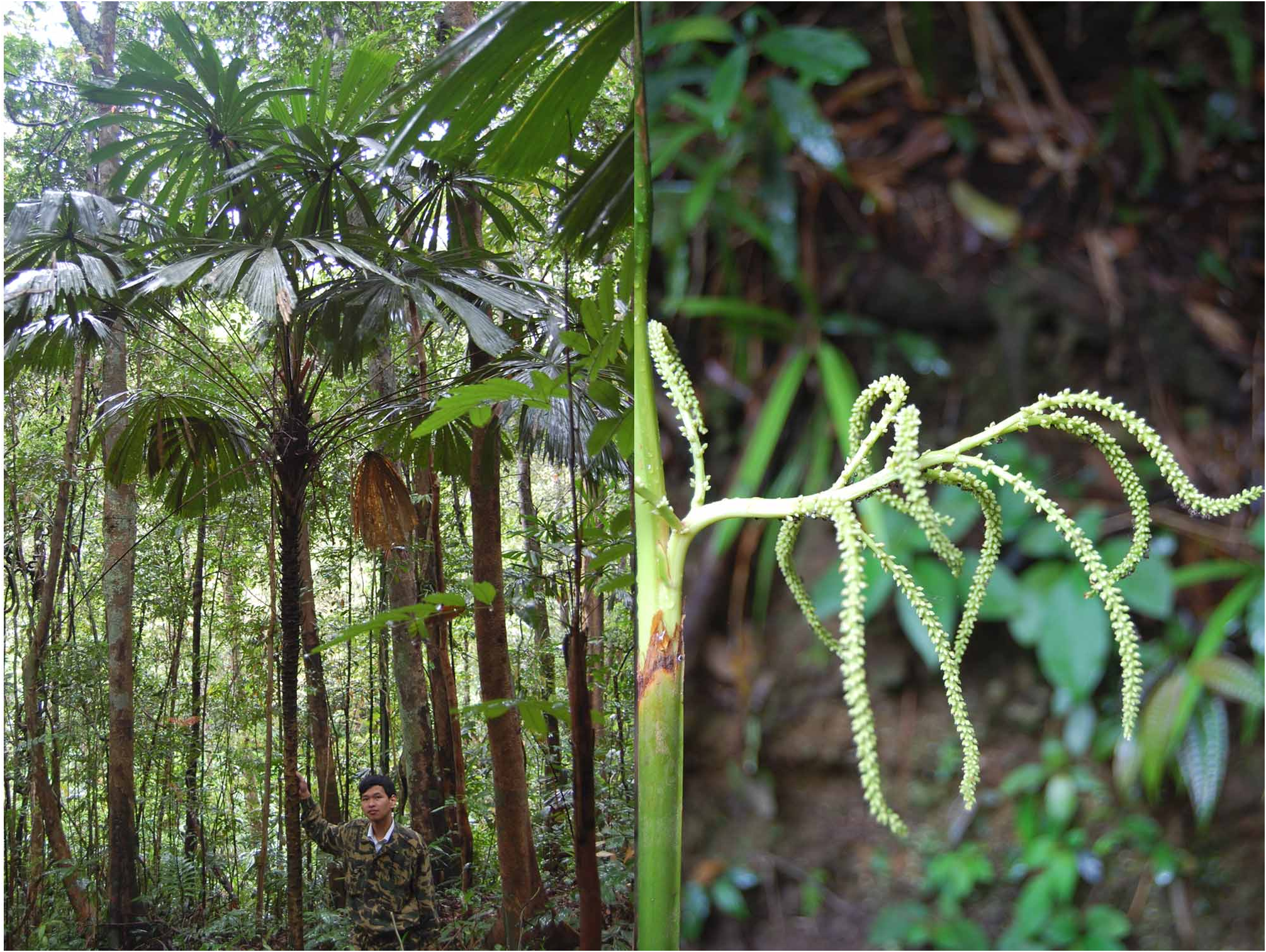
Phoenix reclinata is an arboreal palm tree that typically grows along riverbanks and in floodable lowlands. It is a resilient species that can thrive in a range of environmental conditions. The plant is known for its multiple uses, including as a source of food, materials for crafting artefacts, fibre, and in rituals. In Angola, it is known locally as 'kalolo' in the Kikongo language and 'palmite' in Portuguese. The species is documented in various regions, including the Quiçama National Park, and is considered to be of low conservation concern.
Habitat
The Senegal date palm is found in a wide range of habitats, from lowland riverbanks to high-altitude rocky slopes. It is often associated with wetlands and floodplains, where it can tolerate periodic inundation. The species is also found in rain forest clearings and monsoonal forests, indicating a degree of shade tolerance. Its adaptability allows it to survive in both humid and semi-arid regions, making it a common sight across tropical and subtropical Africa.
Cultivation
Phoenix reclinata is relatively easy to cultivate and is often grown in home gardens and agroforestry systems for its multiple uses. It prefers well-drained soils and can tolerate a range of soil types, including sandy and clay soils. While it can grow in partial shade, it thrives best in full sun. The palm is drought-tolerant once established, making it suitable for cultivation in drier regions. It is also known to withstand some degree of frost, which allows it to be grown in temperate climates with mild winters.
Uses
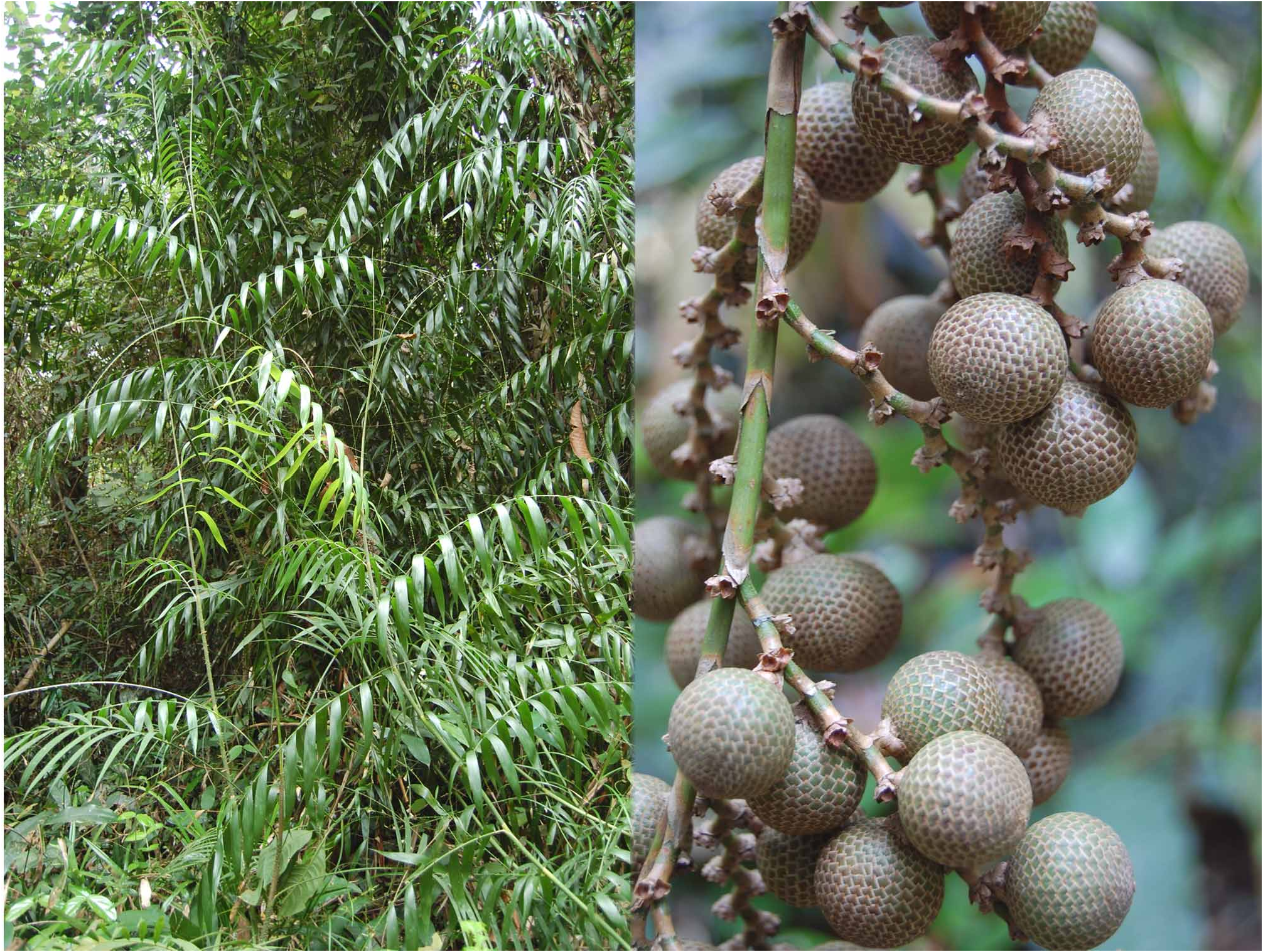
The Senegal date palm has a variety of uses in traditional and modern contexts. The fruits, though smaller than those of the domesticated date palm (Phoenix dactylifera), are edible and used for food. The leaves are used for thatching, weaving, and making baskets and other artefacts. The fibres from the palm are used in crafts and for making ropes. The plant also plays a role in cultural and ritual practices. Its versatility and availability make it an important resource for local communities in its native range.
Other common names
Senegal date palmWild Date Palm
Distribution
KM · SR · IN · GY · BM · AU · BR · Antioquia, Cundinamarca, Tolima, Valle · Global · Jardín Botánico de Bogotá · TW · Bogotá, D.C. · conterminous 48 United States · Angola · Benin · Bermuda · Botswana · Burkina · Burundi · Cameroon · Cape Provinces · Caprivi Strip · Central African Repu · Comoros · Congo · Djibouti · Eritrea · Ethiopia · Florida · Gabon
Synonyms
Phoenix abyssinicaPhoenix baoulensisPhoenix comorensisPhoenix djalonensisPhoenix dybowskiiPhoenix equinoxialisPhoenix leonensisPhoenix reclinata var. comorensisPhoenix reclinata var. madagascariensisPhoenix reclinata var. somalensisPhoenix spinosaFulchironia senegalensis