Sea Purslane
Sesuvium portulacastrum (L.) L.

Sesuvium portulacastrum, commonly known as Sea Purslane, is a sprawling perennial herb in the Aizoaceae family. It is widely distributed across coastal and mangrove regions, thriving in sandy clay, coastal limestone, sandstone, tidal flats, and salt marshes. Native to Africa, Asia, Australia, Hawai`i, North America, and South America, it has naturalized in many other regions. This plant is well-adapted to saline and coastal environments and is often found in low-lying, moist areas near the shoreline.
Description
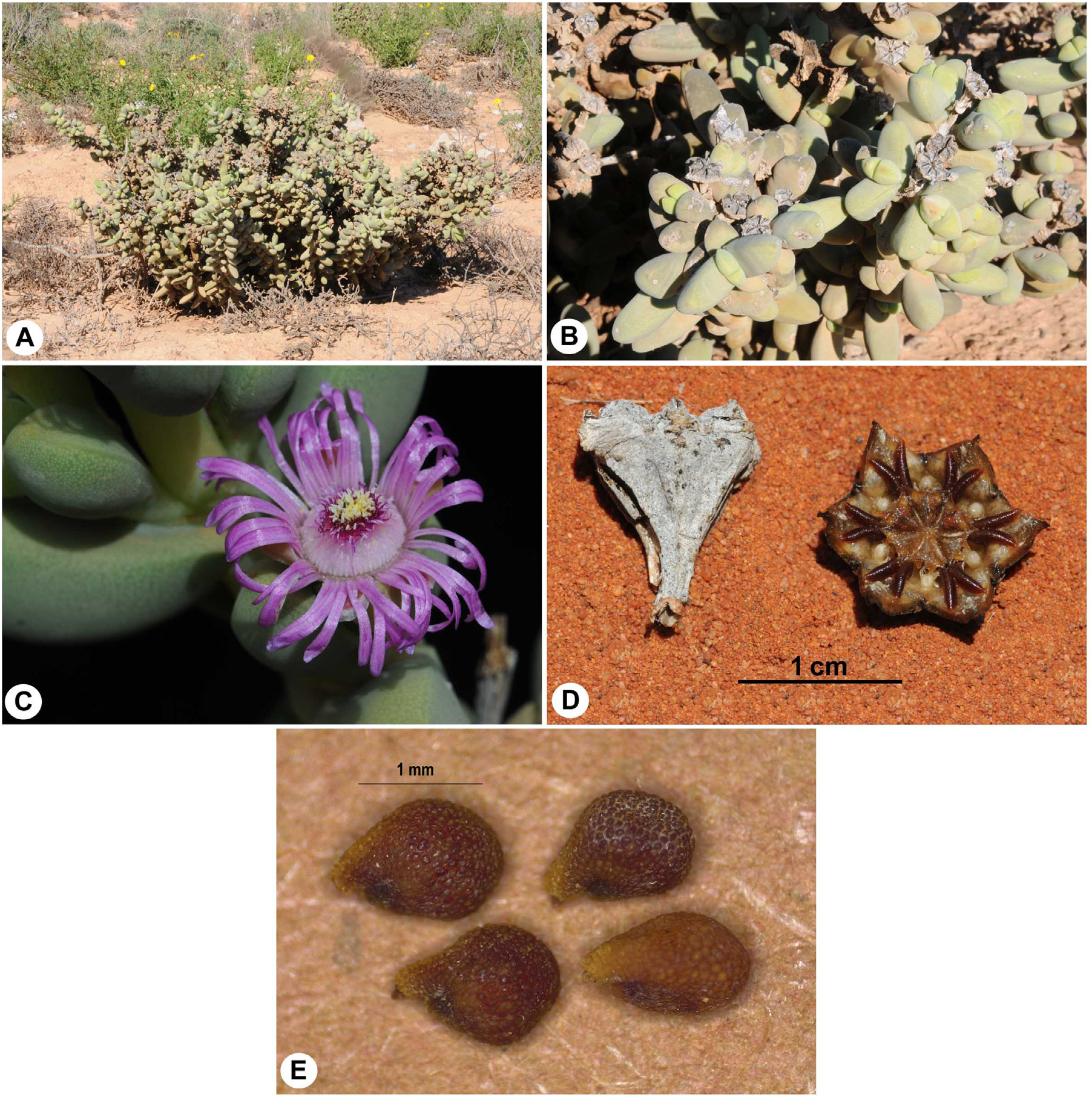
Sesuvium portulacastrum is a low-growing, prostrate perennial herb that spreads across the ground. It is commonly found in coastal sands and mangrove fringes, where it forms dense mats. The plant has fleshy, succulent leaves and small, inconspicuous flowers. It is well-suited to saline and brackish conditions, making it a common sight in intertidal zones and coastal wetlands. Its ability to tolerate high salinity and frequent inundation contributes to its success in these challenging environments.
Habitat
Sesuvium portulacastrum is typically found in coastal and estuarine habitats, including sandy beaches, tidal flats, salt marshes, and the edges of mangrove forests. It is well-adapted to saline soils and can tolerate periodic flooding by seawater. The plant is often seen in low-lying, moist areas where it can form extensive carpets. It is also capable of growing in disturbed areas and can be found in anthropogenic habitats such as roadsides and coastal dunes.
Cultivation
Sesuvium portulacastrum is not commonly cultivated for ornamental purposes, but it can be grown in coastal gardens and salt-tolerant landscapes. It prefers full sun and well-drained, sandy or saline soils. The plant is drought-tolerant once established and requires minimal maintenance. It is best suited for regions with mild winters and warm summers. Propagation can be done through seeds or cuttings, though it is more commonly spread through natural means in its native range.
Uses
Sesuvium portulacastrum has limited economic value but is sometimes used in traditional medicine for its purported anti-inflammatory and astringent properties. The plant is also used in ecological restoration projects to stabilize coastal soils and prevent erosion. Its dense growth habit helps to bind the soil and reduce the impact of wave action. In some regions, it is also used as a forage plant for livestock, though its palatability is generally low.
History
Sesuvium portulacastrum was first described by Carl Linnaeus in 1759 in his work Species Plantarum. The species was later reclassified by Linnaeus himself, leading to the current scientific name Sesuvium portulacastrum (L.) L. The plant has a long history of being associated with coastal and estuarine environments, and its widespread distribution is a result of both natural dispersal and human activity. It has been introduced to many regions outside its native range, where it has become naturalized in coastal areas.
Curiosities
One interesting aspect of Sesuvium portulacastrum is its ability to thrive in highly saline environments. It is often one of the first plants to colonize newly formed coastal areas or disturbed sites. The plant's fleshy leaves help it retain water and reduce salt stress, allowing it to survive in conditions that are inhospitable to many other species. Additionally, its small, inconspicuous flowers are adapted for wind pollination, which is common in coastal plants where insect pollinators are scarce.
Other common names
Sea PurslaneShoreline Purslaneshoreline sea-purslanesea-purslaneSeaside purslaneshoreline seapurslane
Distribution
Portugal Continental · BR · Langkawi · Vía Parque Isla de Salamanca | Parque Nacional Natural Tayrona · TW · CL · SA · AE · Belgium · Walloon Region · France · The Netherlands · Great Britain · PT · Israel · Portugal · ES · OM · Antioquia, Atlántico, Bolívar, Chocó, La Guajira, Magdalena · JP · Atacama Region |Coquimbo Region |Valparaíso Region |O'Higgins Region |Maule Region |Biobío Region |Araucanía Region |Los Lagos Region · Global · Alabama · Aldabra · Andaman Is. · Angola · Argentina Northeast · Argentina Northwest · Argentina South · Aruba
Synonyms
Pyxipoma polyandrumTrianthema griseumTrianthema polyandrumSesuvium spathulatumSesuvium distylumSesuvium eduleSesuvium sessiliflorumSesuvium repensSesuvium portulacaSesuvium parviflorumSesuvium longifoliumSesuvium pedunculatumSesuvium uvifoliumPortulaca portulacastrumAizoon canarienseAizoon montevidenseHalimus maritimaHalimus portulacastrumSesuvium microphyllumTrianthema americanumPortulaca portulacastrumSesuvium portulacastrum f. albiflorumSesuvium portulacastrum var. griseumSesuvium portulacastrum var. pedunculatumSesuvium portulacastrum var. revolutumSesuvium portulacastrum var. subsessileTrianthema portulacastrum var. hildebrandii