Sakaki
Cleyera japonica Thunb.

Cleyera japonica, commonly known as sakaki, is an evergreen tree native to Japan, Taiwan, China, Myanmar, Nepal, and northern India. It can grow up to 10 m tall, with dark green, leathery leaves and cream-white, scented flowers that bloom in early summer. The tree produces red berries that turn black when ripe. It is often found in the second layer of evergreen oak forests and holds cultural significance in Japanese Shintō, where it is used in shrine offerings.
Description
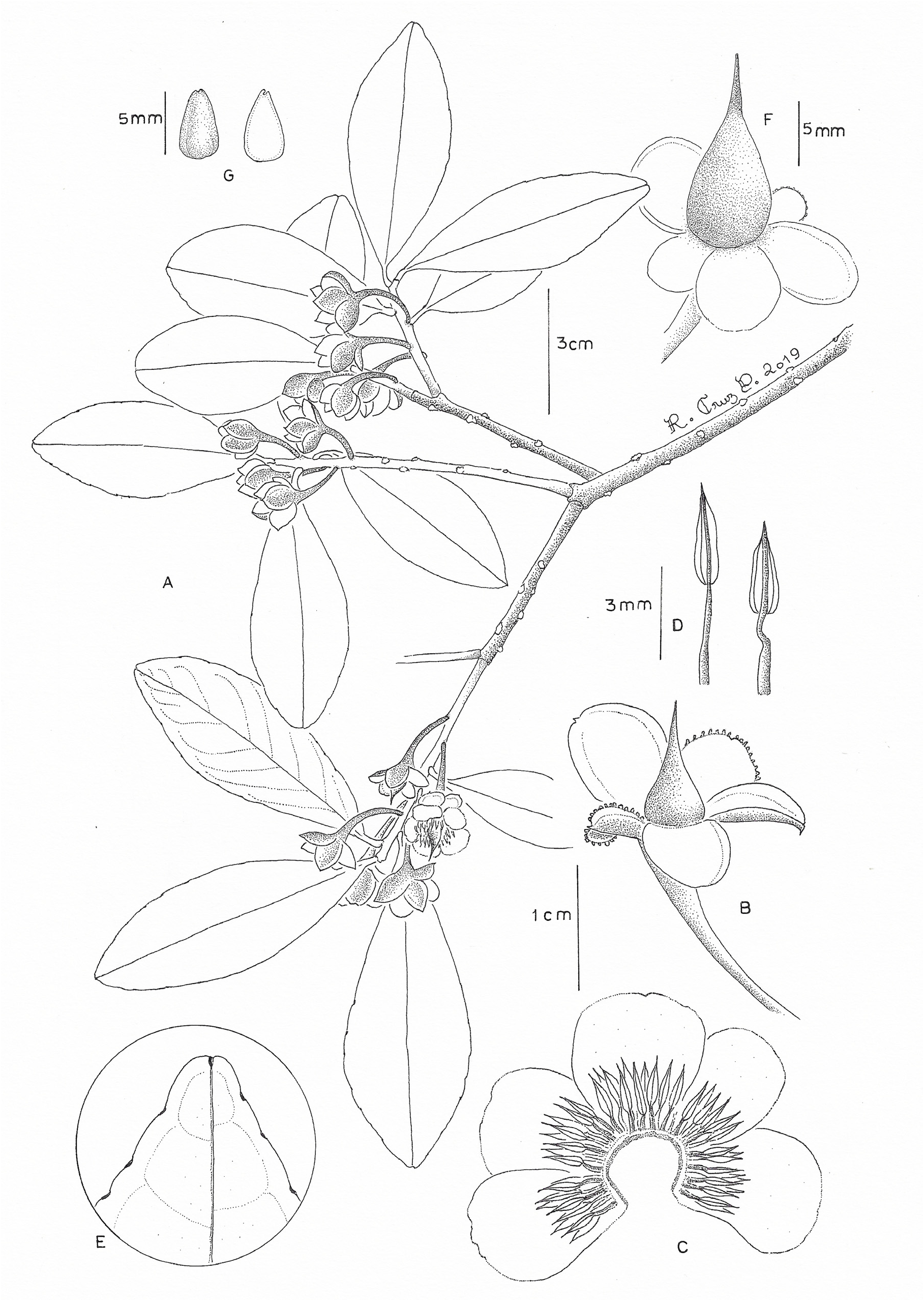
Cleyera japonica (Thunb.) belongs to the family Pentaphylacaceae and is widely distributed in regions including Japan, China, India, and Southeast Asia. It is characterized by its smooth, oval leaves that are 6–10 cm long, with a dark green upper surface and yellowish-green underside. The tree has a smooth, dark reddish-brown bark. Small, fragrant, cream-white flowers appear in early summer, followed by red berries that mature to black. Sakaki plays an ecological role in evergreen oak forests and is culturally significant in Shintō, where it is used in religious ceremonies and offerings such as Tamagushi and masakaki.
Other common names
Sakaki
Distribution
conterminous 48 United States · Assam · Bangladesh · China South-Central · China Southeast · East Himalaya · Japan · Korea · Myanmar · Nansei-shoto · Nepal · Philippines · Taiwan · Thailand · Tibet · Vietnam · West Himalaya
Synonyms
Adinandra japonicaDupinia japonicaTernstroemia japonicaMokofua japonicaTaonabo japonicaFreziera ochnaceaMokof japonicaTernstroemia cleyera