poorman's friend
Stylosanthes viscosa (L.) Sw.

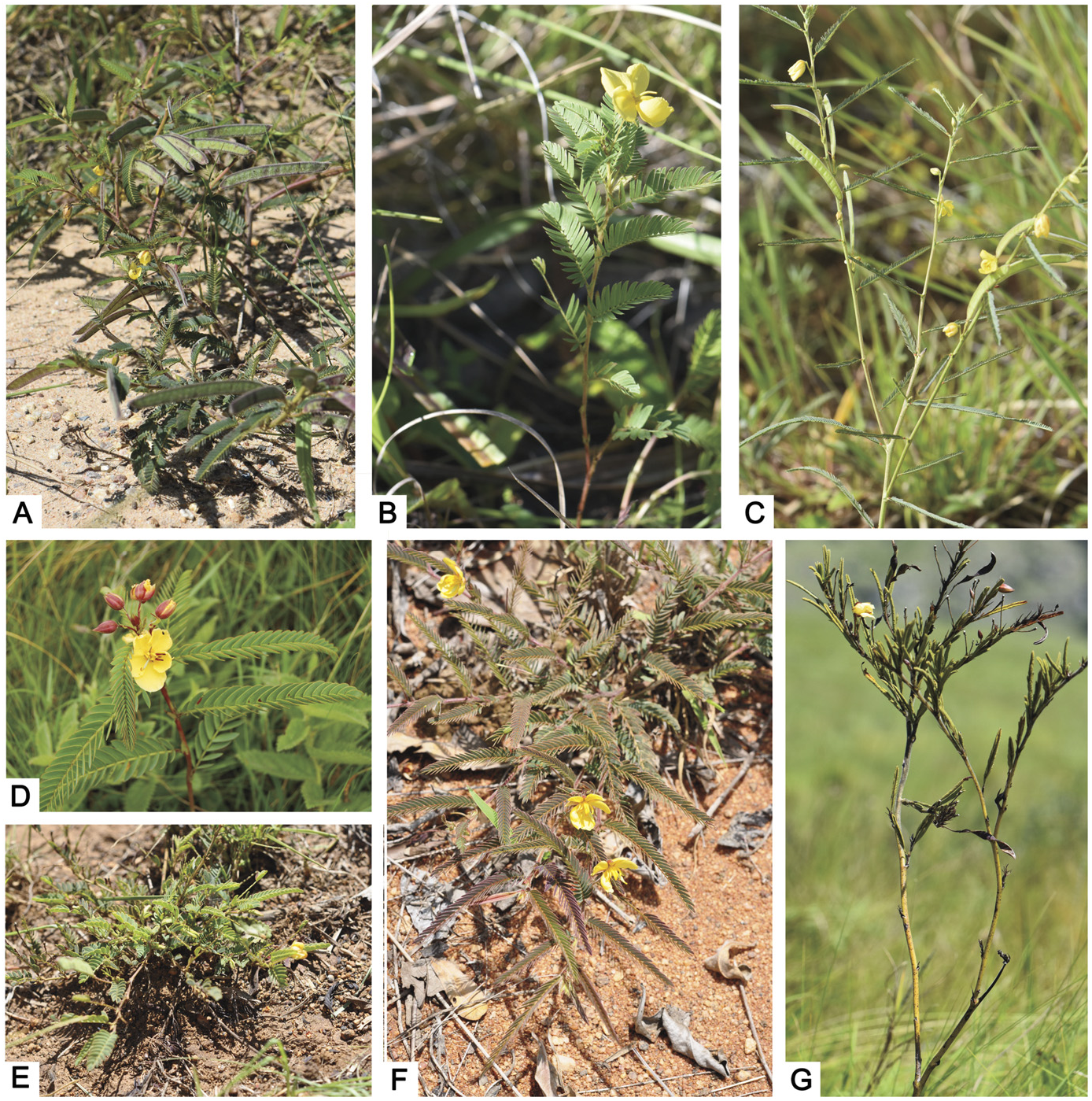
Stylosanthes viscosa, commonly known as poorman's friend, is a subshrub native to a wide range of regions across the Americas, including Brazil, Argentina, and several Central American countries. It is a member of the Fabaceae family, known for its ecological adaptability and its role in semi-arid and rocky ecosystems. The species is characterized by its glandular branches, three-foliolate leaves, and yellow, papilionaceous flowers that produce loment fruits. It is often found in campo rupestre vegetation, a unique plant community of rocky outcrops in Brazil.
Description
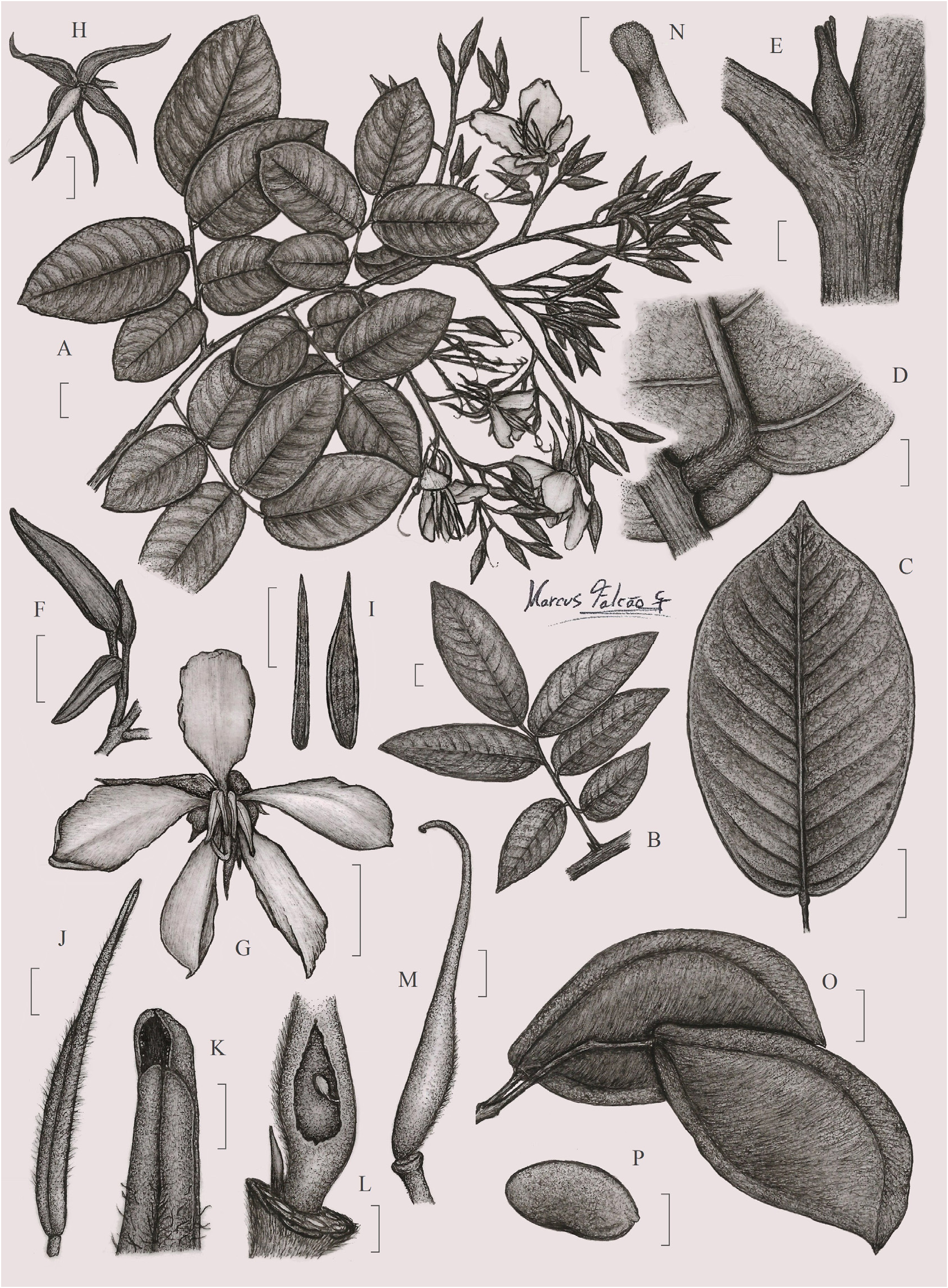
Stylosanthes viscosa is a subshrub with glandular, inermous branches and lacks nectaries. Its stipules are lateral and triangular, and the leaves are imparipinnate with three opposite, elliptic leaflets. The venation is camptodromous, and the leaf surface lacks translucid punctuation. The inflorescence is a spike, either axillary or terminal, bearing sessile, zygomorphic flowers with a gamosepalous calyx of five sepals and a dialypetalous, yellow, papilionaceous corolla of five petals. The androecium is monadelphous and heterodinamous, with longitudinal anthers, and the ovary is superior, sessile, and pauciovulate. The fruit is a loment that is sessile, ovate, and plane, with a glabrous, brown epicarp. The seeds are reniform, plane, with a brown coat and a sub-basal hilum.
Habitat
This species is commonly found in campo rupestre vegetation, a unique ecosystem characterized by rocky outcrops and semi-arid conditions. It is distributed across various regions of Brazil, including the Itacolomi State Park in Minas Gerais, as well as in other parts of South and Central America. It thrives in open, rocky habitats and is adapted to nutrient-poor soils and high solar exposure.
Cultivation
While not widely cultivated, Stylosanthes viscosa is well-adapted to arid and semi-arid environments and can be grown in rocky or well-drained soils. It prefers full sun and is relatively drought-tolerant once established. Its ability to grow in poor soils makes it suitable for use in restoration projects or as a ground cover in xeriscaping. Propagation can be done through seeds, which should be sown in a well-draining medium and kept moist until germination.
Uses
Stylosanthes viscosa is known for its ecological value in rocky and semi-arid habitats, where it contributes to soil stabilization and provides forage for local fauna. It is sometimes referred to as 'poorman's friend' due to its hardy nature and ability to thrive in challenging environments. While not a major crop, it may be used in ecological restoration projects and as a component of native plant gardens in appropriate climates.
Other common names
Viscid pencil-flowerpoorman's friend
Distribution
Itacolomi State Park, Calais, MG, Brazil · BR · AU · Antioquia, Casanare · SV · HN · GT · Hawaii · Argentina Northeast · Belize · Bolivia · Brazil Northeast · Brazil North · Brazil Southeast · Brazil South · Brazil West-Central · Colombia · Costa Rica · Cuba · Dominican Republic · El Salvador · French Guiana · Guatemala · Guyana · Honduras · Jamaica · Mexico Central · Mexico Gulf · Mexico Northeast · Mexico Northwest
Synonyms
Stylosanthes pilosaStylosanthes debilisHedysarum hamatum var. viscosaStylosanthes prostrataStylosanthes glutinosaHedysarum hamatum var. viscosumAstyposanthes viscosaStylosanthes viscosa f. typicaStylosanthes viscosa var. minor