Platymiscium floribundum
Platymiscium floribundum Vogel
Platymiscium floribundum is a tree species native to Brazil, belonging to the Fabaceae family. It is characterized by its glabrous, inermous branches, interpetiolar stipules, and imparipinnate leaves with opposite leaflets. The species produces yellow, papilionaceous flowers and elliptic samaras with black-seeded fruits. It was first described in 1837 by Vogel.
Description
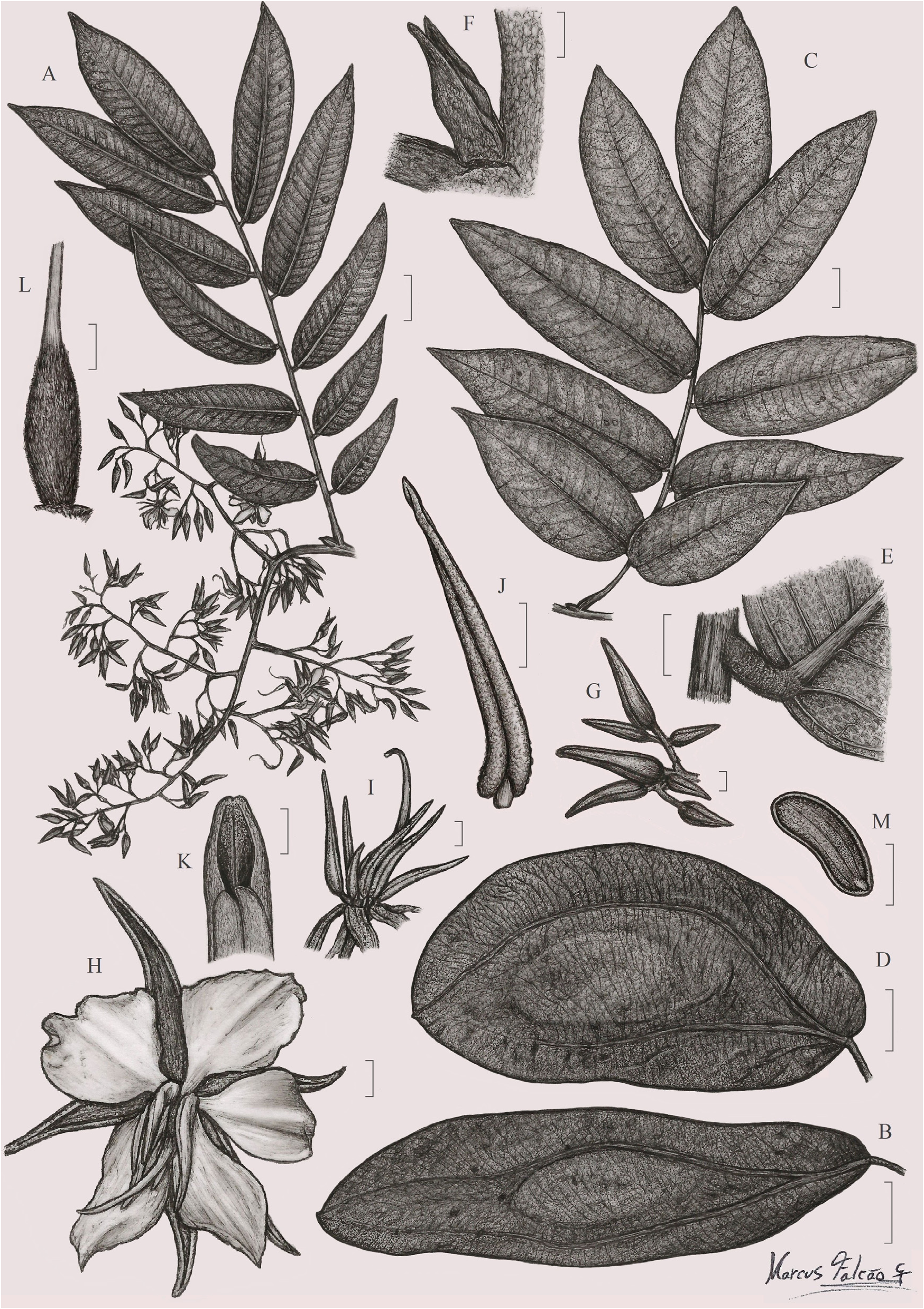
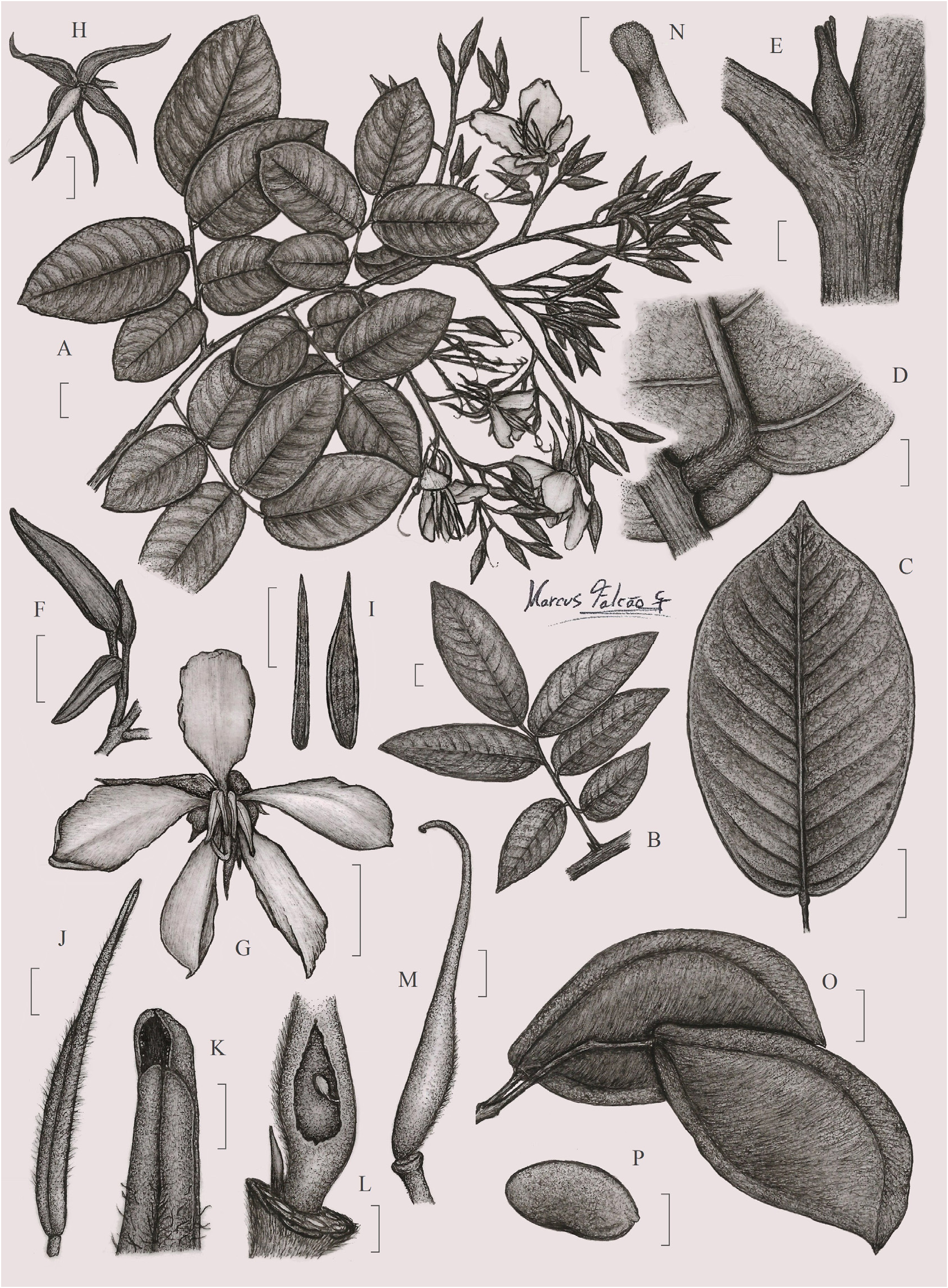
Platymiscium floribundum is a tree with glabrous, unarmed branches and lacks nectaries. The stipules are interpetiolar and triangular in shape. The leaves are imparipinnate with five leaflets arranged oppositely, and the leaflets are ovate-elliptic with brochidodromous venation. The inflorescence is a terminal raceme, with zygomorphic, pedicellate flowers. The calyx is gamosepalous with five sepals, and the corolla is dialypetalous, papilionaceous, and yellow in color, with five petals. The androecium is diadelphous and homodinamous, with longitudinal anthers. The ovary is superior, sessile, and pauciovulate. The fruit is a stipitate samara, elliptic, plane, with a straight margin and glabrous, brown epicarp. The seeds are elliptic, plane, with a black coat and a central hilum.
Habitat
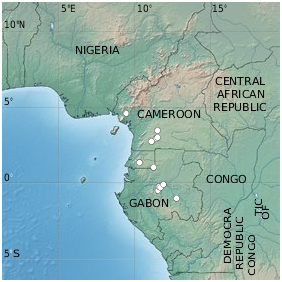
Platymiscium floribundum is native to Brazil and is found in the semi-arid regions of the country, particularly in the Northeast, Southeast, South, and West-Central areas. It is adapted to drier environments and is often associated with vegetation types such as caatinga and other xeric ecosystems.
Cultivation
Cultivation of Platymiscium floribundum is likely limited due to its natural adaptation to semi-arid environments. It would require well-drained soils and low water availability to thrive, similar to its native habitat. Propagation is likely through seeds, which should be sown in a suitable germination medium under warm and dry conditions. Protection from excessive moisture and frost would be necessary for successful growth outside its native range.
Uses
While specific uses of Platymiscium floribundum are not well-documented, as a member of the Fabaceae family, it may contribute to soil nitrogen fixation through symbiotic relationships with rhizobia. It may also serve as a source of timber or have potential in reforestation efforts in semi-arid regions. However, further research is needed to explore its potential economic or ecological applications.
Distribution
BR · Global · Brazil Northeast · Brazil Southeast · Brazil South · Brazil West-Central