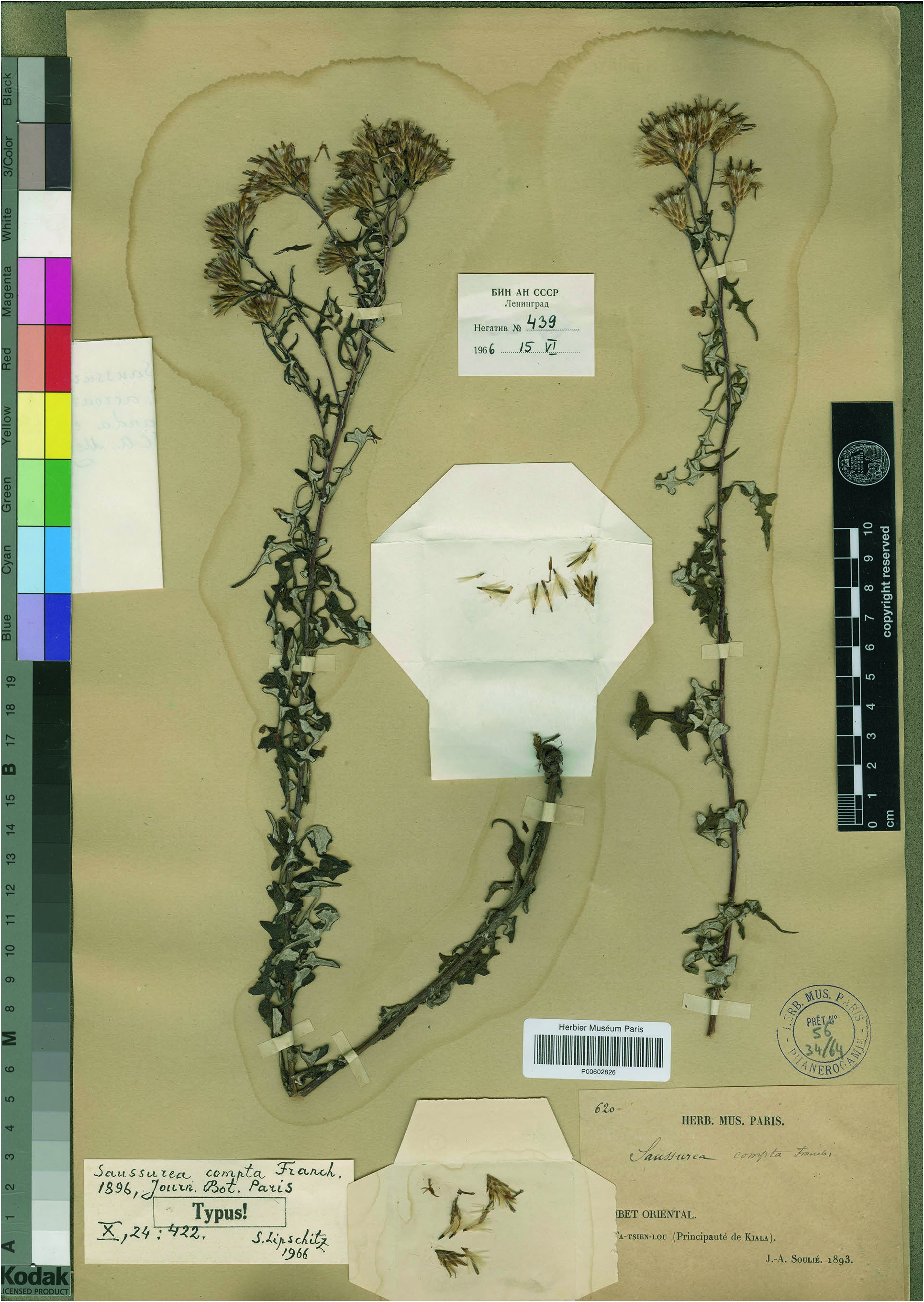
pink hawk's-beard
Crepis rubra L.

Crepis rubra, commonly known as pink hawk's-beard, is a flowering plant species in the Asteraceae family. Native to Europe and parts of the eastern Mediterranean, it has also become naturalized in parts of North America, including the United States. The plant is an annual herb with a slender taproot and distinctive pink or white ligulate flowers. It is known for its ornamental value and has been cultivated in gardens. Its distribution spans across multiple countries in Europe and has extended to other regions due to human activity.
Description
Crepis rubra is an annual herb that grows between 4 and 40 cm in height. It features a thin taproot and a swollen caudex. The flowering stems are scapelike, ranging from ascending to procumbent or erect, and are often tomentose or glabrous. Rosette leaves are narrowly obovate, ranging from 2 to 15 cm in length, with runcinate to entire margins. Cauline leaves are sparse, with the upper ones often reduced to scales. The inflorescence consists of a single head with 40 to 100 flowers. The involucre is cylindrical to campanulate, 11 to 15 mm long, with narrowly ovate outer and inner bracts. The corolla is ligulate, 16 to 17 mm long, and colored pink or white. The achenes are dimorphic, with outer achenes curved and inner achenes straight, both ribbed and with distinct beaks. The pappus is whitish to yellowish, 5 to 8 mm long, and persistent.
Habitat
Crepis rubra is typically found in temperate and Mediterranean climates, often in open, disturbed habitats such as roadsides, fields, and waste areas. It thrives in well-drained soils and is adapted to a wide range of environmental conditions, including both full sun and partial shade. The plant is native to regions such as Bulgaria, France, Italy, Greece, and Turkey, and has been introduced to parts of the United States, where it has become naturalized in certain areas.
Cultivation
Crepis rubra is cultivated for its ornamental value, particularly in gardens where its pink or white flowers add visual interest. It prefers well-drained soils and full sun, though it can tolerate partial shade. The plant is relatively easy to grow from seed and is often used in rock gardens or as a border plant. It is drought-tolerant once established and does not require frequent watering. In cultivation, it is best sown in early spring, and it can be propagated through seeds or by division of the rootstock.
Uses
Crepis rubra is primarily used as an ornamental plant in horticulture due to its attractive pink or white flowers. It is also of interest to botanists and researchers for its morphological characteristics and distribution patterns. While it is not commonly used for culinary or medicinal purposes, it has been studied in botanical and ecological contexts. In some regions, it may be considered a weed due to its ability to naturalize in disturbed areas. Its dimorphic achenes and distinctive floral structure make it a subject of interest in plant systematics and evolutionary studies.
Other common names
Red hawksbeardred hawk's-beardpink hawk's-beardPink Hawk’s-beard
Distribution
Bulgaria · California · France · Italy · Kriti · Greece · Norway · Croatia · Turkey · Montenegro · Albania · East Aegean Is. · DK · FR · SE · NO · conterminous 48 United States · Germany · Great Britain · Switzerland · Yugoslavia
Synonyms
Barkhausia auriculifoliaPicris rubraBarkhausia rubraCrepis auriculifoliaAnisoderis rubraHostia rubraCrepis incarnataHieracioides rubra