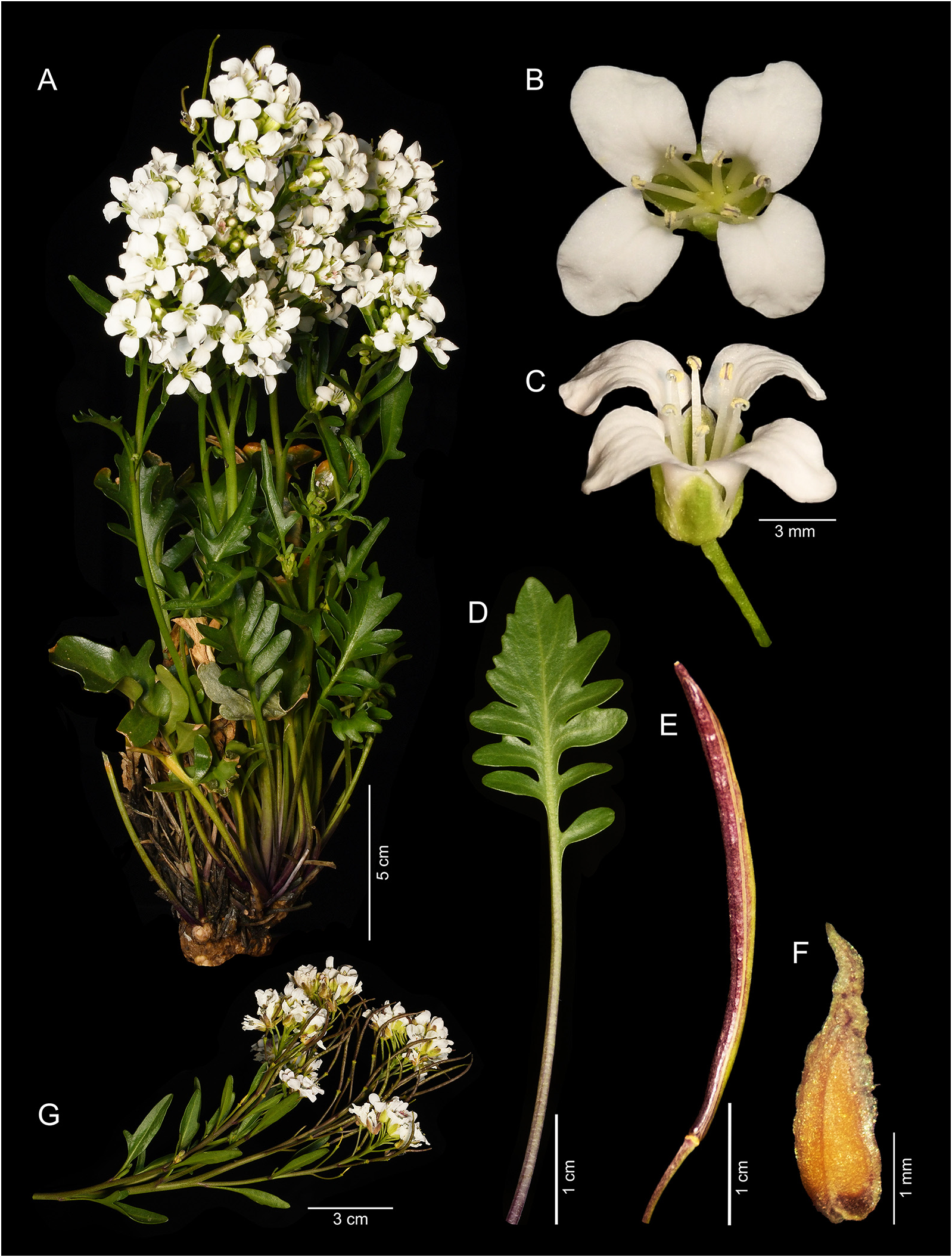
Persian Candytuft
Aethionema grandiflorum Boiss. & Hohen.

Aethionema grandiflorum is a flowering plant in the Brassicaceae family, commonly known as Persian Candytuft. It is native to eastern Turkey, the southern Caucasus, and northern Iran, growing on limestone slopes at elevations between 750 and 2600 m. The species was first described in 1849 by Boissier and Hohen. The holotype consists of two collection sheets, one with handwritten locality, date, and collection number, and the other with a printed label. It has been cultivated as a garden plant and has occasionally naturalized outside its native range. It has received the RHS Award of Garden Merit.
Description
Aethionema grandiflorum is a member of the Brassicaceae family and is known for its ornamental value. It is found in rocky, limestone habitats in its native range, which includes Iran, Iraq, the Transcaucasus, and Turkey. The holotype material was collected and studied by Boissier, and no lectotypification was required as the original material was sufficient. The plant is sometimes grown in gardens and has been recognized for its horticultural merit by the Royal Horticultural Society.
Other common names
Persian stonecressPersian-candytuftPersian Candytuft
Distribution
Iran · Iraq · Transcaucasus · Turkey
Synonyms
Aethionema cordifoliumAethionema pallidiflorumAethionema pulchellum