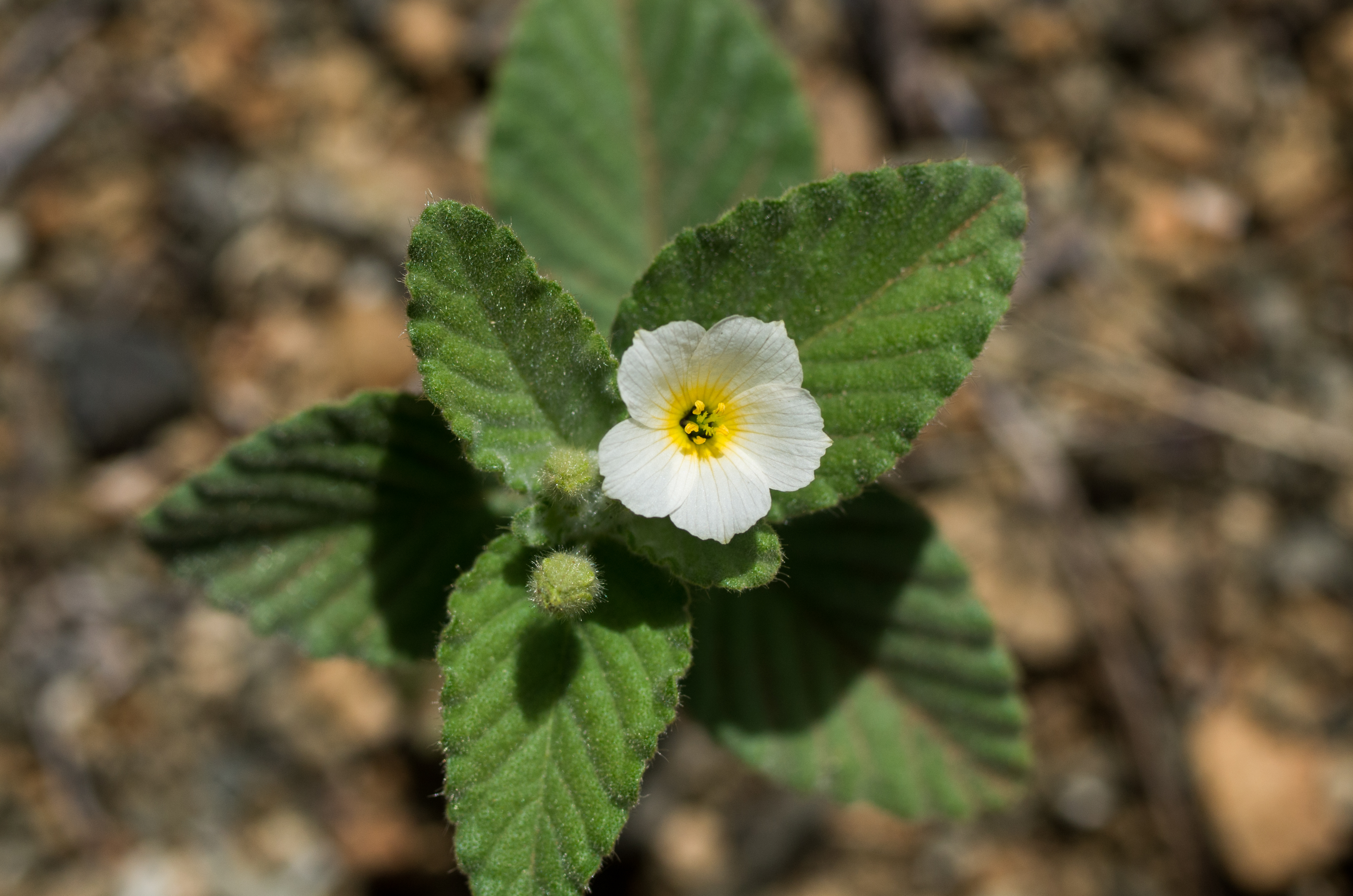
Passiflora acuminata
Passiflora acuminata DC.

Passiflora acuminata is a woody liana native to several regions in South America, including Brazil, Colombia, Ecuador, French Guiana, Guyana, Peru, and Venezuela. It was first described in 1828 by DC. and belongs to the Passifloraceae family. This species is characterized by its glabrous, green stems and distinctive leaf morphology, with ovate to elliptic leaves that are often dark green and lustrous. The plant produces solitary, pendulous flowers with a unique hypanthium and sepals that are white or occasionally lavender in color.
Description
Passiflora acuminata is a climbing vine with stems that are rounded to angular and glabrous. The tendrils are conical and glabrous, and the stipules are linear, with a slightly broader upper part that is irregularly glandular-serrate. The leaves are simple, ranging from 6 to 19 cm in length and 2.2 to 9 cm in width, with a green to dark green color and a lustrous upper surface. The base of the leaves can be cuneate to cordate, and the margin is either entire or glandular-serrulate. The petiole is green to reddish green, slightly canaliculate, and has two sessile, ovate glands at the apex. The flowers are axillary, pendulous, and about 3 cm long, with a hypanthium that is slightly pubescent and has red dots on the outside and is white on the inside. The sepals are oblong, ranging from 20 to 32 mm in length and 6 to 10 mm in width, and are typically white, though occasionally lavender.
Habitat
Passiflora acuminata is found in the tropical regions of South America, particularly in the northeastern and northern parts of Brazil, as well as in Colombia, Ecuador, French Guiana, Guyana, Peru, and Venezuela. It typically grows in forested areas and is adapted to the warm, humid conditions of these regions. The plant is often found in the understory of tropical forests, where it can climb on other vegetation to reach sunlight.
Cultivation
Cultivating Passiflora acuminata requires a warm and humid environment, as it is adapted to tropical climates. It thrives in well-drained, fertile soil and benefits from partial to full shade. The plant can be propagated through cuttings or seeds, though cuttings are generally more reliable. Regular watering is necessary to maintain the moisture levels required for healthy growth. Due to its climbing nature, a support structure such as a trellis or stake should be provided to allow the vine to grow vertically. Fertilization with a balanced, water-soluble fertilizer during the growing season can promote vigorous growth and flowering.
Uses
Passiflora acuminata is primarily of botanical and horticultural interest due to its unique morphology and ornamental value. While it is not widely cultivated for commercial purposes, it may be grown in botanical gardens or by enthusiasts interested in tropical plants. The plant's flowers and foliage make it an attractive addition to shaded gardens or greenhouses. Additionally, the species is of interest to researchers studying the taxonomy and ecology of the Passifloraceae family, as it contributes to the understanding of the diversity and distribution of passionflower species in South America.
Distribution
BR · Brazil Northeast · Brazil North · Colombia · Ecuador · French Guiana · Guyana · Peru · Venezuela
Synonyms
Passiflora gleasoniiPassiflora tolimanaPassiflora metae