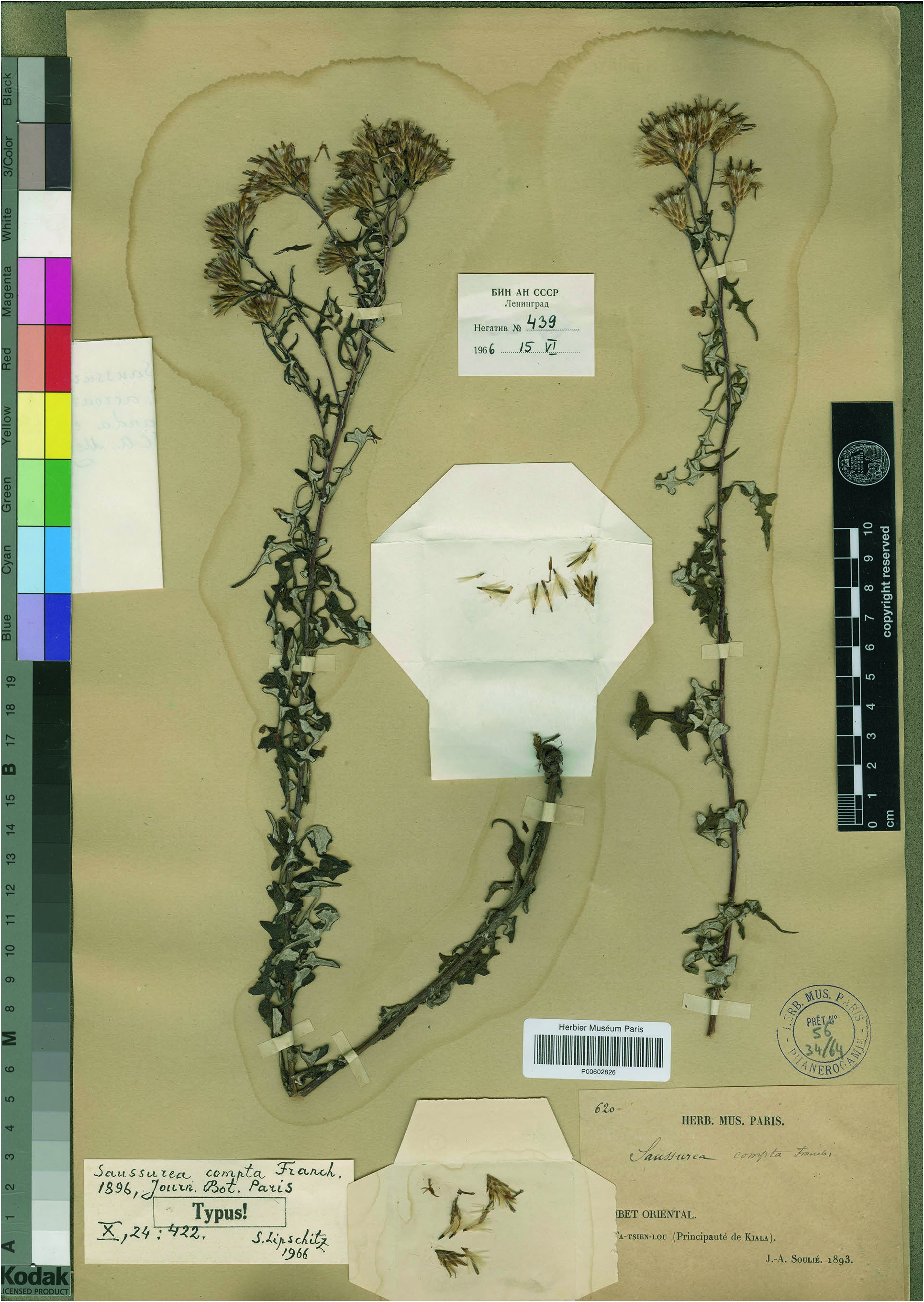
Oriental false hawksbeard
Youngia japonica (L.) DC.

Youngia japonica, known as Oriental false hawksbeard, is a widespread flowering plant in the Asteraceae family. Native to eastern Asia, it has become a common weed in many regions across the globe. The species was first described in 1838 and is characterized by its bright yellow flowers and herbaceous growth. It is known for its adaptability to various habitats and its ability to thrive in disturbed environments.
Description
Youngia japonica is a herbaceous plant that can grow up to 60 cm in height. The plant has a glabrous (smooth) stem and leaves that are primarily basal, with some occurring along the stem. The leaves are oblanceolate or lyrate in shape, with pinnatifid margins and can reach up to 18 cm in length and 4.5 cm in width. The leaves are usually shortly petiolate at the base and may be glabrous or slightly pubescent on both surfaces. The plant produces numerous capitula (flower heads) arranged in cymose corymbs. Each capitulum has an urceolate-cylindric involucre with outer phyllaries that are very small and inner ones that are linear-lanceolate and pubescent on the inner surface. The flowers are orange-yellow, with corollas measuring about 6 mm in length. The achenes are small, compressed, and have 12-14 ribs. The pappus is uniseriate and 3.5 mm long. Chromosome number is n = 8.
Habitat
Youngia japonica is commonly found in disturbed habitats such as roadsides, fields, and waste areas. It is native to eastern Asia, particularly in regions like China and India, and has been introduced to many other parts of the world, including the Americas, the Caribbean, and parts of Africa and Europe. It thrives in a variety of soil types and is often seen in open, sunny locations.
Cultivation
While not typically cultivated for ornamental or agricultural purposes, Youngia japonica can be grown in garden settings where a low-maintenance, self-seeding plant is desired. It prefers full sun and well-drained soil but is adaptable to various conditions. The plant is relatively drought-tolerant once established and can spread easily through seed dispersal.
Uses
Youngia japonica is primarily known as a weed and is not widely used for commercial or medicinal purposes. However, in some traditional practices, it may be used for its potential medicinal properties, though such uses are not well-documented. The plant is also valued for its ecological role in stabilizing disturbed soils and as a food source for certain insects.
Other common names
Oriental false hawksbeardOriental hawksbeard
Distribution
Jiangsu · Gansu · Guangdong · Hunan · Jiangxi · Sichuan · Anhui · Hubei · Fujian · Uttar Pradesh · Guizhou · Shaanxi · Yunnan · Tamil Nadu · Cuba · Cayman Is. · Kentucky · North Carolina · Ogasawara-shoto · Bhutan · Mauritius · KwaZulu-Natal · New Caledonia · Fiji · Nepal · Queensland · Uttaranchal · Virginia · Delhi · Arkansas
Synonyms
Youngia integrifoliaPrenanthes japonicaYoungia ambiguaLactuca taquetiiYoungia fastigiataChondrilla japonicaCrepis japonica subsp. japonicaCrepis japonica var. genuinaCrepis japonica f. japonicaYoungia mauritiana var. mauritianaYoungia fastigiata var. fastigiataCrepis japonica var. japonicaYoungia mauritiana var. integrifoliaPrenanthes striataCrepis japonicaChondrilla multifloraYoungia striataPrenanthes fastigiataCrepis taquetiiYoungia mauritianaLactuca microspermaYoungia poosiaYoungia fastigiata var. luxuriansYoungia japonica var. japonicaYoungia napiferaYoungia lyrataYoungia runcinataYoungia gracilisPrenanthes multifloraYoungia formosana