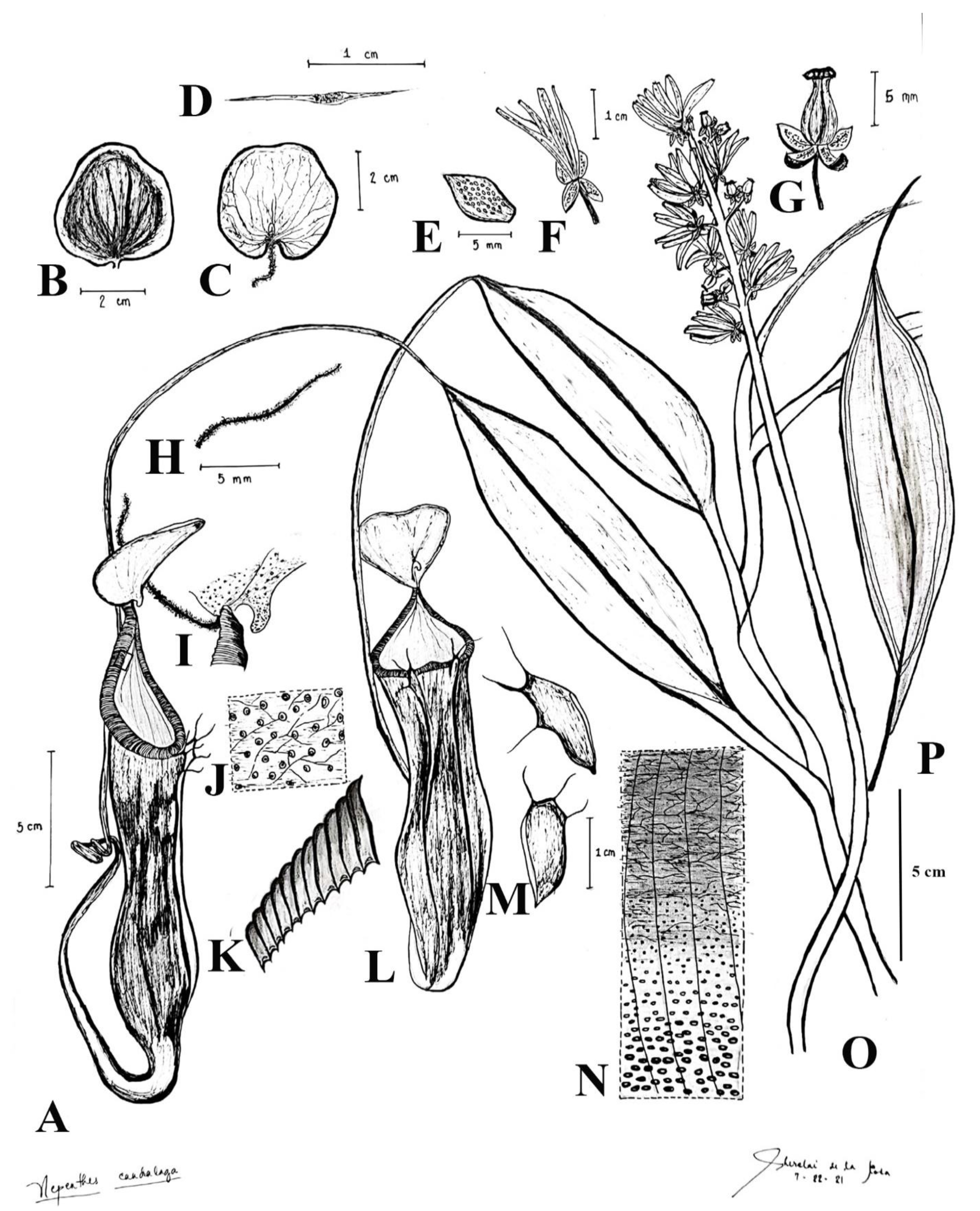
Nepenthes sanguinea
Nepenthes sanguinea Lindl.

Nepenthes sanguinea is a large and vigorous pitcher plant species native to Peninsular Malaysia and southernmost Thailand. It grows at altitudes between 300 and 1,800 metres. This species is primarily terrestrial but can also grow as an epiphyte in the wet biome of upper montane forests. The pitchers vary in height from 10 to 30 cm and display a range of colors, including green, yellow, orange, and red. The interior of the pitchers is typically speckled with its two main colors. The species was introduced to Victorian Britain around 1847 by Thomas Lobb through the Veitch Nurseries.
Description
Nepenthes sanguinea is a member of the family Nepenthaceae and was formally described in 1849. It is distributed across Southern Asia, including Malaya and Thailand. The plant is known for its variability in pitcher coloration and size, which reflects its adaptability to different environmental conditions. Its ability to grow both terrestrially and as an epiphyte contributes to its ecological flexibility. The species is part of the genus Nepenthes, a group of carnivorous plants known for their specialized pitcher structures used to trap and digest insects.
Distribution
Southern Asia · Global · Malaya · Thailand
Synonyms
Nepenthes pumila