Myroxylon peruiferum
Myroxylon peruiferum L.f.

Myroxylon peruiferum, commonly known as quina, is a tree species in the Fabaceae family, native to tropical forests of North and South America. It is characterized by its arboreal habit, imparipinnate leaves with alternate leaflets, white flowers, and samara-type fruit. The species is widely distributed across various regions, including parts of Brazil, Mexico, and Central America.
Description
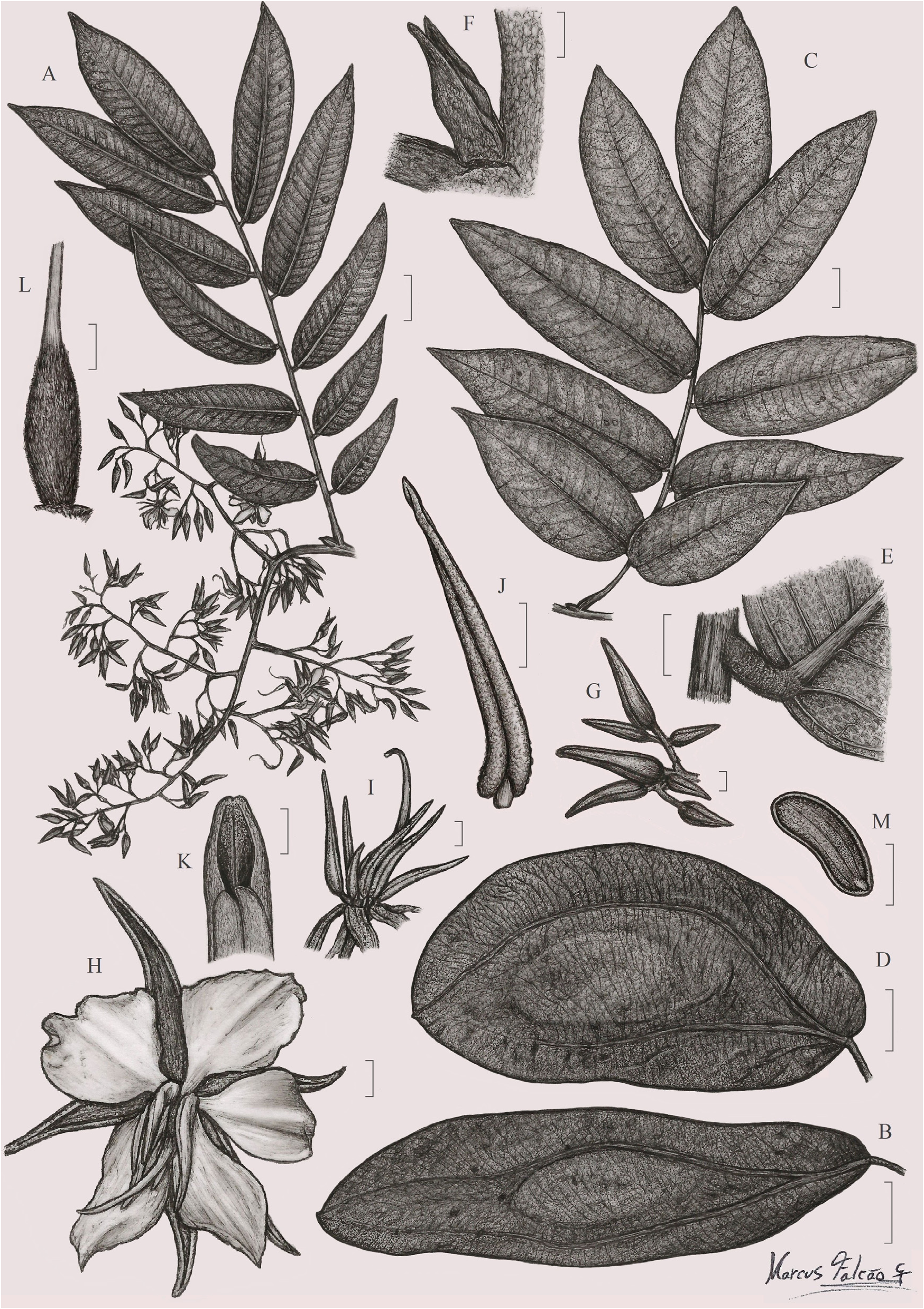
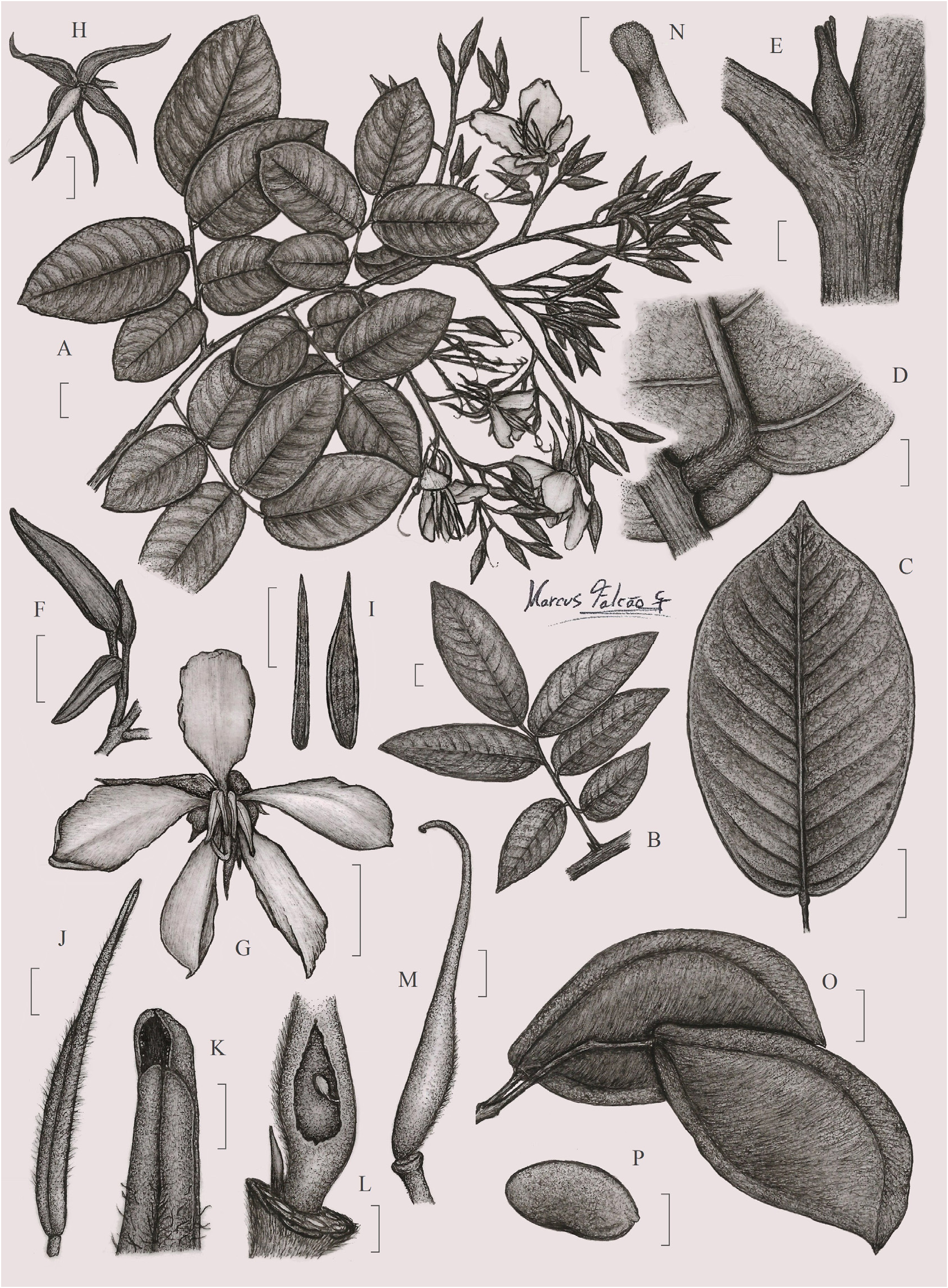
Myroxylon peruiferum is a tree with glabrous, inermous branches and caducous stipules. The leaves are imparipinnate, with 8 to 9 leaflets arranged alternately, and the leaflets are elliptic to oblong in shape. The venation is brochidodromous, and the leaf surface exhibits translucid punctuation. The inflorescence is a terminal raceme, with pedicellate, zygomorphic flowers. The calyx is gamosepalous with five sepals, and the corolla is dialypetalous and papilionaceous, with five white petals. The androecium is dialystaminous and homodinamous, with longitudinal anthers. The ovary is superior, sessile, and pauciovulate. The fruit is a stipitate, linear samara with a glabrous, brown epicarp. Seeds have not been observed in the studied material.
Habitat
Myroxylon peruiferum is found in tropical forests across North and South America. It is distributed in regions such as Brazil, Mexico, and Central America, where it thrives in a variety of ecological conditions. The species is adapted to both humid and semi-arid environments, often occurring in conservation units and forested areas.
Cultivation
Cultivation of Myroxylon peruiferum is not widely documented, but the species is likely adapted to tropical and subtropical climates. It requires well-drained soils and can tolerate a range of moisture conditions. The tree's ability to grow in semi-arid regions suggests a degree of drought tolerance, making it potentially suitable for reforestation and agroforestry projects in similar environments.
Uses
Myroxylon peruiferum is known for its medicinal and economic uses. The bark and wood have been traditionally used in herbal medicine for their purported anti-inflammatory and analgesic properties. The tree is also valued for its timber, which is used in construction and furniture making. Additionally, the species may have potential in ecological restoration projects due to its adaptability and growth characteristics.
Distribution
BR · Global · Argentina Northwest · Bolivia · Brazil Northeast · Brazil Southeast · Brazil South · Brazil West-Central · Colombia · Costa Rica · Ecuador · El Salvador · Guyana · Honduras · Mexico Central · Mexico Southeast · Mexico Southwest · Nicaragua · Peru
Synonyms
Myrospermum pedicellatumMyrospermum peruiferumMyrospermum pubescensMyrospermum erythroxylumMyrospermum arboreumToluifera pubescensToluifera pedicellataToluifera peruiferaToluifera erythroxylaMyrospermum robinifoliumMyroxylon pubescensMyroxylon robiniifoliumToluifera balsamum var. peruiferumMyroxylon pedicellatum