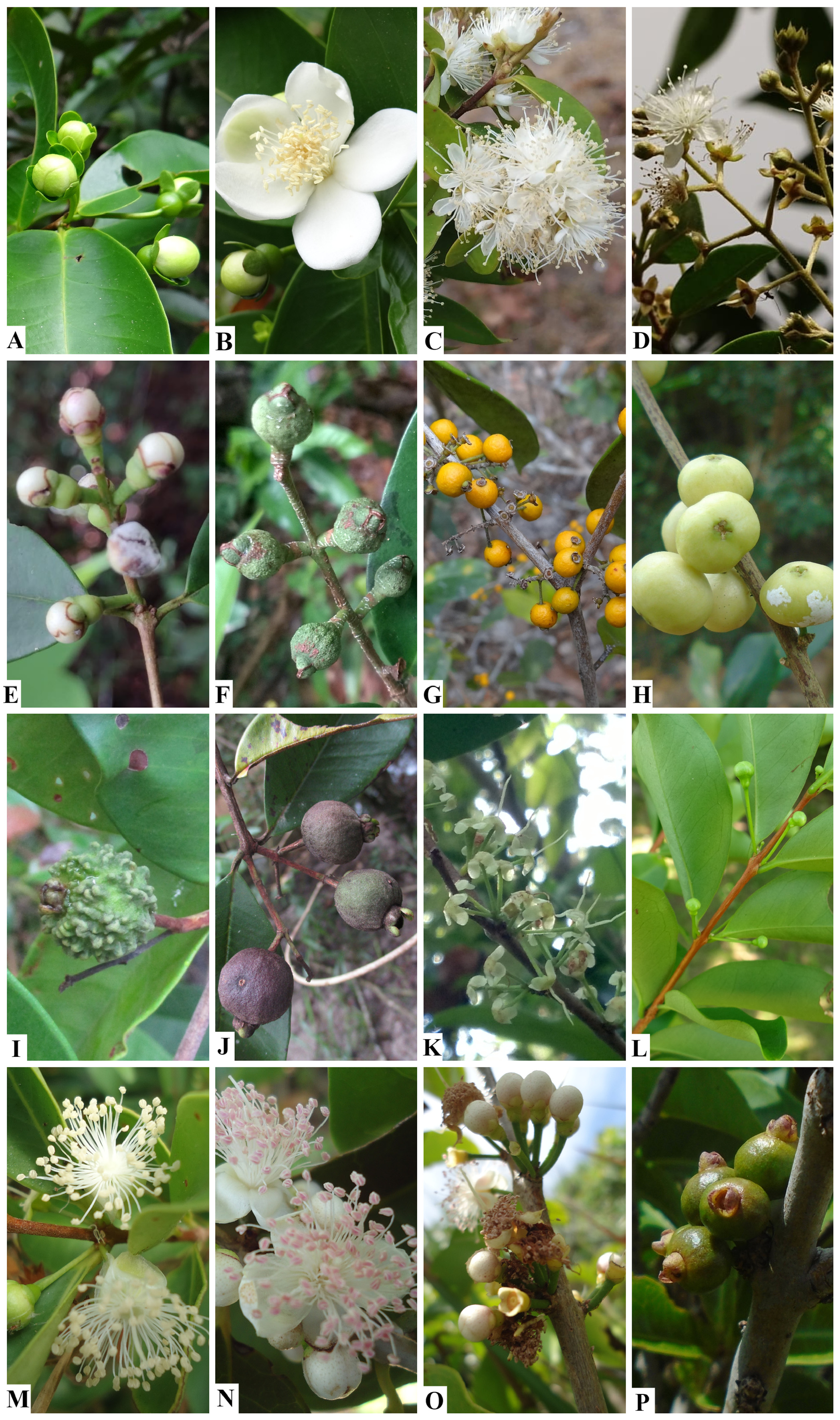
Myrcia racemosa
Myrcia racemosa (O.Berg) Kiaersk.

Myrcia racemosa is a tree species native to the Atlantic Forest of Brazil, occurring from the northeastern to the southern regions of the country. It is part of the Myrtaceae family and is distinguished by its acuminate calyx lobes, glabrous hypanthium, and globose fruit. The species was first described in 1893 and is known for its ecological and botanical significance within the Atlantic Forest biome.
Description
Myrcia racemosa is a tree that typically reaches heights of 3 to 8 meters. It is morphologically similar to Myrcia splendens but is differentiated by its acuminate calyx lobes, a glabrous hypanthium, and subglobose to globose fruit. The species is endemic to the Atlantic Forest, with documented occurrences in the states of Bahia, Alagoas, Pernambuco, and Sergipe in northeastern Brazil, as well as in southern Brazil. Specimens have been collected from various protected areas, including the Reserva Ecológica Mata do Zumbi in Pernambuco and the Área de Proteção Ambiental Guadalupe.
Habitat
This species is primarily found in the lowland Atlantic Forest, a biome characterized by high biodiversity and a tropical climate. It thrives in the humid, forested environments of the northeastern and southern regions of Brazil. The Atlantic Forest is known for its ecological richness and is a hotspot for endemic species, making Myrcia racemosa an important component of this ecosystem.
Cultivation
While there is limited information on the cultivation of Myrcia racemosa, it is likely suited to tropical and subtropical climates with well-drained, moist soils. As a native of the Atlantic Forest, it may require partial shade and a humid environment to thrive. Further research is needed to develop specific cultivation techniques for this species, particularly in conservation and restoration efforts.
Uses
Myrcia racemosa is primarily of ecological importance, contributing to the biodiversity and structural complexity of the Atlantic Forest. Its fruit is likely an important food source for local wildlife, though specific uses by humans are not well documented. The species may also have potential for use in reforestation and habitat restoration projects within its native range.
Distribution
BR · Global · Brazil Northeast · Brazil Southeast · Brazil South
Synonyms
Myrcia acuminatissimaAulomyrcia gaudichaudianaAulomyrcia racemosaMyrcia racemosa var. gaudichaudiana