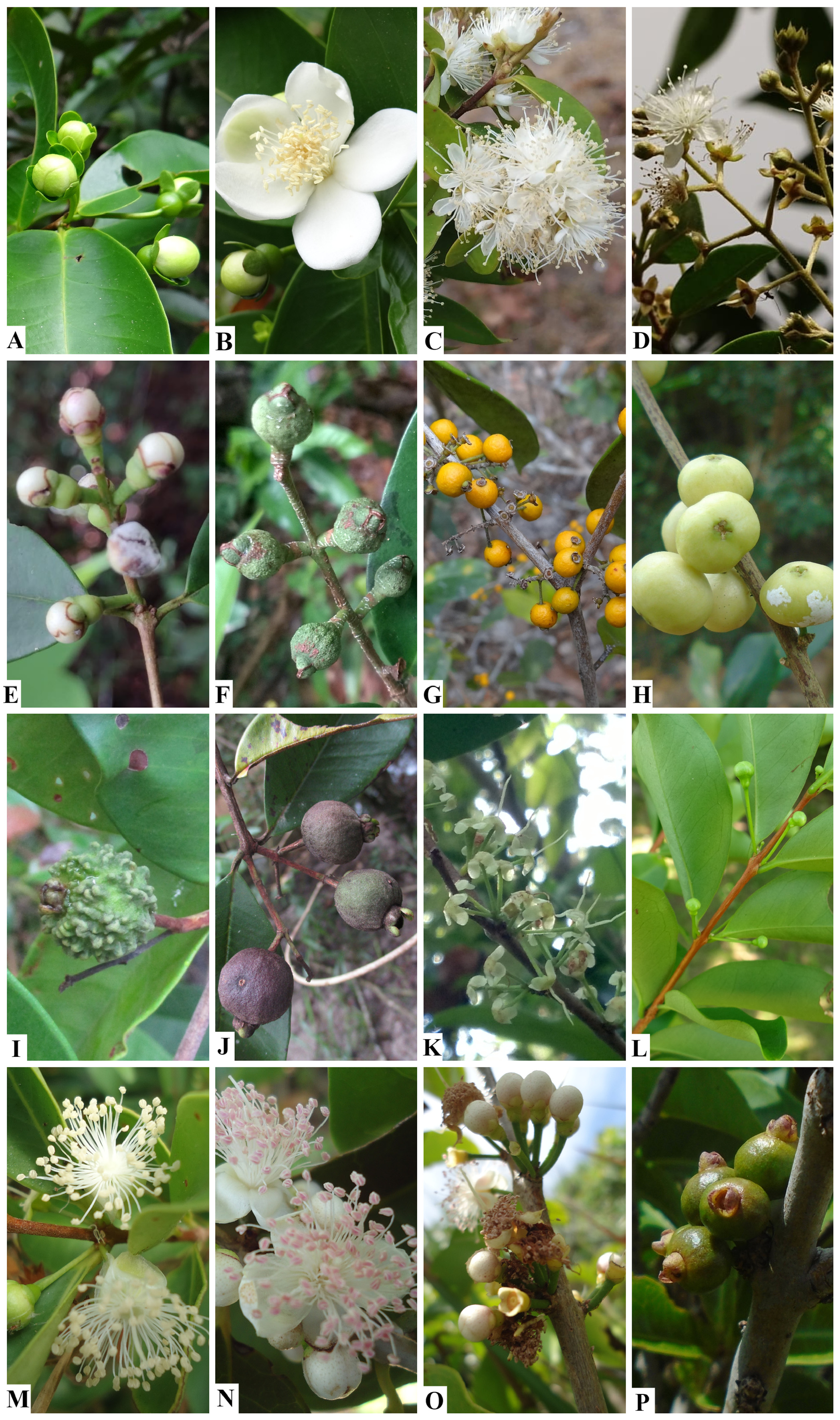
Myrcia bergiana
Myrcia bergiana O.Berg

Myrcia bergiana is a species of tree or shrub in the Myrtaceae family, native to the Atlantic Forest in northeastern and southeastern Brazil. First described in 1857 by O. Berg, it is distinguished by its larger leaves, acute calyx lobes, and pilose hypanthium. It is morphologically similar to Myrcia densa but differs in several key features, including the non-sulcate midvein on the upper leaf surface and the presence of ferruginous trichomes. The species is known for its globose fruits and is considered endemic to the Atlantic Forest region.
Description
Myrcia bergiana is a tree or shrub that typically grows between 3 and 7 meters in height. It is closely related to other Myrcia species, particularly Myrcia densa, but can be differentiated by its larger leaves, which measure 5 to 10 cm in length. The calyx lobes are acute, and the hypanthium is pilose. Another distinguishing feature is the non-sulcate midvein on the adaxial surface of the leaf lamina, as well as the presence of ferruginous (reddish-brown) trichomes. The fruits are globose, a characteristic that sets it apart from many other members of the genus. The species is known to occur in the lowland Atlantic Forest areas of Pernambuco, Brazil, and is considered endemic to this region.
Habitat
Myrcia bergiana is native to the lowland Atlantic Forest, particularly in the northeastern and southeastern regions of Brazil. It is found in the State of Pernambuco, where it inhabits areas such as Igarassu, Tamandaré, and along the Via Litorânea de Carneiros. The species thrives in the humid, tropical climate typical of the Atlantic Forest biome, which is characterized by high biodiversity and a mosaic of vegetation types ranging from dense forests to more open, secondary growth areas. The Atlantic Forest is a globally recognized hotspot of biodiversity and is under significant threat due to deforestation and habitat fragmentation.
Cultivation
While there is limited information on the cultivation of Myrcia bergiana, it is likely to require conditions similar to those found in its natural habitat. This includes well-drained, fertile soils and a warm, humid climate. As a member of the Myrtaceae family, it may be sensitive to waterlogging and would benefit from partial shade during the early stages of growth. Propagation could be achieved through seeds or cuttings, though specific techniques for this species have not been widely documented. Given its endemic status and the conservation challenges facing the Atlantic Forest, any cultivation efforts would likely be part of conservation or restoration programs.
Uses
There is no widely documented information on the specific uses of Myrcia bergiana. However, as a member of the Myrtaceae family, it may have potential for use in traditional medicine, though this has not been confirmed for this particular species. Its ecological value is significant, as it contributes to the biodiversity of the Atlantic Forest, a critically endangered biome. Conservation of species like Myrcia bergiana is essential for maintaining the ecological integrity of the region and supporting the many endemic and threatened species that depend on this unique ecosystem.
Distribution
BR · Global · Brazil Northeast · Brazil Southeast
Synonyms
Myrcia pernambucensisMyrcia bergiana var. angustifolia