Mulberry
Morus alba L.

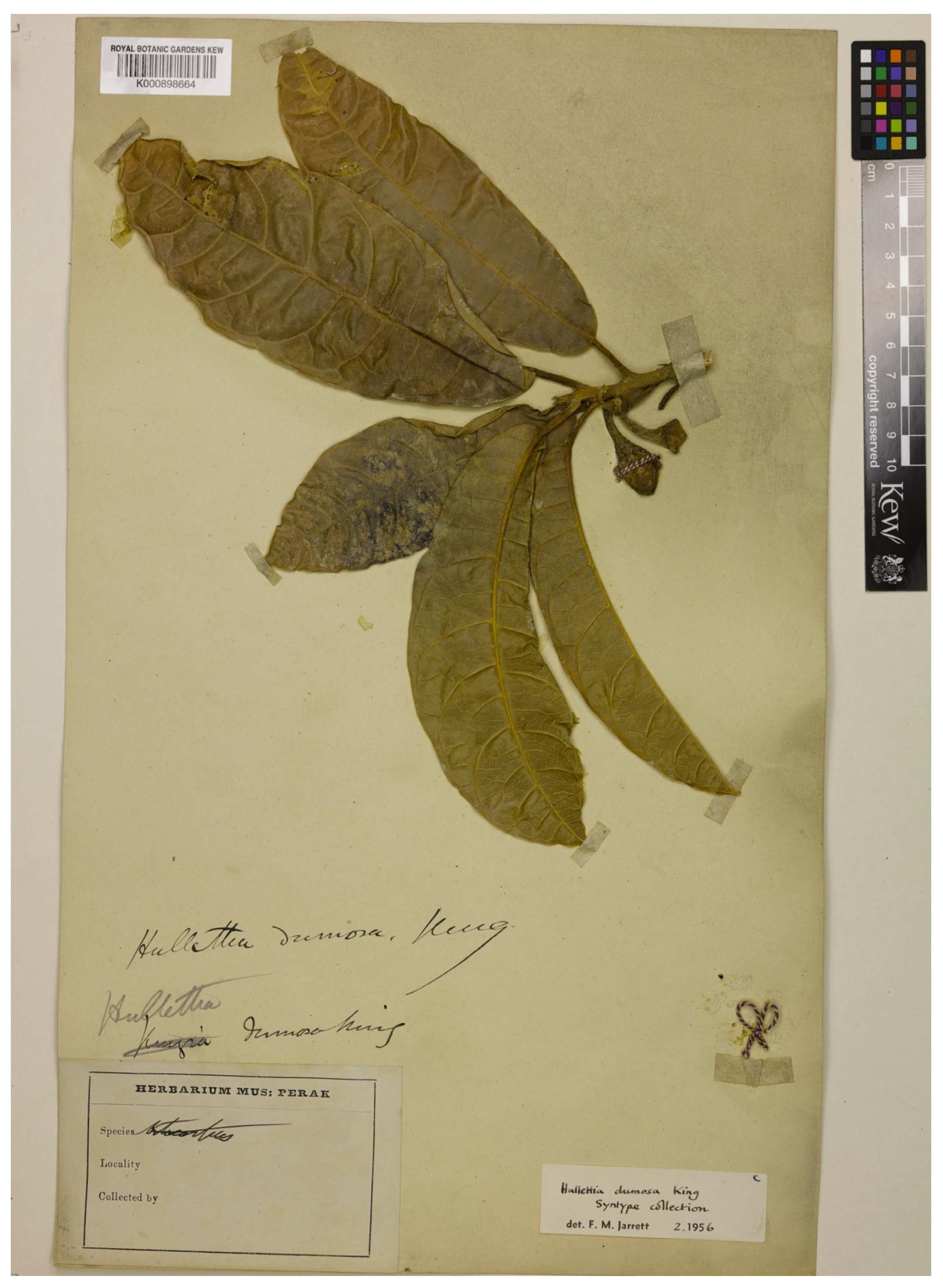
Morus alba L., commonly known as white mulberry, is a small to medium-sized tree native to China and widely cultivated for silkworm feed. It is naturalized in many regions, including parts of Europe, Asia, and the Americas. The species is notable for its rapid pollen release, which occurs at speeds exceeding half the speed of sound. The holotype was designated as specimen 1112.1 (LINN) by Browicz, later restricted to the upper left part of the sheet by Rao & Jarvis.
Description
Morus alba L. belongs to the Moraceae family and is known for its fast growth, reaching heights of 10–20 m. It is primarily cultivated for silk production and has been introduced to various regions, including British Columbia, Portugal, France, and others. The plant's unique reproductive feature is the rapid ejection of pollen. The taxonomic history notes that Bhopal & Chaudhri did not distinguish between two specimens (1112.1 and 1112.2) in the LINN collection, but Browicz later designated 1112.1 as the lectotype. The species was first described in 1753.
Other common names
MulberryRussian MulberrySilkworm MulberryWhite MulberryWhite-Mulberry
Distribution
British Columbia · Ontario · Quebec · Portugal Continental · RU · ZA · Rapa Nui - Easter Islands · HR · IE · EG · Belgium · Brussels-Capital Region · Flemish Region · BR · France · The Netherlands · Great Britain · CY · PK · IT · PT · CD · DK · FR · GR · JO · MU · UA · AR · Liechtenstein
Synonyms
Morus cucullataMorus chinensisMorus constantinopolitanaMorus guzziolaMorus heterophyllaMorus dulcisMorus atropurpureaMorus nanaMorus multicaulisMorus lucidaMorus kakiMorus lhouMorus levasseureiMorus mariettiiMorus romanaMorus pumilaMorus patavinaMorus pataviaMorus tokwaMorus venosaMorus alba var. atropurpureaMorus alba var. multicaulisMorus alba f. albaMorus alba var. latifoliaMorus alba var. tataricaMorus alba var. albaMorus intermediaMorus alba var. bungeanaMorus nigriformisMorus alba f. skeletoniana