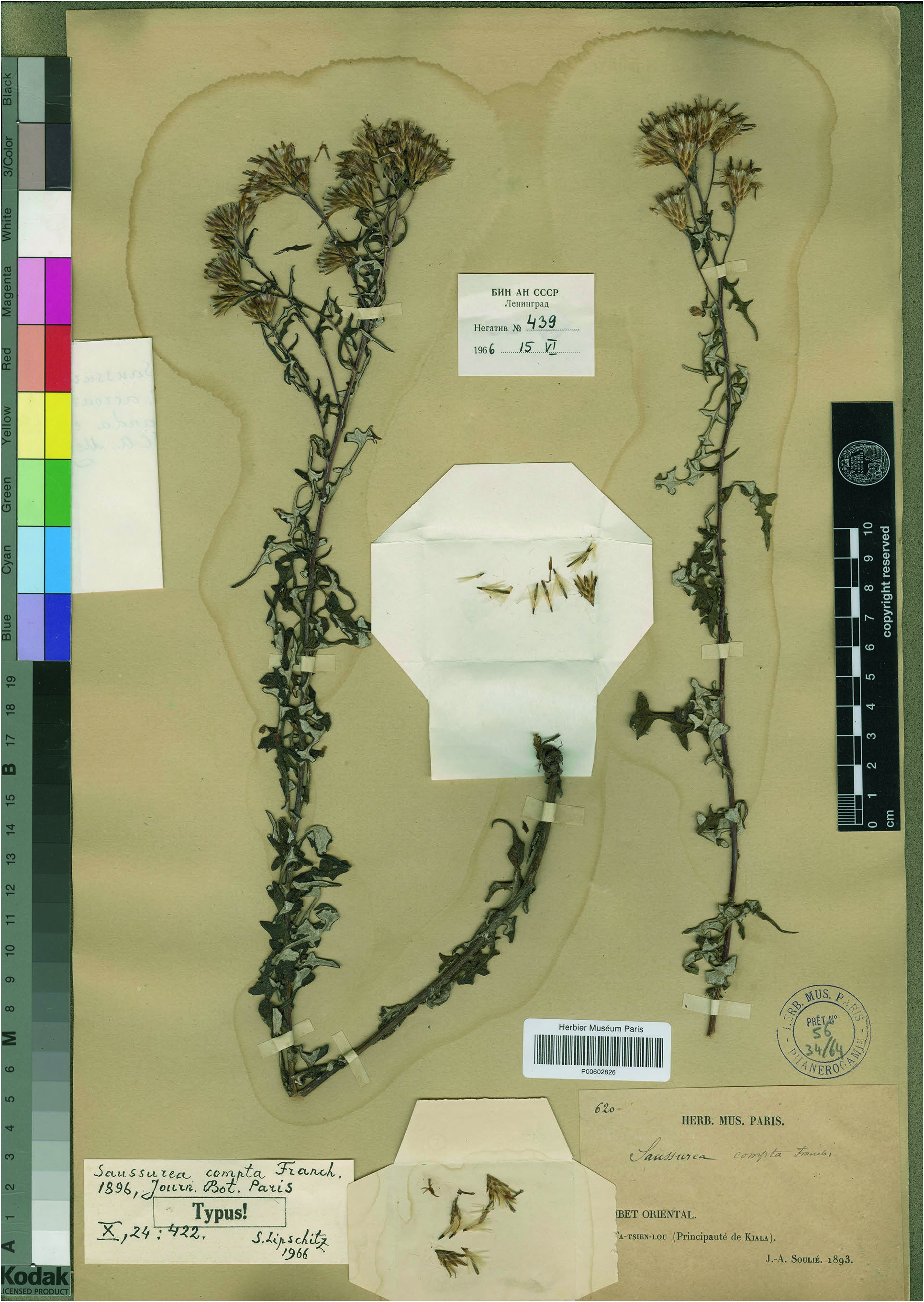
mucronate launea
Launaea mucronata (Forssk.) Muschl.

Launaea mucronata is an annual or occasionally short-lived perennial herb in the Asteraceae family, native to regions spanning North Africa, the Middle East, and parts of Asia. It features a taproot and a variable growth form, with a single, erect, leafy flowering stem that is corymbosely branched at the top. The plant is glaucous and can grow up to 80 cm tall.
Description
Launaea mucronata exhibits a polymorphic growth pattern, with some plants having a dominant main stem and others branching from the base. The lower cauline leaves are narrowly spathulate, deeply pinnatifid with narrow, acute segments, and white-cartilagineously sinuate-dentate margins. Upper leaves are lanceolate and gradually reduce to bracts in the synflorescence region. The synflorescence is branched, with a variable number of capitula. Peduncles are 1.5–10 cm long and bracteate. Capitula contain 29–80 flowers, and the involucre is 8–14 mm long at fruiting.
Other common names
mucronate launea
Distribution
Pakistan · Libya · Jordan · United Arab Emirates · Morocco · Algeria · Egypt · Greece · Iraq · Iran · Tunisia · Israel · Saudi Arabia · Sinai · Macedonia · Syria · Afghanistan · Canary Is. · Chad · Eritrea · Gulf States · Kuwait · Mauritania · Oman · Palestine · Sudan · Yemen
Synonyms
Leontodon mucronatusZollikoferia mucronata var. mucronataLaunaea resedifolia subsp. mucronata