Mimosa verrucosa
Mimosa verrucosa Benth.

Mimosa verrucosa, known as jurema-branca or jurema-de-oeiras, is a tree species in the legume family, Fabaceae. Native to Brazil, it is distinguished by its inermous (spineless) and glandular branches, bipinnate leaves, and axillary spike inflorescences with rose-colored, tubular flowers. The species is recognized for its arboreal growth habit and the characteristic verrucose (warty) texture of its fruit. It is found in the semi-arid regions of northeastern and central-western Brazil.
Description
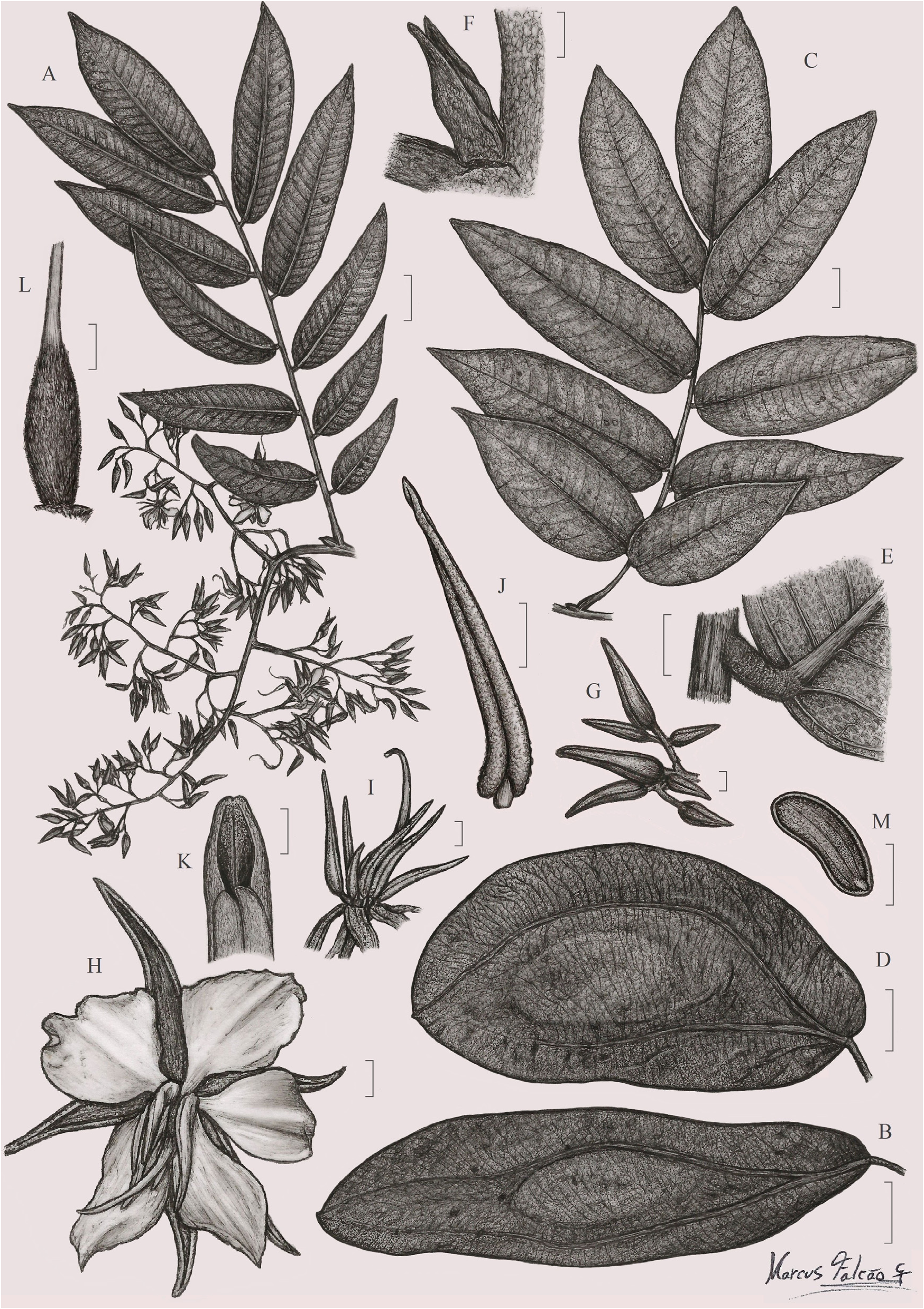
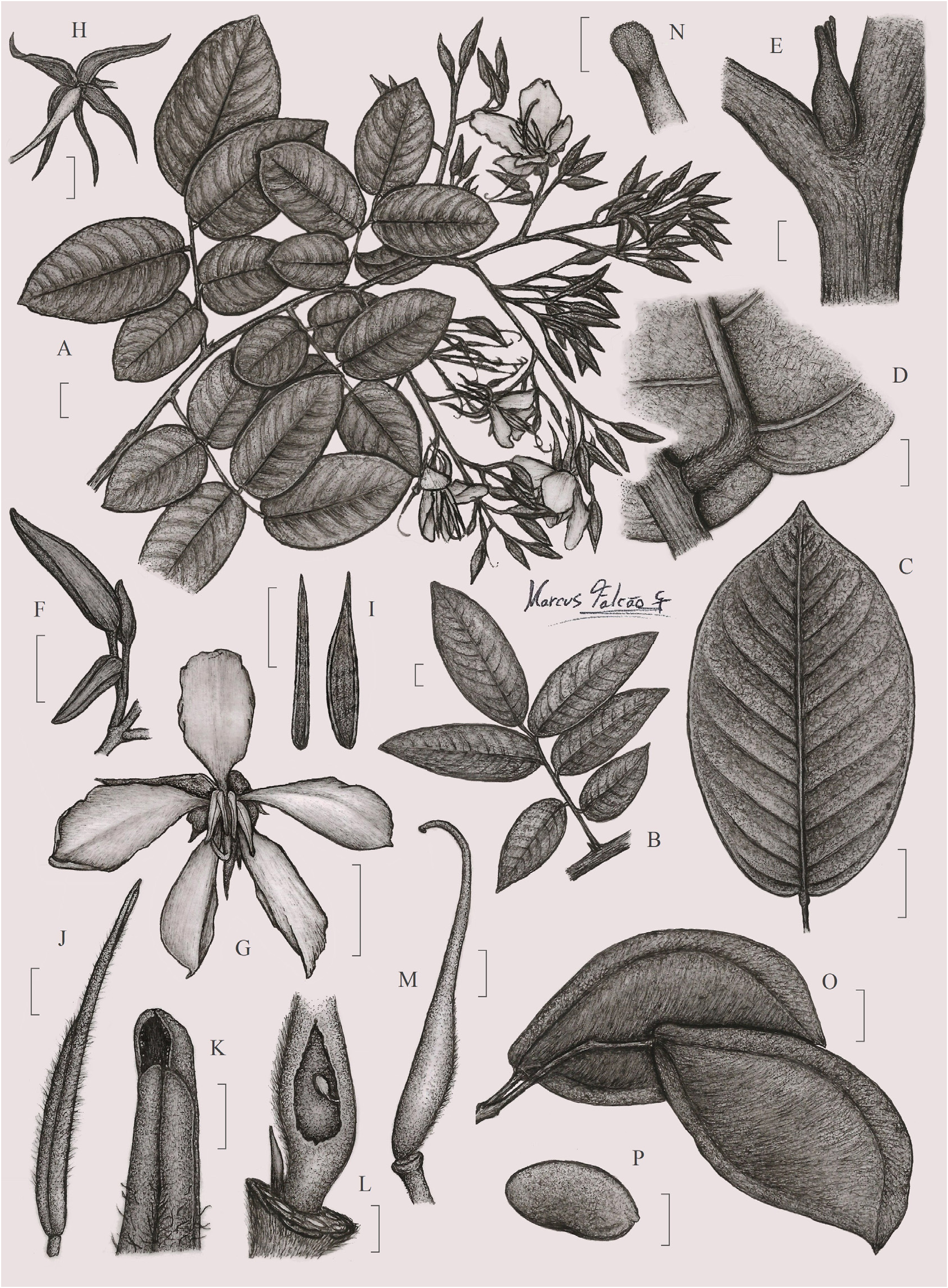
Mimosa verrucosa is a tree with glandular, inermous branches. The leaves are bipinnate and paripinnate, with 10 to 18 opposite, oblong leaflets. The inflorescence is an axillary spike, bearing sessile, actinomorphic flowers with a gamosepalous calyx of four sepals and a gamopetalous, tubular corolla of four rose-colored petals. The androecium is dialystaminous and homodinamous, with anthers dehiscing longitudinally. The superior, sessile ovary is pluriovulate. The fruit is a linear craspedium, stipitate, with a brown, verrucose epicarp and constricted margins. Seeds have not been observed in the species.
Habitat
Mimosa verrucosa is native to the semi-arid regions of Brazil, particularly in the states of Paraíba and other areas in the northeast and central-west. It is typically found in conservation units and other protected habitats within these regions, often in environments with limited water availability and well-drained soils. The species is adapted to the conditions of the Caatinga biome, a tropical dry forest characterized by seasonal droughts and nutrient-poor soils.
Cultivation
As a native species of the Caatinga, Mimosa verrucosa is not widely cultivated outside its natural range. It thrives in arid to semi-arid conditions and is likely suited to well-drained, sandy or rocky soils. Due to its drought tolerance and leguminous nature, it may have potential for use in reforestation or soil stabilization projects in similar climates. Cultivation would require careful attention to soil conditions and minimal water input, as it is adapted to low-resource environments.
Uses
Mimosa verrucosa is primarily of ecological interest, playing a role in the biodiversity of the Caatinga biome. It may contribute to soil stabilization and provide habitat for local fauna. While specific traditional uses by indigenous or local communities are not widely documented, its leguminous nature suggests it could potentially be used for nitrogen fixation in degraded soils. Further research is needed to explore its potential in ecological restoration and sustainable land management.
Distribution
BR · Global · Brazil Northeast · Brazil North · Brazil West-Central