Mimosa tenuiflora
Mimosa tenuiflora (Willd.) Poir.

Mimosa tenuiflora, also known as jurema preta or tepezcohuite, is a perennial tree or shrub native to the northeastern region of Brazil and parts of Central and South America. It is characterized by its aculeate branches, bipinnate leaves, and axillary spike inflorescences. The plant is recognized for its dark bark and orbicular galls covered in glandular trichomes, distinguishing it from other Mimosa species. It thrives in semi-arid and tropical regions, often at lower altitudes but can be found up to 1,000 m. The species is widely distributed across Brazil, Mexico, Central America, and other parts of South America, and has been introduced to regions like Java and New Guinea.
Description
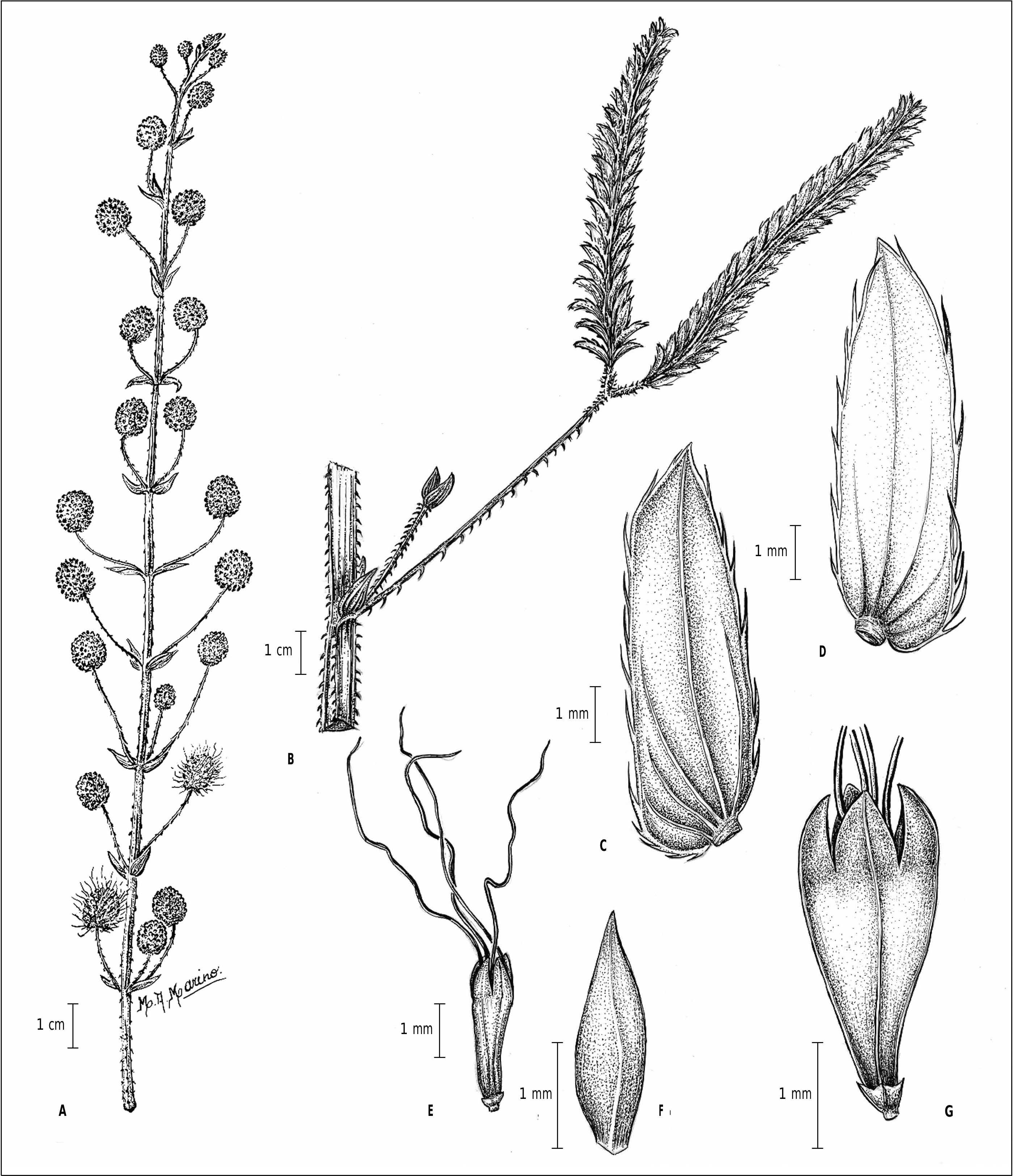
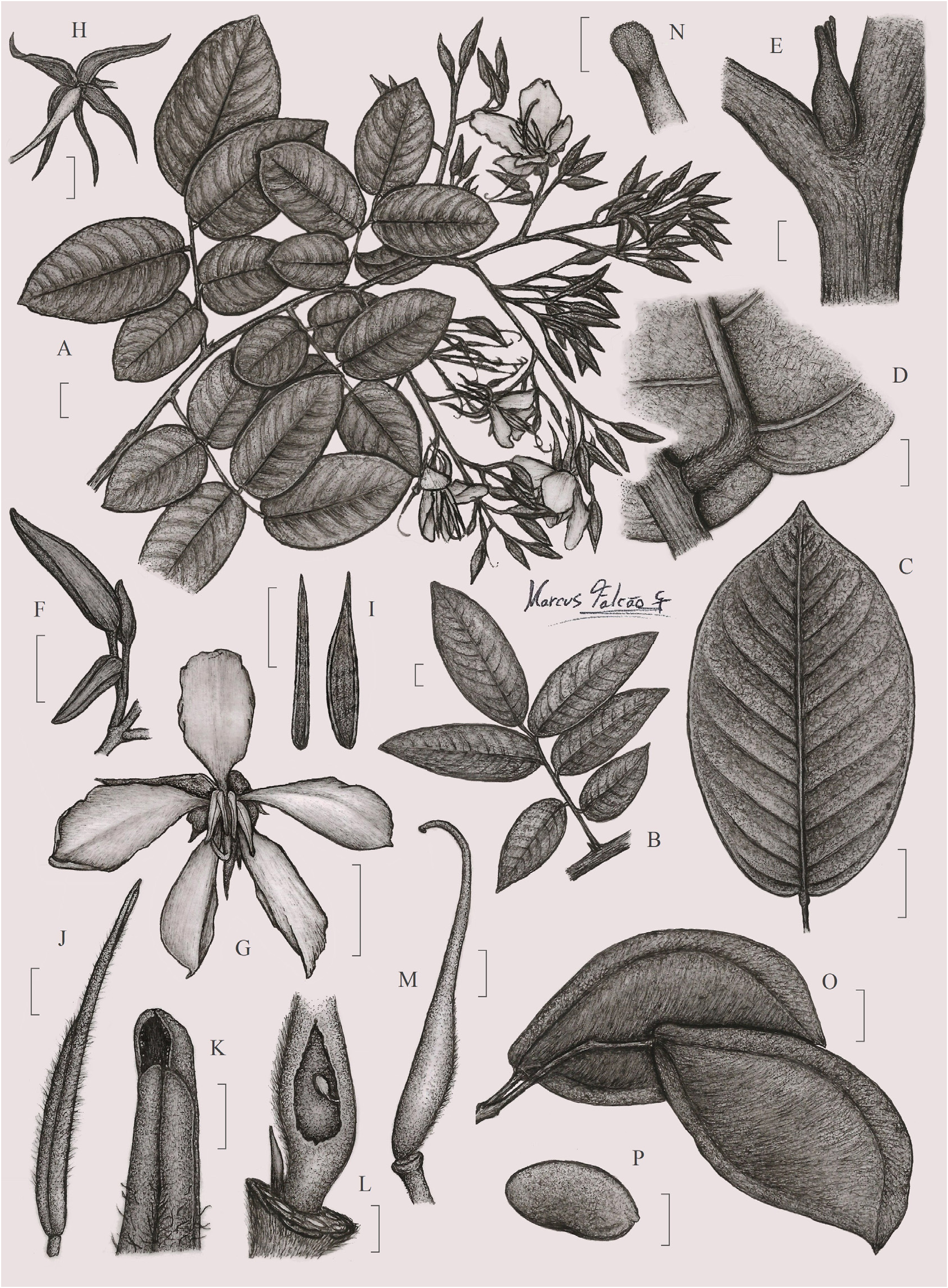
Mimosa tenuiflora is an arboreous plant with glabrescent, aculeate branches. Its leaves are bipinnate, paripinnate, and 8–14-foliolate, with opposite, oblong leaflets and actinodromous venation. The plant lacks nectaries and has caducous stipules. The inflorescence is a spike, axillary in position, with sessile, actinomorphic flowers. The calyx is gamosepalous with four sepals, and the corolla is gamopetalous, tubular, and whitish with four petals. The androecium is dialystaminous and homodinamous, with longitudinal anthers. The ovary is superior, stipitate, and pluriovulate. The fruit is a craspedium, stipitate, linear, and plane-corrugate, with a straight margin and glabrous, brown epicarp. The seeds are obovate, plane, with a brown coat and a basal hilum.
Habitat
Mimosa tenuiflora is typically found in semi-arid and tropical regions, often in lower altitude areas but can be present up to 1,000 m. It is native to the northeastern part of Brazil and is commonly found in the semi-arid region of Paraíba. The species is also present in Mexico, Central America, and northern South America, including countries like Colombia, Venezuela, and El Salvador. It has been introduced to regions such as Java and New Guinea, where it grows in similar tropical environments.
Cultivation
Mimosa tenuiflora is adaptable to a range of tropical and semi-arid climates, making it suitable for cultivation in warm, dry regions. It prefers well-drained soils and can tolerate periods of drought. The plant is often found in disturbed areas and can be propagated through seeds or cuttings. Due to its ornamental value and potential medicinal uses, it is sometimes cultivated in botanical gardens and for traditional or commercial purposes in regions where it is native or naturalized.
Uses
Mimosa tenuiflora has a variety of traditional and modern uses. In traditional medicine, it is used for its astringent and healing properties, particularly in treating skin conditions and wounds. The bark and root are often prepared as decoctions or poultices. The plant is also used in spiritual and ritual practices in some indigenous communities. In horticulture, it is valued for its ornamental appearance and resilience in arid environments. Additionally, it is sometimes cultivated for its potential in phytoremediation and as a source of natural dyes.
Distribution
BR · Barrancas | Distracción | Hatonuevo | Riohacha · La Guajira · Global · SV · HN · GT · Brazil Northeast · Brazil Southeast · Colombia · El Salvador · Honduras · Jawa · Malaya · Mexico Northeast · Mexico Southeast · Mexico Southwest · New Guinea · Nicaragua · Panamá · Sumatera · Venezuela
Synonyms
Mimosa nigraAcacia tenuifloraMimosa limanaMimosa cabreraMimosa hostilisAcacia hostilisAcacia juremaMimosa apodocarpa var. hostilis