Mackay-bean
Entada gigas (L.) Fawc. & Rendle

Entada gigas is a remarkable climbing plant in the Fabaceae family, known for its exceptionally large seedpods and widespread distribution across tropical regions. Commonly called the Mackay-bean or sea heart, this species is notable for its ecological and ornamental significance. It is a vigorous liana that can reach lengths of up to 45 meters and is native to Central and South America, the Caribbean, and parts of Africa. Its unique seeds are adapted for water dispersal, enabling the plant to colonize new areas across oceans.
Description
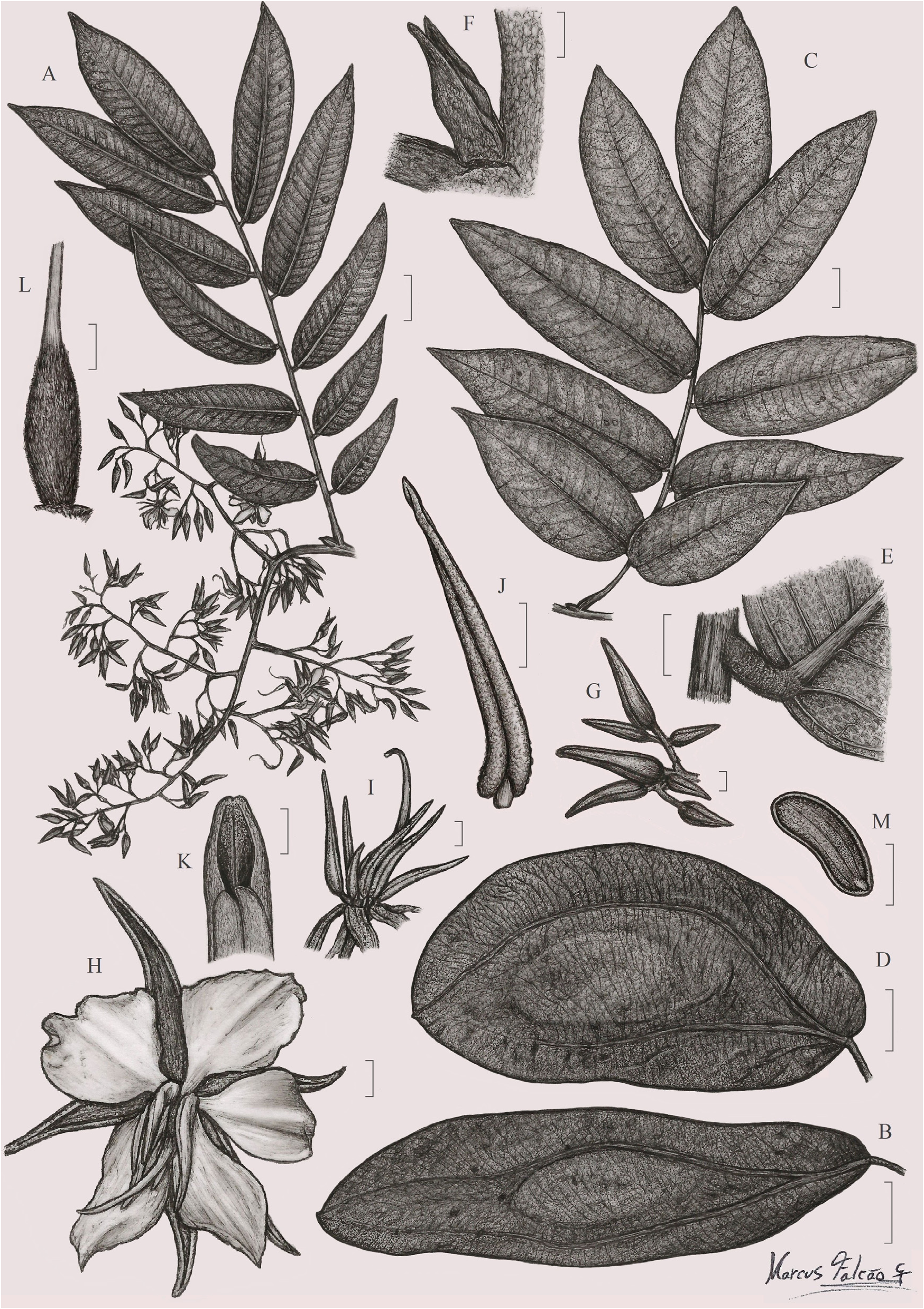
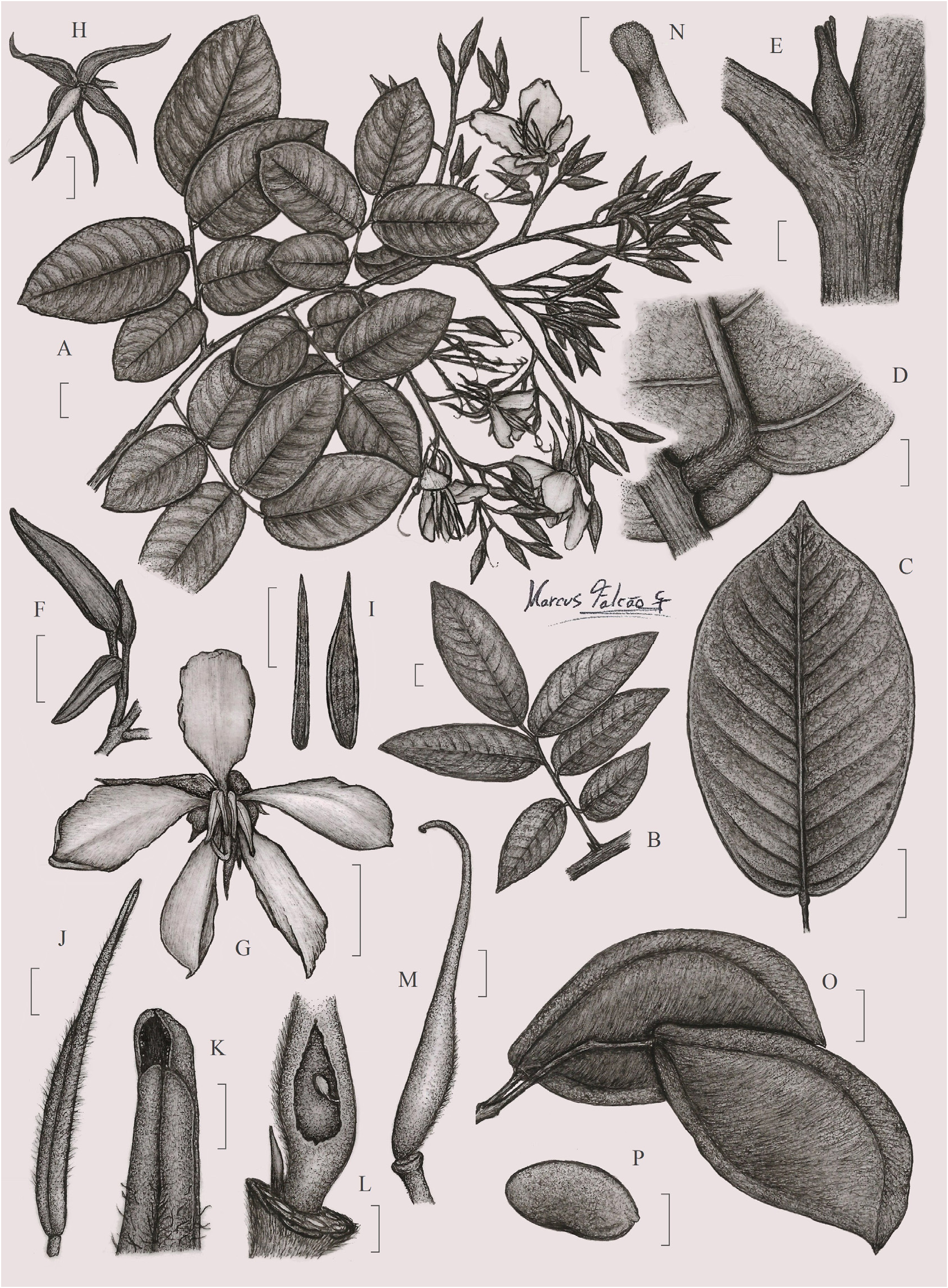
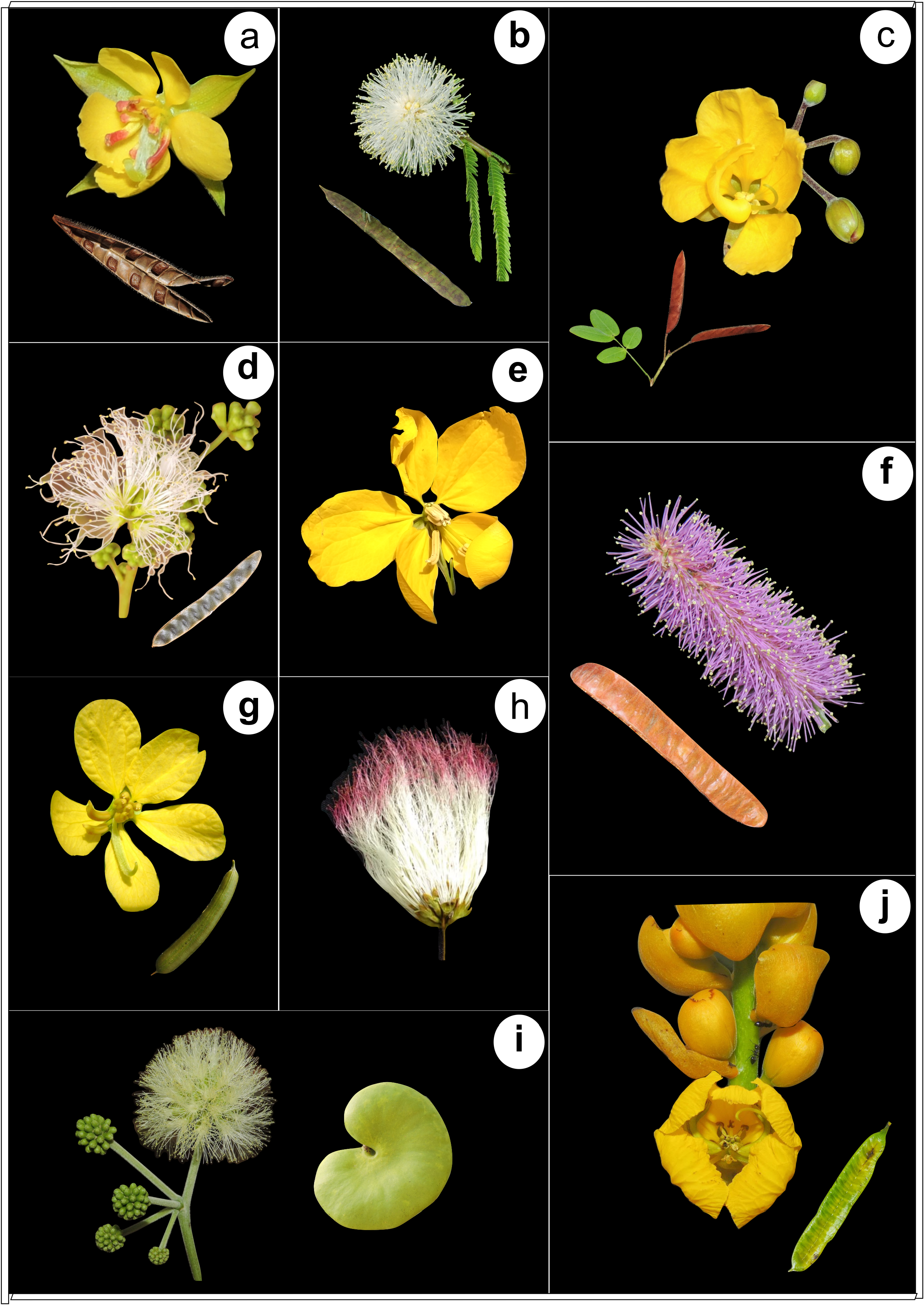
Entada gigas is a climbing liana that can grow up to 45 meters in length. Its leaves are compound, with rachises 5.9 to 7.5 cm long, and each leaf typically has 1 to 2 pairs of pinnae, with 3 to 5 pairs of leaflets per pinna. The leaflets are oblong to elliptic, often asymmetric, with an obtuse or rounded apex and an emarginate margin. Both surfaces are mostly glabrous, though the underside near the base and mid-rib may be puberulous. The inflorescence is a spiciform raceme, 8 to 25 cm long, with creamy white to greenish-yellow flowers. The fruit is a large, twisted craspedium, 40 to 120 cm long and 7.5 to 12 cm wide, divided into one-seeded segments by transverse septa. The seeds are circular to slightly cordate, laterally compressed, and 4 to 5.5 cm in diameter, with a hard coat and air spaces between the cotyledons that allow them to float.
Habitat
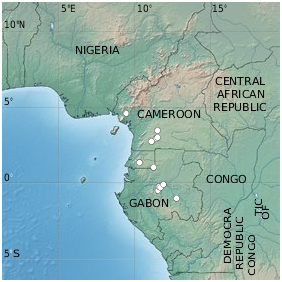
Entada gigas is native to tropical regions of Central America, northern South America, the Caribbean, and parts of Africa. It thrives in a variety of habitats, including lowland and montane forests, riverbanks, and disturbed areas. The plant is often found in moist, well-drained soils and can tolerate a range of environmental conditions. It is particularly common in the Parque Nacional Natural Sierra Nevada de Santa Marta and Parque Nacional Natural Los Katíos in Colombia, as well as in regions of Antioquia, Chocó, Cundinamarca, and other nearby departments. It is also found in countries such as Angola, Belize, Benin, Cameroon, and others.
Cultivation
Entada gigas is relatively easy to cultivate in tropical and subtropical climates. It requires a warm, humid environment and well-drained soil. The plant is a vigorous climber and needs a strong support structure, such as a trellis or tree, to grow vertically. Seeds should be soaked in water for 24 hours before planting to improve germination rates. The plant benefits from regular watering and partial shade, especially during the early stages of growth. It is relatively disease-resistant and can tolerate some drought once established. Propagation can also be done through cuttings, though seed propagation is the most common method.
Uses
Entada gigas has several uses, both ecological and ornamental. The large, attractive seeds are often collected as curiosities or used in crafts and jewelry. The plant is also valued for its ecological role, providing food and shelter for various wildlife species. In some regions, the seeds are used in traditional medicine, though specific medicinal applications are not well-documented. The plant's ability to grow rapidly and climb tall structures makes it useful for erosion control and as a living fence. Additionally, the floating seeds are dispersed by water, making the species an important component of coastal and riparian ecosystems.
Other common names
nicker-beanMackay-beansea-beansword-beannicker bean
Distribution
Parque Nacional Natural Sierra Nevada de Santa Marta | Parque Nacional Natural Los Katíos · CU · KM · Puerto Wilches | Sabana de Torres | San Vicente de Chucurí · Antioquia, Chocó, Cundinamarca, La Guajira, Magdalena, Nariño, Norte de Santander, Risaralda, Santander · Belgium · Flemish Region · Angola · Belize · Benin · Cameroon · Central African Repu · Central American Pac · Colombia · Congo · Costa Rica · Cuba · Dominican Republic · Ecuador · Equatorial Guinea · Gabon · Ghana · Haiti · Honduras · Ivory Coast · Jamaica · Kenya · Leeward Is. · Liberia · Mexico Central
Synonyms
Mimosa gigasEntada gigalobiumEntada planoseminataEntada umbonataEntada planoseminataEntada umbonataEntada scandens subsp. umbonataEntada gigas subsp. umbonataEntada scandens subsp. planoseminataEntada gigas subsp. planoseminataEntada gigas subsp. rectocarpaEntada scandens subsp. rectocarpa