longlobe four o'clock
Mirabilis tenuiloba S.Watson

Mirabilis tenuiloba, known as longlobe four o'clock, is a plant species in the family Nyctaginaceae. It is native to the south-western United States and north-eastern Mexico, including Arizona, California, and parts of Baja California. The species was first described by S. Watson in 1882, based on a specimen collected in San Bernardino County, California, by W. G. Wright in 1880. A lectotype has been designated from the original material to stabilize the taxonomic reference. The plant is part of the genus Mirabilis, which includes other four o'clock species.
Description
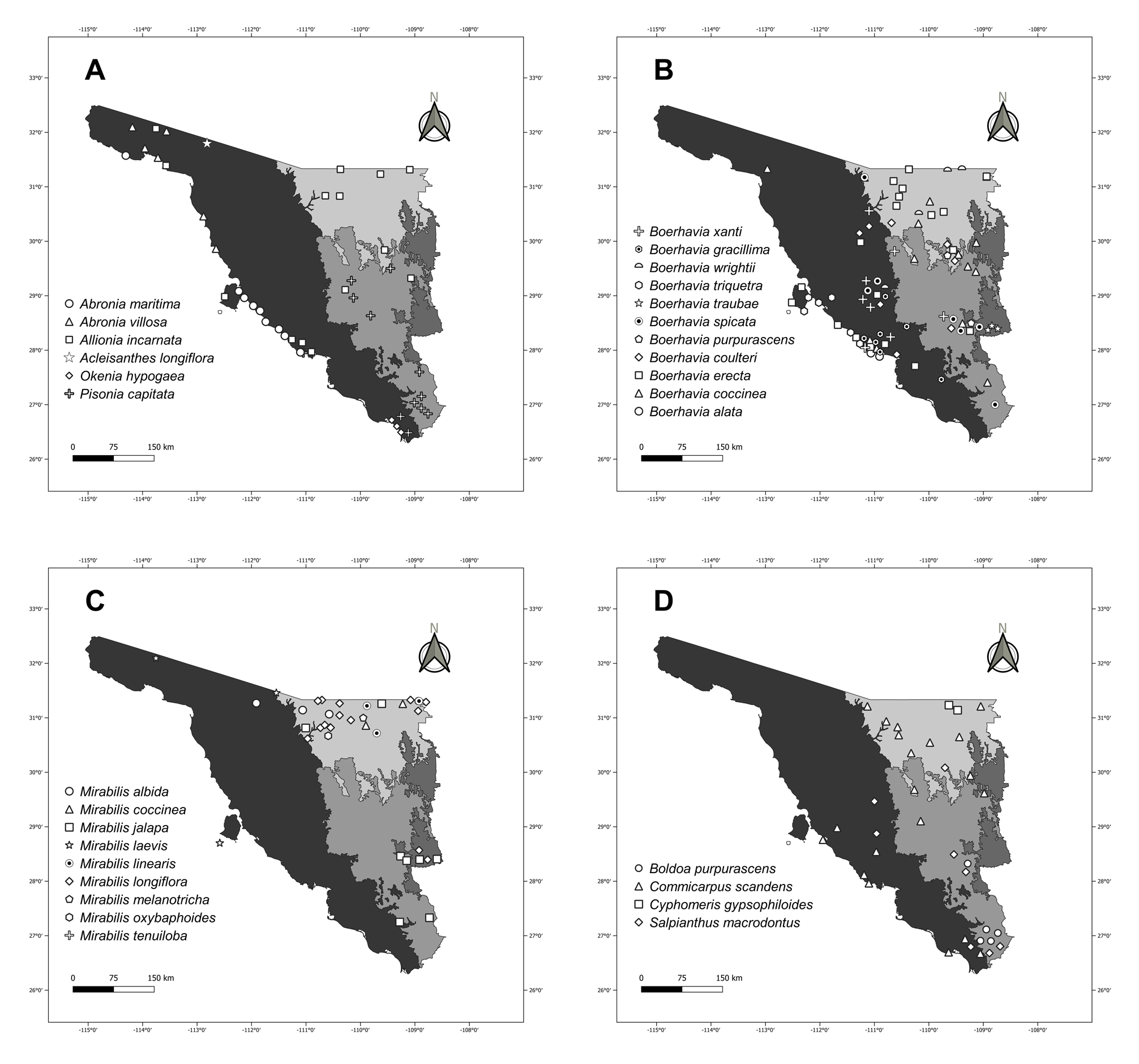
Mirabilis tenuiloba is a member of the Nyctaginaceae family, commonly known as the four o'clock family. It is found in Arizona, California, and parts of Mexico, particularly in Baja California and Baja California Sur. The species was described by S. Watson in 1882, with the original specimen collected in 1880 from San Bernardino County, California. Two specimens from the same collection were identified, with GH 00032689 designated as the lectotype due to its completeness and alignment with Watson’s description. The plant is recognized by its long, narrow lobes and is part of the Mirabilis genus, which is characterized by its showy flowers that open in the evening.
Other common names
longlobe four o'clock
Distribution
Arizona · California · Mexico Northwest
Synonyms
Hesperonia tenuiloba