long-beaked grimmia
Grimmia longirostris Hook.

Grimmia longirostris is a moss species in the family Grimmiaceae, characterized by its distinct leaf morphology and growth habit. It is primarily monoicous, with a dense cushion-like growth form and is found in various regions across North and South America, as well as Europe. The species was first described in 1818 by Hooker.
Description
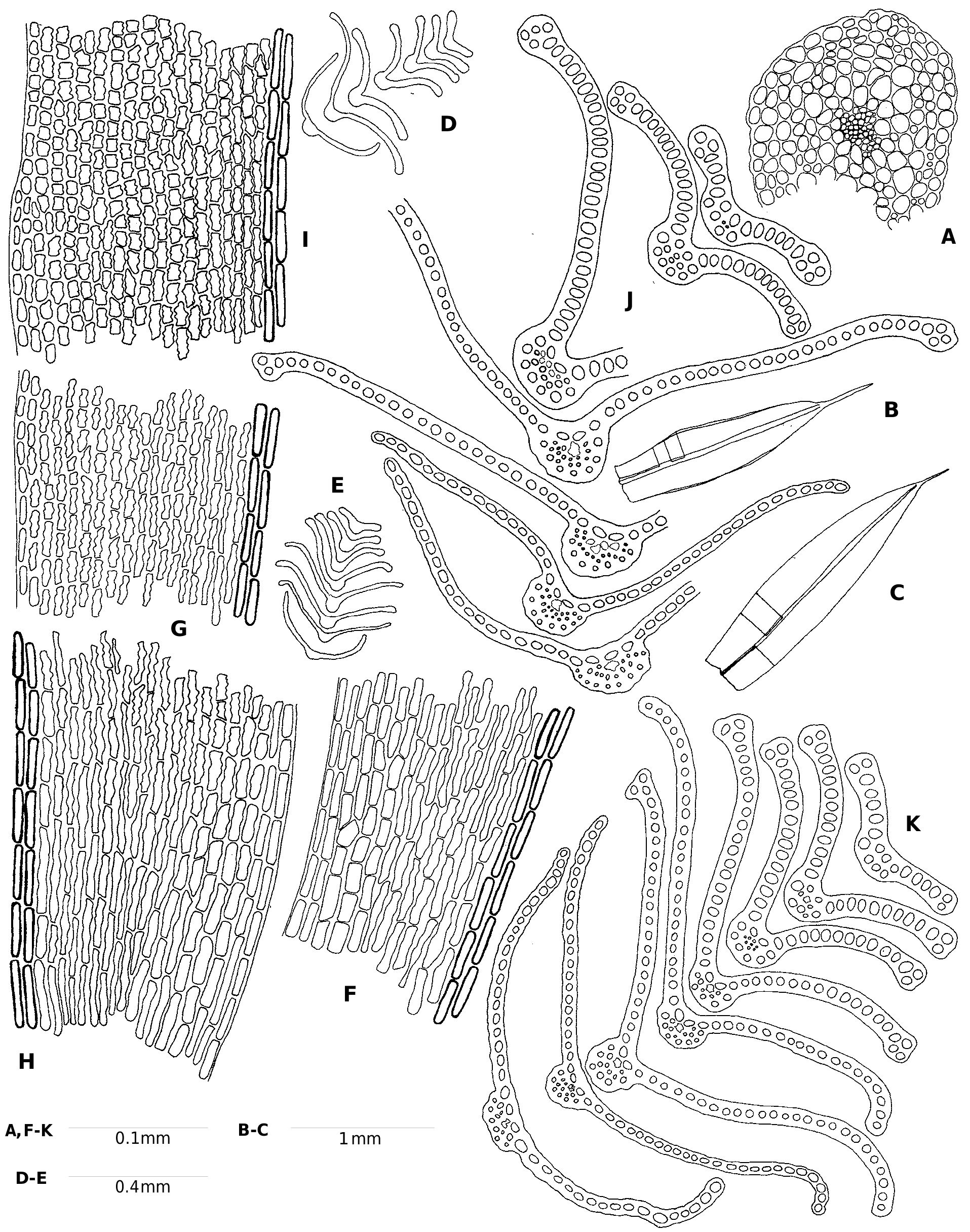
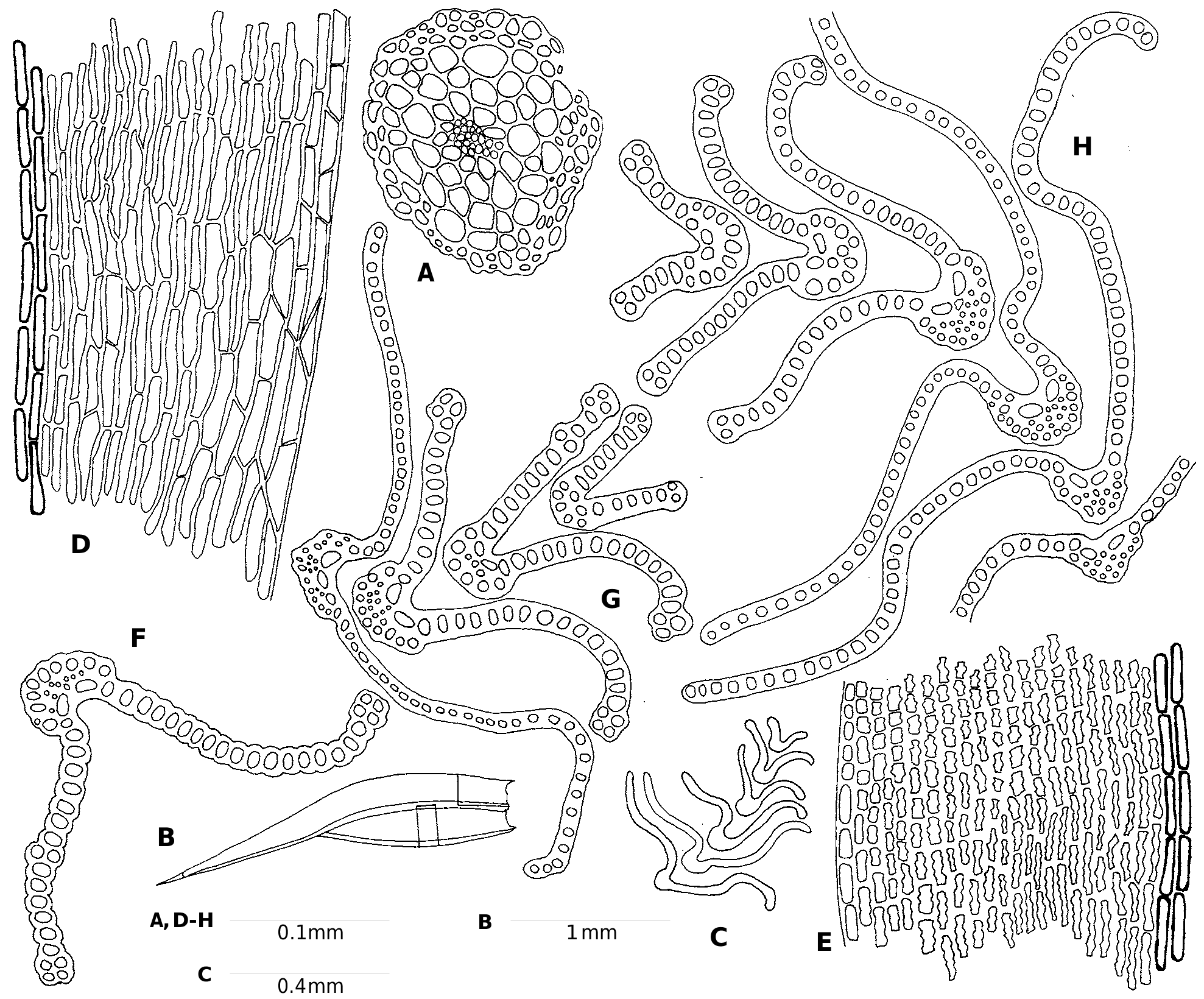
The gametophyte of Grimmia longirostris is mostly monoicous. Female perichaetial leaves can reach up to 4 mm in length, with a sheathing base that extends up to two-thirds of the leaf's length. The leaf base is elongated and narrows abruptly to a subulate apical part. A broad band of hyaline cells is present along the margin from the insertion to the broadest part of the leaf, gradually disappearing in the upper portion. The costa extends beyond the leaf tip as a denticulate hair-point. Growth is in dense cushions, with plants adhering to the substrate via rhizoids. The stems are erect, branched, and radiculose at the base, reaching up to 30 mm in height with a well-developed central strand. Lower leaves are scale-like, while upper stem leaves are up to 3 mm long, loosely arranged, and may be contorted. When dry, the leaves are imbricate and bend backward when moistened, becoming erecto-patent when wet. The leaves transition from an ovate base to a lanceolate lamina, tapering to an acute apex with a short, denticulate hair-point. The leaf form is concave at the base, plicate on one side, and keeled in the laminal part. The margin on the broader side is recurved or revolute, while the other side is mostly plane. Basal paracostal cells are elongate-rectangular with nodulose, thickened walls, and transverse walls are thin and often oblique. Cells near the margin are quadrate to rectangular with smooth walls and thickened transverse walls. In some specimens, hyaline cells extend to the broadest part of the leaf, with paracostal cells in the transitional part being short-rectangular with thick walls.
Habitat
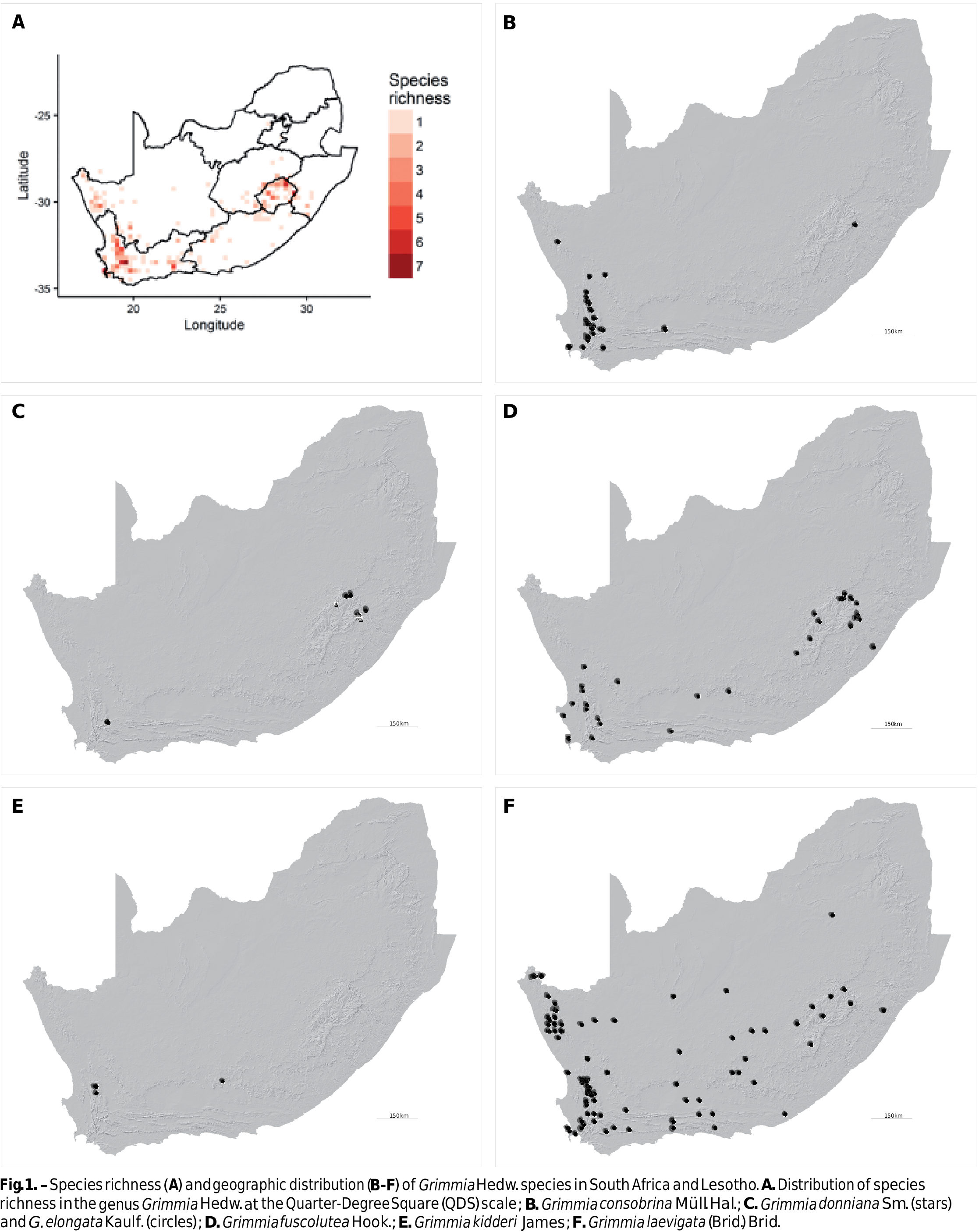
Grimmia longirostris is typically found in rocky or exposed habitats, often growing in dense cushions on substrates such as stone or soil. It is distributed across regions with varied climates, including Labrador, Québec, and other parts of Canada, as well as several regions in South America such as Antioquia, Boyacá, and Cundinamarca in Colombia. It is also recorded in Europe, including Denmark and Norway.
Cultivation
Cultivation of Grimmia longirostris is not commonly practiced, but it can be grown in controlled environments that mimic its natural habitat. It requires a moist, well-drained substrate and high humidity. The moss thrives in cool, shaded conditions and benefits from indirect light. Propagation can be achieved through rhizoid fragments or young shoots, which should be placed on a suitable substrate and kept consistently moist.
Uses
Grimmia longirostris is primarily of interest to bryologists and ecologists due to its unique morphological features and distribution. It is used in studies of moss biodiversity and ecological adaptation. The species does not have significant economic or ornamental uses, but it contributes to the understanding of bryophyte evolution and biogeography.
Other common names
long-beaked grimmiaNorth Grimmia
Distribution
Labrador · Québec · BR · Encino | Onzaga | Tona | Vetas · SE · Samacá · Cerinza · Mongua | Monguí · Antioquia, Boyacá, Cundinamarca, Magdalena, Risaralda, Santander, Valle · NO · DK · "Sumapaz, Cocuy" · Vermont-US
Synonyms
Dryptodon ovatus var. affinisDryptodon sciuroidesRacomitrium hausmannianumGrimmia affinis var. ramosissimaGrimmia afro-ovataGrimmia akaishi-alpinaGrimmia allioniiGrimmia antillarumGrimmia arctophila subsp. labradoricaGrimmia bogotensisGrimmia calyculataGrimmia campylotrichaGrimmia catalinensisGrimmia catalinensis var. muticaGrimmia cavifoliaGrimmia cinereaGrimmia columbicaGrimmia cylindricaGrimmia elataGrimmia hausmannianaGrimmia hawaiicaGrimmia immergensGrimmia integridensGrimmia itatiaiaeGrimmia itatiaiensisGrimmia leucophaeolaGrimmia micro-ovataGrimmia nanoglobosaGrimmia neilgherriensisGrimmia obliqua