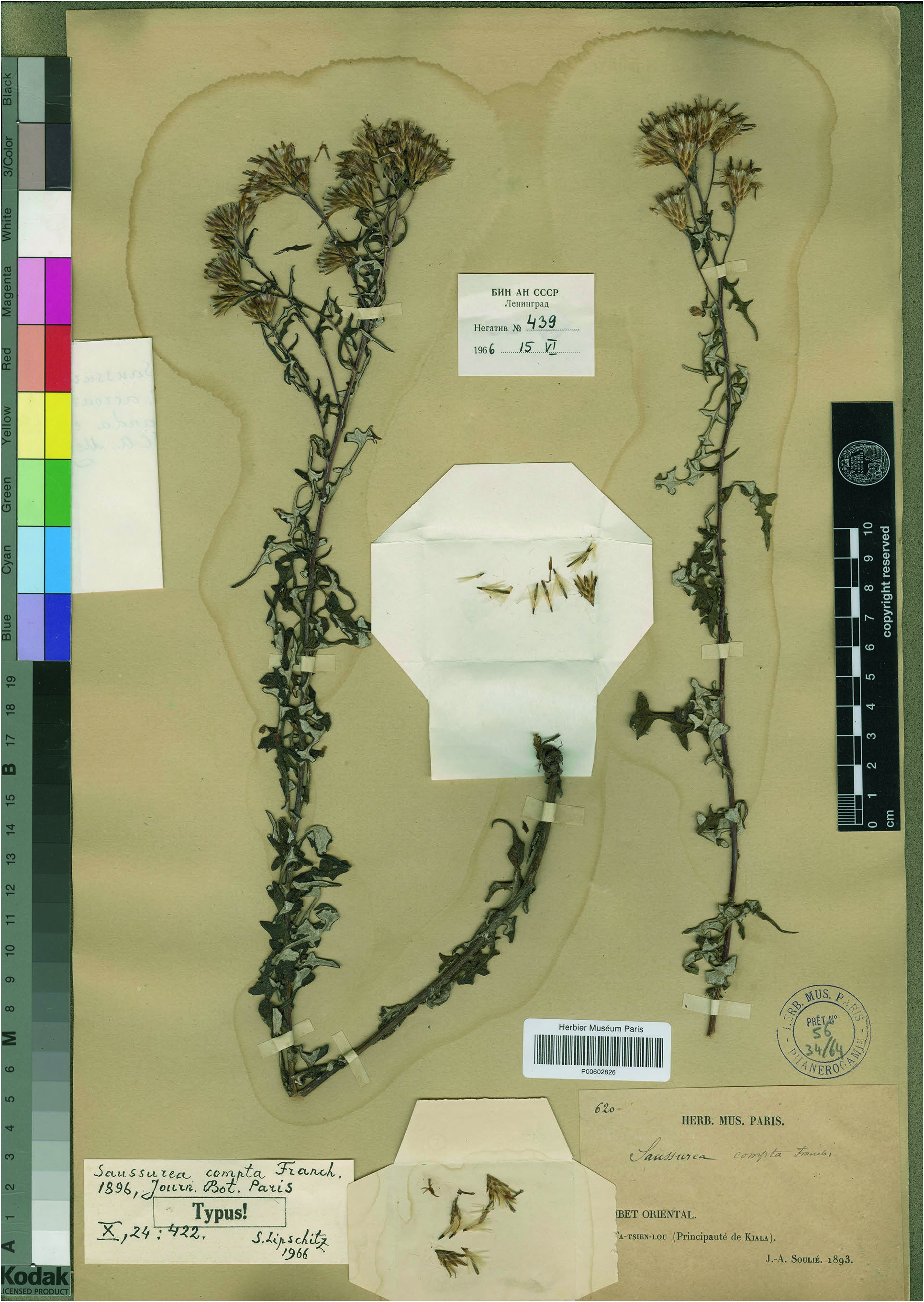
Lactuca sibirica
Lactuca sibirica (L.) Benth. & Hook.f. ex Maxim.

Lactuca sibirica, commonly known as Siberian lettuce, is a perennial herb in the Asteraceae family. Native to a wide range across northern Eurasia, including regions in Europe, Russia, Central Asia, and East Asia, it is characterized by its tall, branched stems and lanceolate leaves. The species is known for its relatively large inflorescences with blue ligules and is a host to the rust fungus Puccinia minussensis. It was first described in 1874 and is part of the Lactuca genus, which includes other wild lettuces and related species.
Description
Lactuca sibirica is a perennial plant with a vertical, usually branched rhizome. It has an erect stem that can grow up to 100 cm in height, typically glabrous and either unbranched or branched in the upper portion. The leaves are lanceolate, ranging from 12 to 16 cm in length and 2 to 3 cm in width, with margins that can be entire, denticulate, or pinnately lobed to deeply laciniate. The basal leaves have cordate, half-clasping bases. The inflorescence is a corymb or corymbose panicle, with relatively large heads (up to 3.3 cm in diameter) on thin branches. Each head contains numerous florets, approximately 20 in total. The involucral bracts are 12–15 mm long, often with a purplish tinge and slightly hairy at the apex. The ligules are blue, and the achenes are fusiform, olive-colored, 4–5 mm long, with a pappus that is white or yellowish, 5–9 mm in length. The chromosome number is 2n = 16, 18.
Habitat
Lactuca sibirica is found in a variety of temperate and subarctic habitats, including open woodlands, meadows, and forest edges. It thrives in regions with cold winters and moderate to cool summers, often in areas with well-drained soils. The plant is distributed across a vast geographic range, spanning from Europe to East Asia, including regions such as Finland, Russia, Mongolia, and Japan. It is particularly common in northern and central parts of its range, where it can be found in both natural and disturbed habitats.
Cultivation
While Lactuca sibirica is not commonly cultivated for commercial use, it can be grown in gardens or botanical collections for ornamental or ecological purposes. It prefers full sun to partial shade and well-drained, fertile soils. The plant is hardy and can tolerate cold climates, making it suitable for temperate and subarctic garden settings. Propagation can be achieved through rhizome division or seed sowing in early spring. Due to its perennial nature and ability to spread via rhizomes, it may become invasive in certain garden conditions if not managed properly.
Uses
Lactuca sibirica is primarily of ecological and botanical interest. It serves as a host plant for the systemic rust fungus Puccinia minussensis, which has complex interactions with the plant's ramets. The species is also used in botanical studies to understand the diversity and evolution of the Lactuca genus. While not typically consumed by humans, its relatives in the genus Lactuca are the ancestors of cultivated lettuce. It is occasionally grown in botanical gardens for its ornamental value and as part of native plant collections.
Distribution
Heilongjiang · Shaanxi · Nei Mongol · East European Russia · Latvia · Kazakhstan · Krasnoyarsk · Sakhalin · North Korea · Amur · Qinghai · Estonia · Shanxi · Kamchatka · Khabarovsk · Hebei · Finland · Magadan · Hokkaido · Liaoning · Sweden · Norway · Krym · West Siberia · Xinjiang · Gansu · Yakutskiya · Northwest European Russia · North European Russia · Mongolia
Synonyms
Mulgedium sibiricumLactuca sibirica var. integrifoliaMulgedium sibiricum var. sibiricumLactuca sibirica var. dentataMulgedium sibiricum var. integrifoliumMulgedium sibiricum var. dentatumLactuca sibirica var. sibiricaLagedium sibiricumSonchus sibiricusMulgedium kamtschaticumAgathyrsus sibiricusSonchus sibiricus var. dentatusSonchus sibiricus var. integrifoliusAgathyrsus sibiricus