Japanese waxtree
Toxicodendron succedaneum (L.) Kuntze

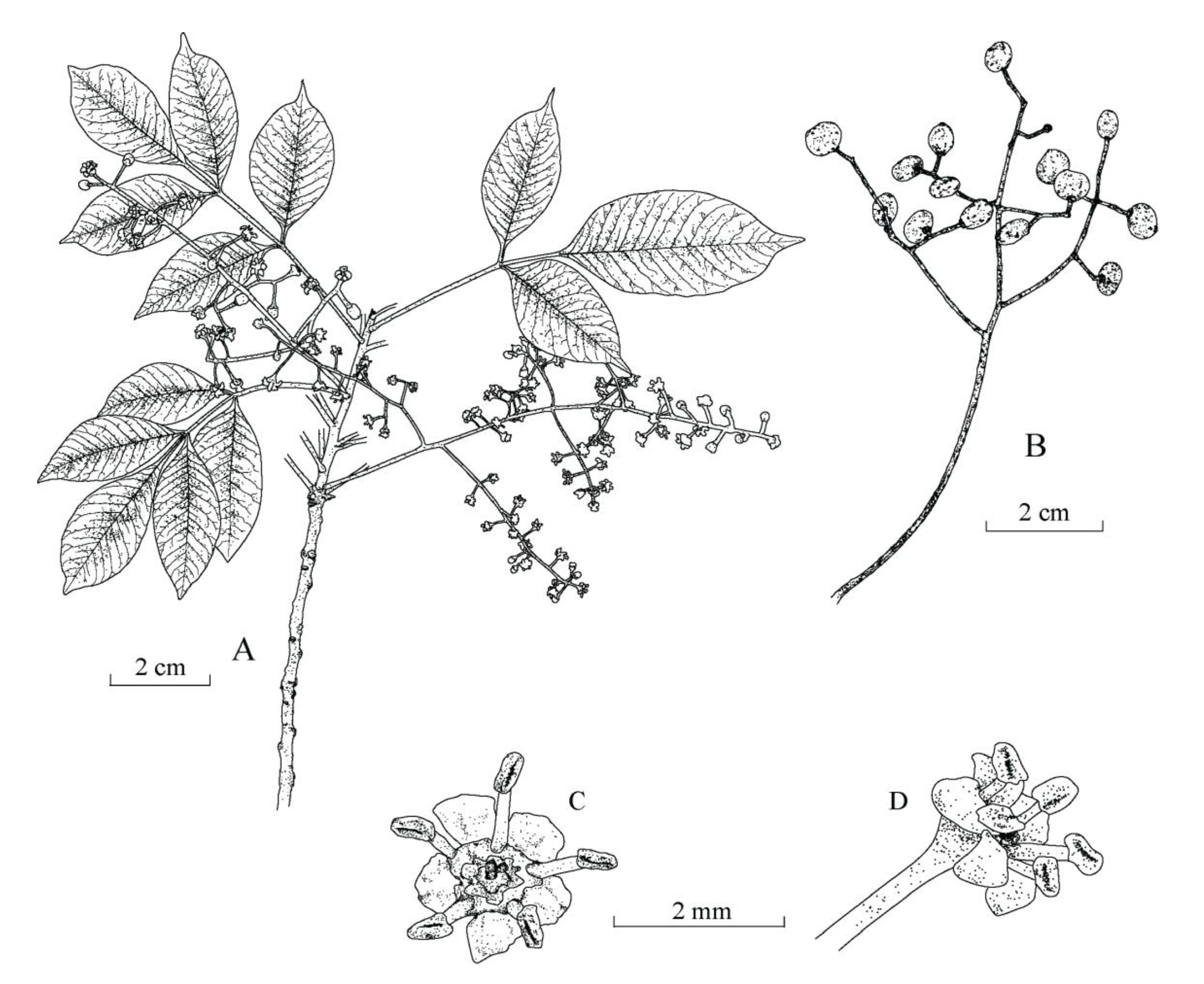
Toxicodendron succedaneum, known as Japanese waxtree, is a flowering plant in the Anacardiaceae family. It is native to Asia but has been introduced to regions such as Australia, New Zealand, and others. This species can grow up to 8 m tall and is often mistaken for a sumac tree. It is cultivated for its ornamental value, particularly for its autumn foliage, but can cause allergic reactions. In Australia and New Zealand, it is considered a noxious weed. The plant is a city tree symbol of Kurume, Fukuoka, Japan.
Description
Toxicodendron succedaneum is a large shrub or tree found in parts of Asia and introduced to other areas, including Australia, New Zealand, and the Caribbean. It is a member of the Anacardiaceae family and is known for its ornamental appeal, especially in autumn when its foliage turns vibrant colors. Despite its beauty, the plant can cause allergic reactions, leading to its classification as a noxious weed in some regions. It is sometimes called the wax tree or Japanese Hazenoki tree. The species has been planted outside its native range, often without awareness of its potential hazards. It is recognized as a city tree symbol in Kurume, Fukuoka, Japan.
Other common names
Wax treesumacscarlet rhusrhustreeJapanese waxtreered-lacwaxtree
Distribution
ZA · AU · NZ · Lord Howe Island · BR · Global · Assam · Bangladesh · Cambodia · Caroline Is. · China North-Central · China South-Central · China Southeast · Cuba · East Himalaya · Hainan · Inner Mongolia · Japan · Korea · Laos · Malaya · Myanmar · Nansei-shoto · Nepal · Ogasawara-shoto · Qinghai · Sumatera · Taiwan · Thailand · Tibet
Synonyms
Toxicodendron succedaneumAlbonia peregrinaConnarus juglandifoliusRhus erosusRhus succedaneaRhus fraxinifolia