Hymenaea stigonocarpa
Hymenaea stigonocarpa Mart. ex Hayne

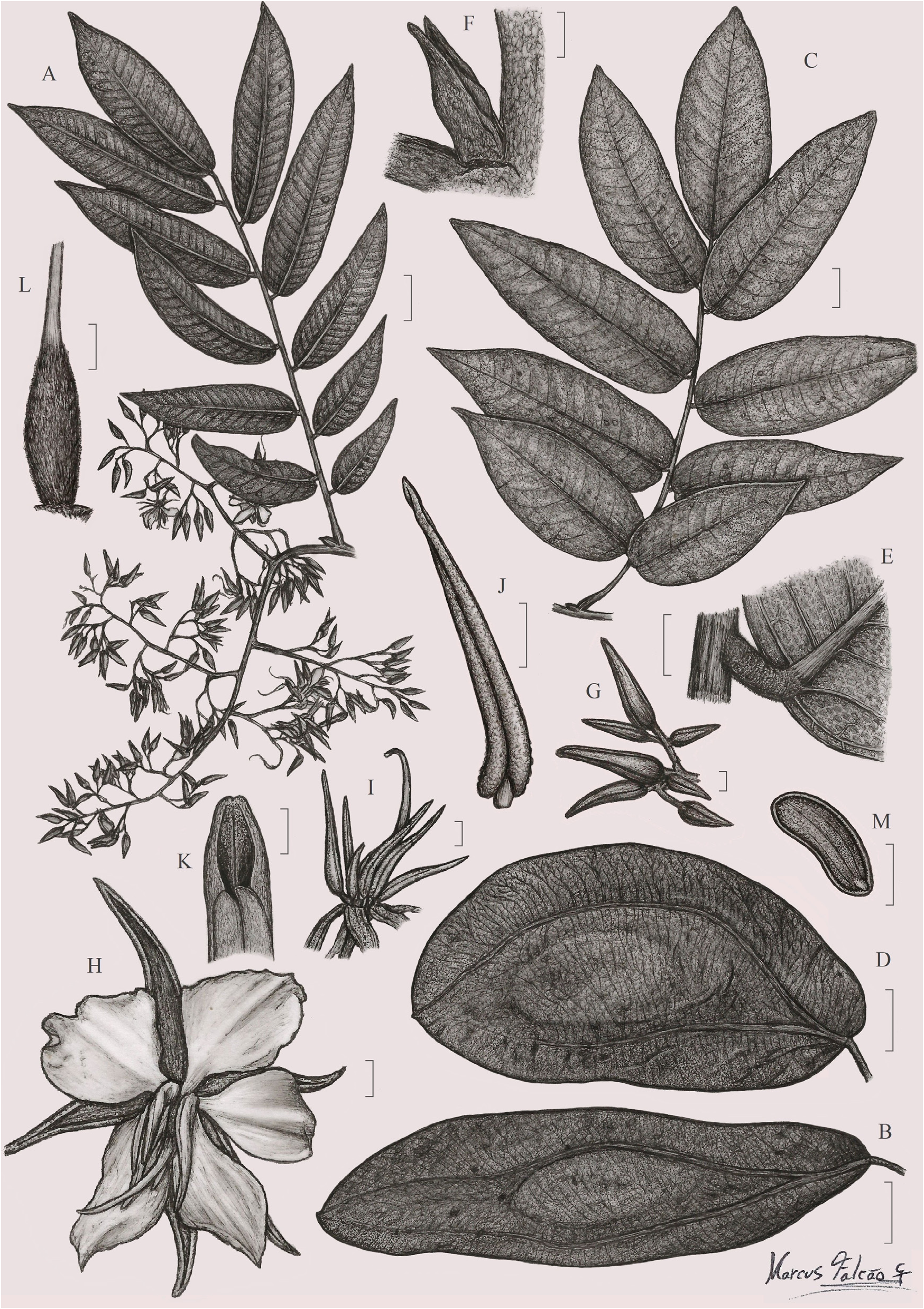
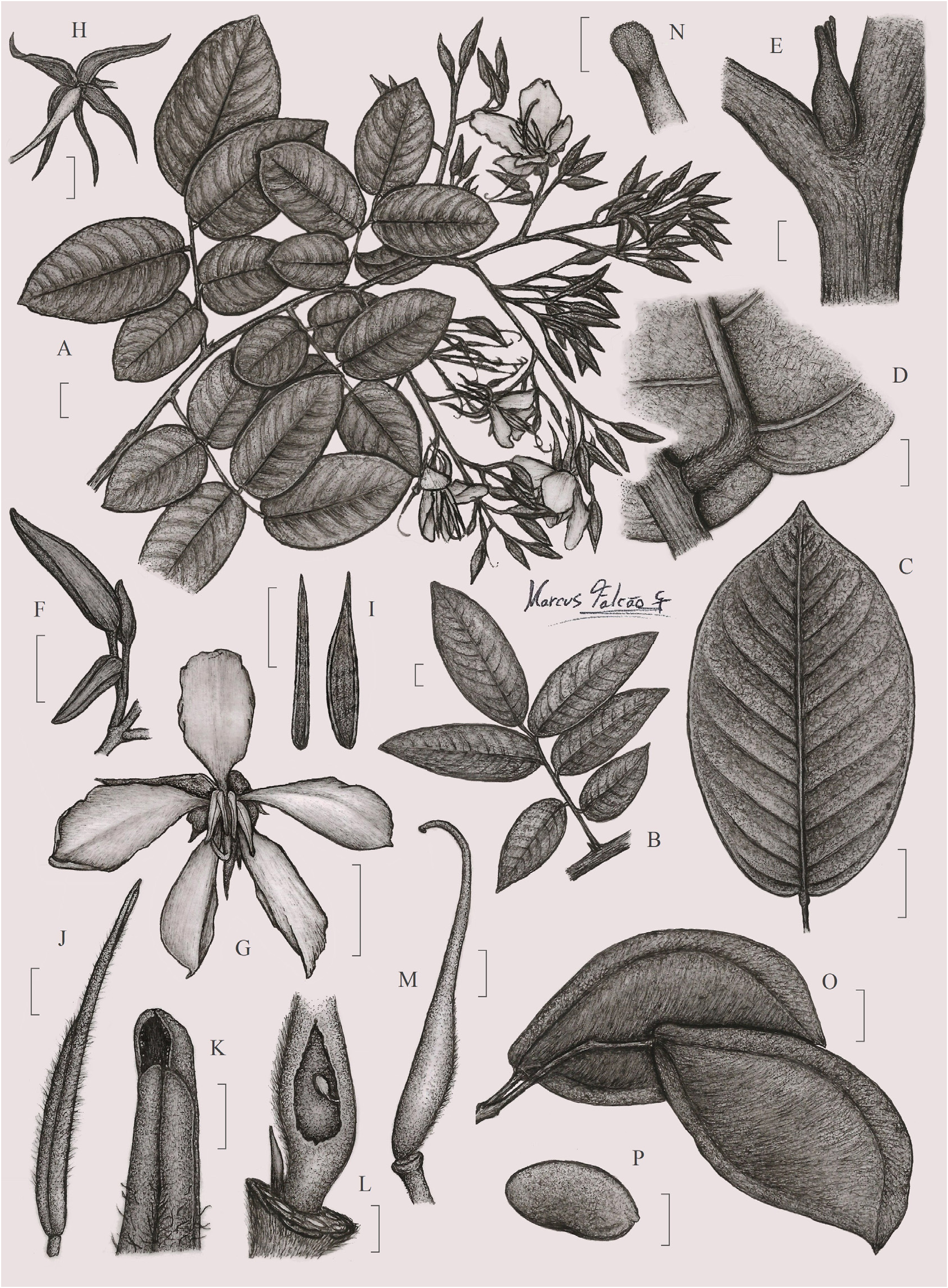
Hymenaea stigonocarpa is a tree species in the Fabaceae family, native to several regions in South America. It is commonly known as jatobá do cerrado in Brazil. The tree typically reaches heights of 6–9 m and is characterized by a twisted spindle-shaped trunk, rough grey bark, and reddish-brown twigs. It has deciduous leaves with two large asymmetrical leaflets and produces clusters of flowers at the ends of branches. The fruits are edible and valued by local communities for their use in the wild.
Description
Hymenaea stigonocarpa is a member of the Fabaceae family, distributed across Brazil, Bolivia, Paraguay, and Venezuela. The tree exhibits a unique irregular shape, with a trunk that is twisted and spindle-shaped. Its bark is very rough and grey, and the twigs are reddish-brown. The leaves are deciduous, composed of two large asymmetrical leaflets with entire margins. The flowers appear in clusters of up to thirty at the branch tips. The species is known for its edible fruits, which are collected and consumed by local populations. The tree is recognized by the vernacular name jatobá do cerrado in its native Brazil.
Distribution
BR · Global · Bolivia · Brazil Northeast · Brazil North · Brazil Southeast · Brazil West-Central · Paraguay · Venezuela
Synonyms
Hymenaea stigonocarpa var. pubescensHymenaea stigonocarpa var. stigonocarpaHymenaea rotundataHymenaea chapadensisHymenaea correanaHymenaea olfersianaHymenaea stigonocarpa var. olfersiana