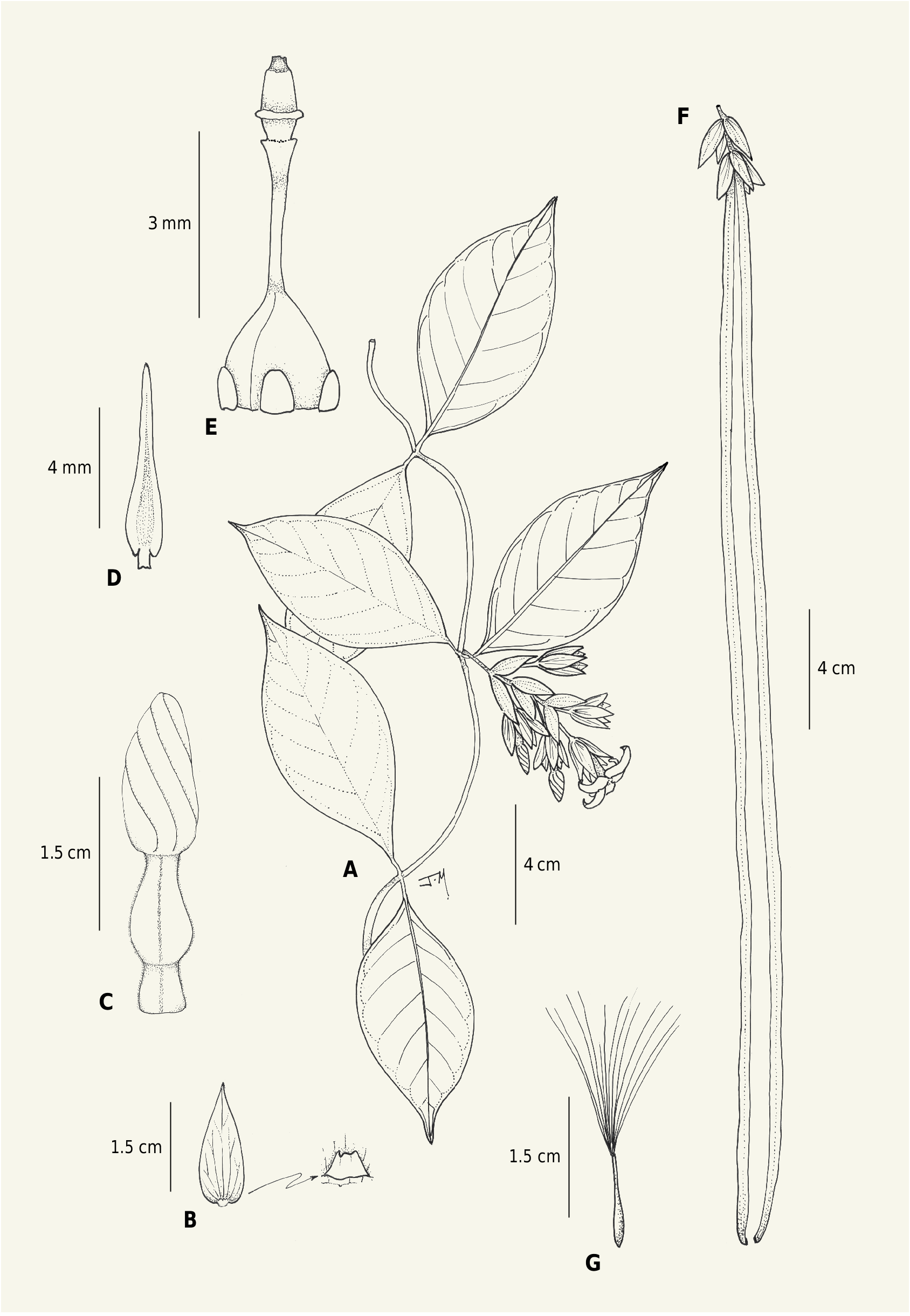
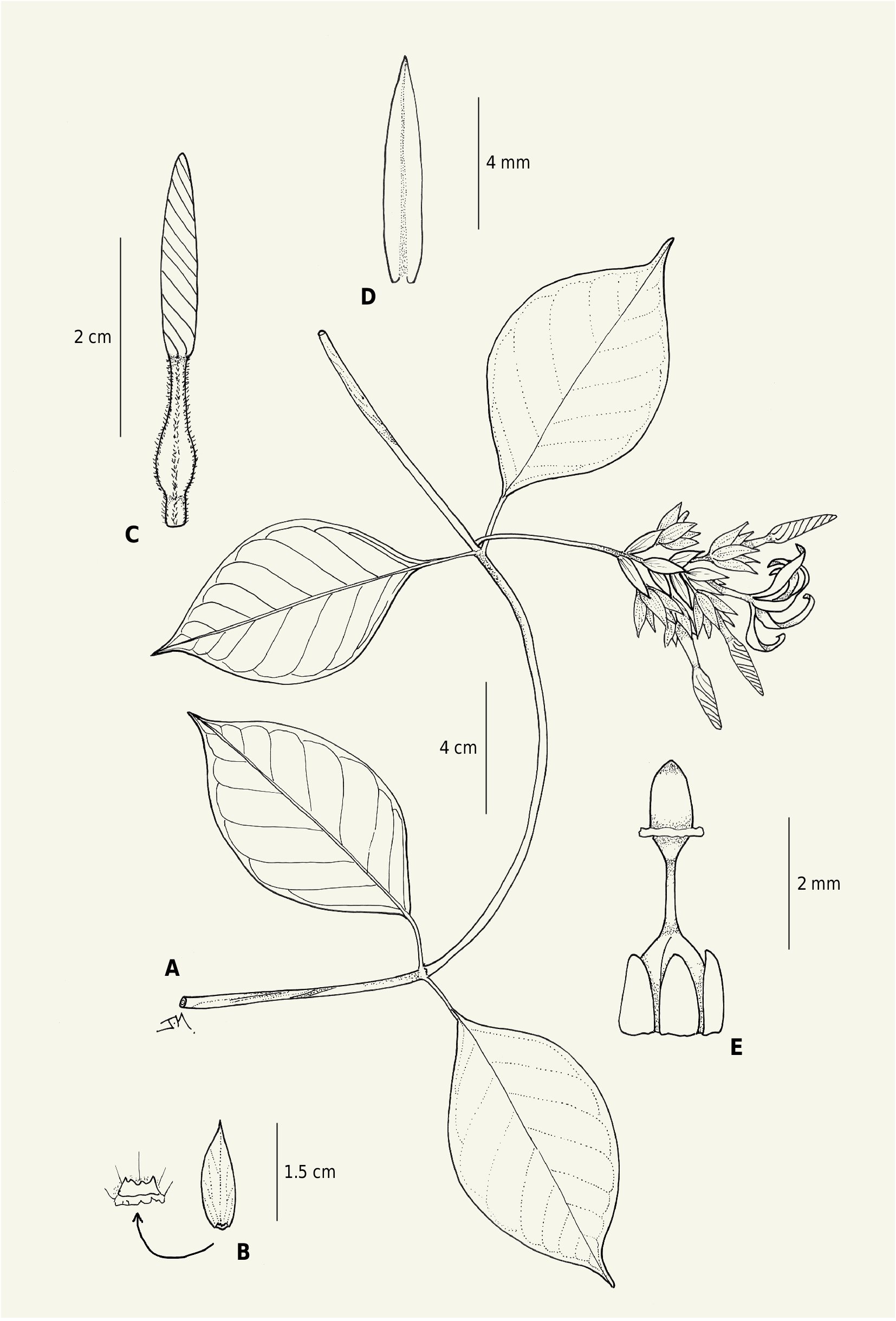
Hunteria umbellata
Hunteria umbellata (K.Schum.) Hallier f.

Hunteria umbellata is a shrub or small tree in the Apocynaceae family, reaching up to 22 m in height with a trunk up to 40 cm in diameter. It is native to tropical Africa, found from Guinea-Bissau to Angola. The plant has white, creamy, or pale yellow flowers and yellow, smooth fruit. It grows in forests at altitudes up to 600 m. The species is used in traditional medicine for fever, leprosy sores, stomach and liver ailments, and as an anthelmintic. It has also been used as arrow poison. Its hard wood is used for carving and making small tools.
Description
Hunteria umbellata, described in 1899, is a member of the Apocynaceae family. It is distributed across tropical Africa, including Benin, Cameroon, Congo, and other regions. The plant is utilized for its medicinal properties, including treatment of internal worms and various health conditions. Its wood is valued for carving and tool-making. The species is known for its white or pale yellow corolla and yellow fruit.
Distribution
Global · Benin · Cabinda · Cameroon · Central African Repu · Congo · Gabon · Ghana · Guinea-Bissau · Guinea · Ivory Coast · Liberia · Nigeria · Senegal · Sierra Leone · Zaïre · Base-Guinée · Guinée forestière
Synonyms
Hunteria eburneaHunteria elliotiiHunteria mayumbensisPicralima elliotiiPicralima gracilisPicralima umbellataPolyadoa elliotiiPolyadoa umbellataCarpodinus umbellata