Hairy False-Flax
Camelina microcarpa Andrz. ex DC.

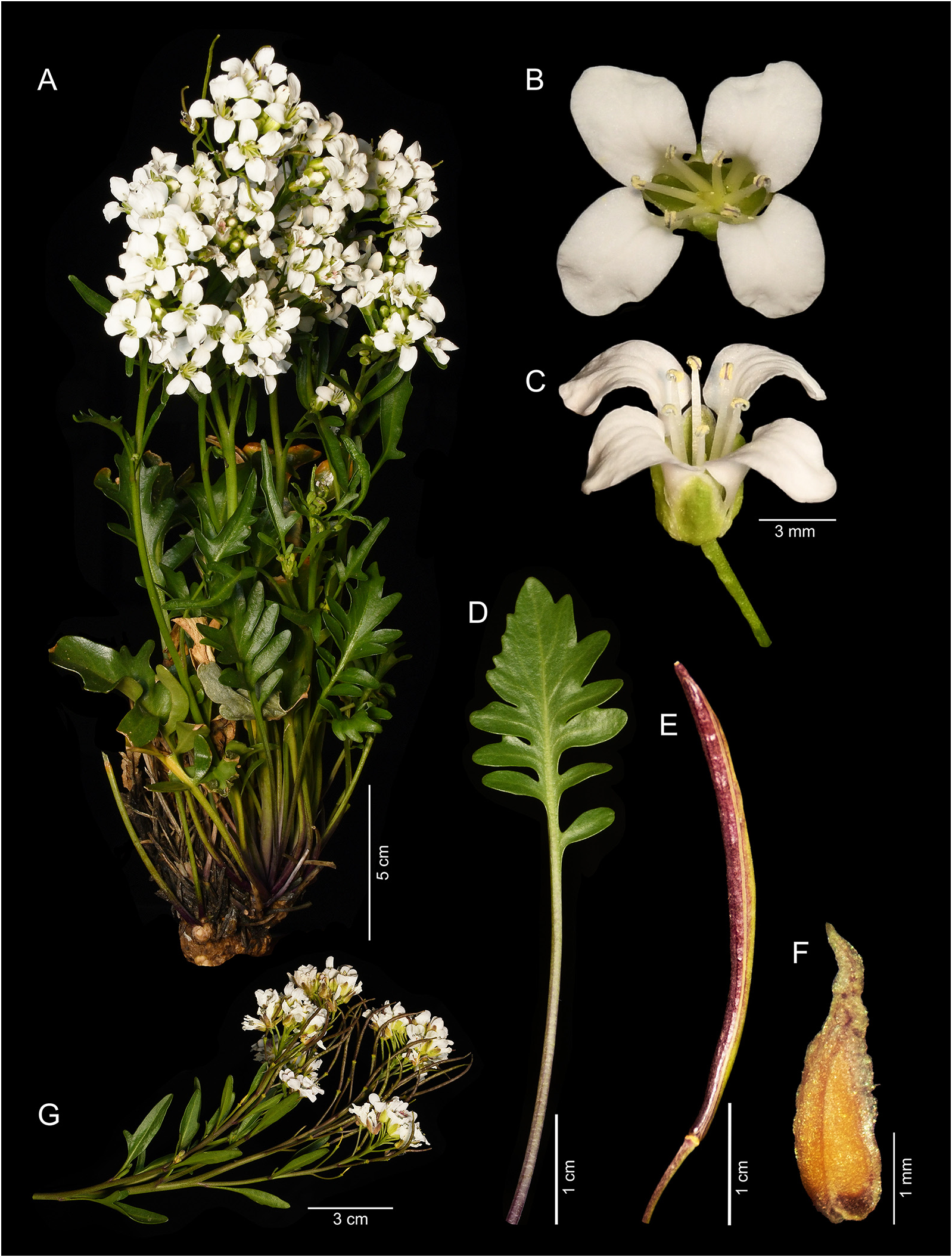
Camelina microcarpa, commonly known as Hairy False-Flax, is an annual herbaceous plant in the Brassicaceae family. Native to parts of Europe and Asia, it has spread globally and is often found as an introduced species, sometimes considered a noxious weed in agricultural settings. It is a close relative of the cultivated Camelina sativa and may serve as a progenitor in its domestication. The plant is characterized by its hairy stem, lance-shaped leaves, and clusters of pale yellow flowers that produce small, oblong fruits.
Description
Camelina microcarpa is an erect, annual plant with a stem that may be branched or unbranched, typically growing between 30 cm and 1 m in height. The plant is often covered in fine hairs, especially on the lower part of the stem. Its leaves are lanceolate to oblong in shape, and the upper portion of the stem bears a dense inflorescence of pale yellow flowers. Each flower produces a small, plump, oblong to nearly rounded fruit, measuring under a centimeter in length, which is held on a short stalk. The species is known for its adaptability and is often found in disturbed areas, cultivated fields, and along roadsides.
Habitat
Hairy False-Flax is typically found in open, disturbed habitats such as agricultural fields, roadsides, and waste areas. It thrives in a range of soil types but prefers well-drained soils and full sun. Native to parts of Europe and Asia, it has become naturalized in many regions across North America, where it is often considered a weed in cereal crops like wheat and rye. It is particularly common in temperate climates and can tolerate a variety of environmental conditions, including seasonal frosts and moderate drought.
Cultivation
Although not cultivated for commercial use, Camelina microcarpa can be grown as a model plant for research, especially in relation to its close relative, Camelina sativa, which is cultivated for oil production. The species is relatively easy to grow in temperate gardens and can be sown in early spring. It prefers full sun and well-drained soil. Due to its weedy nature, it may require regular thinning to prevent it from becoming invasive. It is best suited for research or ecological restoration projects rather than ornamental gardening.
Uses
While not a crop species itself, Camelina microcarpa is of interest to botanists and agricultural scientists due to its potential role as a wild progenitor of Camelina sativa. It is occasionally considered a weed in grain fields, particularly in wheat and rye, where it can compete with crops for resources. The plant has not been widely used for food or medicine, but it is sometimes studied for its genetic traits that may be useful in crop improvement programs. In some regions, it is collected for botanical research and seed bank preservation.
Other common names
Hairy False-FlaxLesser Gold Of PleasureLesser Gold-Of-PleasureLittle-Pod False FlaxLittle-Pod False-FlaxLittle-Seed False-FlaxLittlepod False FlaxLittlepod FalseflaxLittleseed FalseflaxSmall Fruited FalseflaxSmall-Seed False FlaxSmall-Seed False-FlaxSmallseed Falseflax
Distribution
Newfoundland · Alberta · British Columbia · Manitoba · New Brunswick · Nova Scotia · Ontario · Prince Edward Island · Quebec · Saskatchewan · Yukon · Portugal Continental · FI · IS · SE · RU · CL · Belgium · Flemish Region · Walloon Region · France · The Netherlands · Great Britain · NO · BY · UA · Estonia · Latvia · Bulgaria · Denmark
Synonyms
Kernera polyspermaMyagrum armeniacumCamelina armeniacaCamelina bornmuellerianaCamelina campestrisCamelina confusaCamelina longestylaCamelina microcarpa f. longistipitatusCamelina microcarpa subsp. sylvestrisCamelina microphyllaCamelina paphlagonicaCamelina pilosaCamelina sativaCamelina sativa subsp. microcarpaCamelina sativa var. pilosaCamelina sativa subsp. pilosaCamelina sylvestrisCamelina transbaicalensisCochlearia polyspermaCamelina sylvestris subsp. microcarpaCamelina microcarpa f. longistipataCamelina microcarpa subsp. pilosa