Grimmia Dry Rock Moss
Grimmia laevigata (Brid.) Brid.

Grimmia laevigata, known as Grimmia Dry Rock Moss, is a species of moss in the family Grimmiaceae. It is characterized by its scale-like leaves on young shoots and the lower part of the stem, with a distinctive short hair-point or a sharp hyaline end cell. The moss is dioicous, with distinct male and female structures, and is found in a variety of regions across Europe and the Atlantic islands. It was first described in 1826 and is known for its variability in leaf form and length.
Description
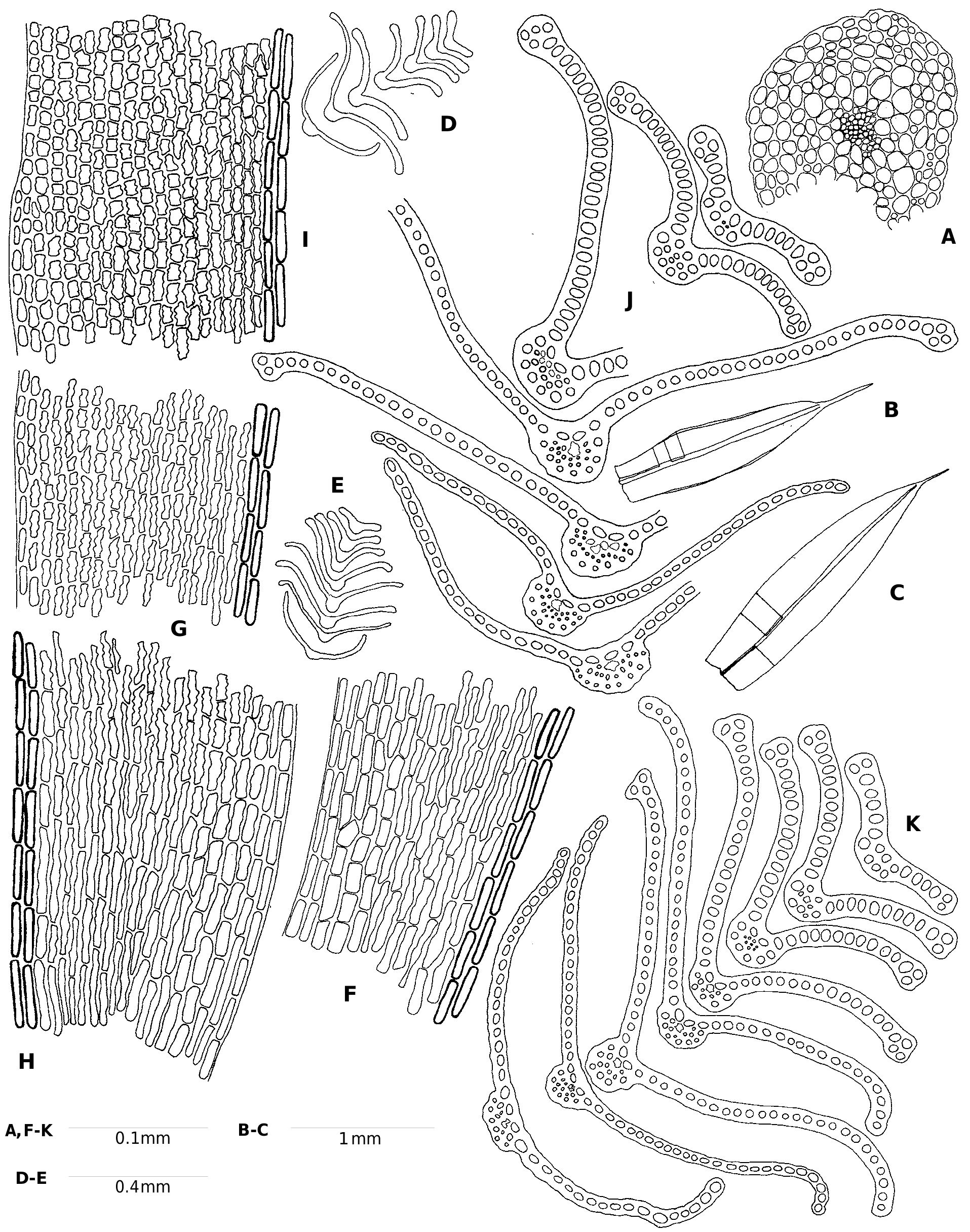
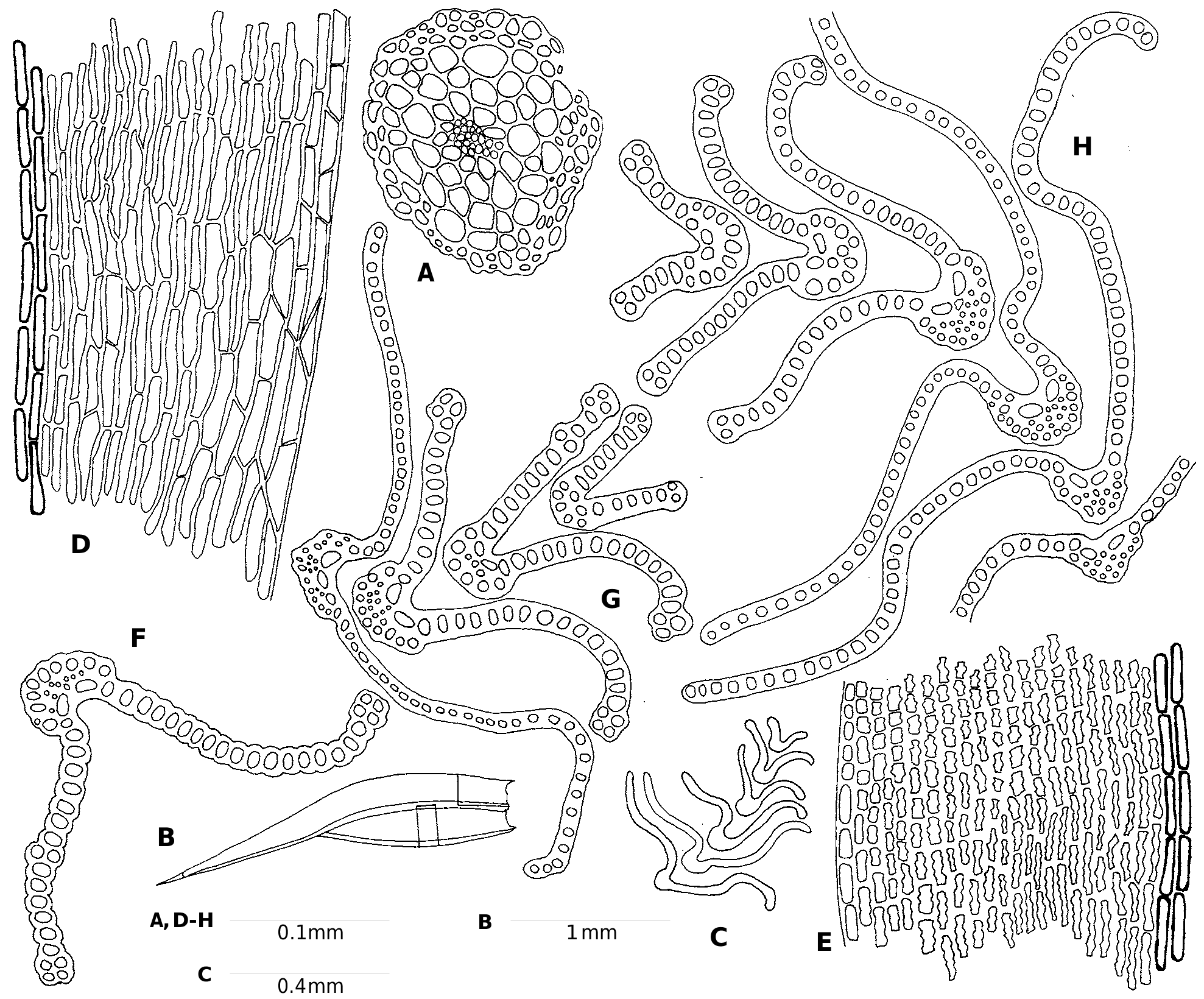
Grimmia laevigata is a dioicous moss species with a cushion-like growth form. The female plants have innermost perichaetial leaves up to 2 mm long, which are sheathing and broad-ovate, narrowing at the base. The lower half of the leaf is hyaline or has some hyaline cells along the margin, and the costa is obscure in the apical part, ending in a long, denticulate hair-point. The perigonia are multifoliose buds at the tips of branches. Male plants have innermost perigonial leaves up to 1 mm long, sheathing and broad-ovate, with a hyaline cell at the apex and a costa that vanishes below the apex. The paraphyses are short and numerous. The plants are erect, scarcely branched, and slightly radiculose at the base, with stems up to 20 mm high and a well-developed central strand. The leaves on the lower part of the stem are scale-like and gradually become longer towards the tip, measuring 1.2 to 1.8 mm long, rarely up to 3 mm. The leaves are imbricate and appressed to the stem when dry, and older leaves bend backward when moistened, while younger leaves remain erect or spread when wet. The leaf base is short, rounded, and half-sheathing, with a lingulate or broad-lanceolate shape tapering to an obtuse or rounded apex. The hair-point is roughly denticulate, occasionally nearly smooth, and the leaf form is widely concave or concave throughout with a plane margin. Some rows of cells are present along the margin.
Habitat
Grimmia laevigata is typically found in rocky habitats, growing on dry rock surfaces. It is adapted to environments with limited moisture and is often associated with exposed, well-drained substrates. The moss is distributed across various regions, including the British Isles, the Azores, and parts of mainland Europe, where it thrives in open, sunny conditions.
Cultivation
Cultivating Grimmia laevigata requires a well-drained, rocky substrate and a humid environment with good air circulation. It is best grown in a terrarium or on a moss board, where the conditions can be closely controlled. The moss prefers bright, indirect light and should be kept moist but not waterlogged. Regular misting is beneficial, and the use of a humidity dome can help maintain the necessary moisture levels. Due to its preference for dry rock surfaces, a substrate composed of small rocks or gravel is ideal. Fertilization is generally not required, but occasional applications of a weak, dilute solution of water-soluble fertilizer can support healthy growth.
Uses
Grimmia laevigata is primarily of interest to bryologists and moss enthusiasts due to its unique morphology and ecological niche. It is used in scientific studies to understand the diversity and evolution of moss species, particularly within the genus Grimmia. The moss can also be used in educational settings to demonstrate the characteristics of dry rock-dwelling bryophytes. While not commonly used in horticulture, it can be cultivated in specialized moss gardens or terrariums to add texture and diversity to the display.
Other common names
Grimmia Dry Rock MossHoary Grimmia
Distribution
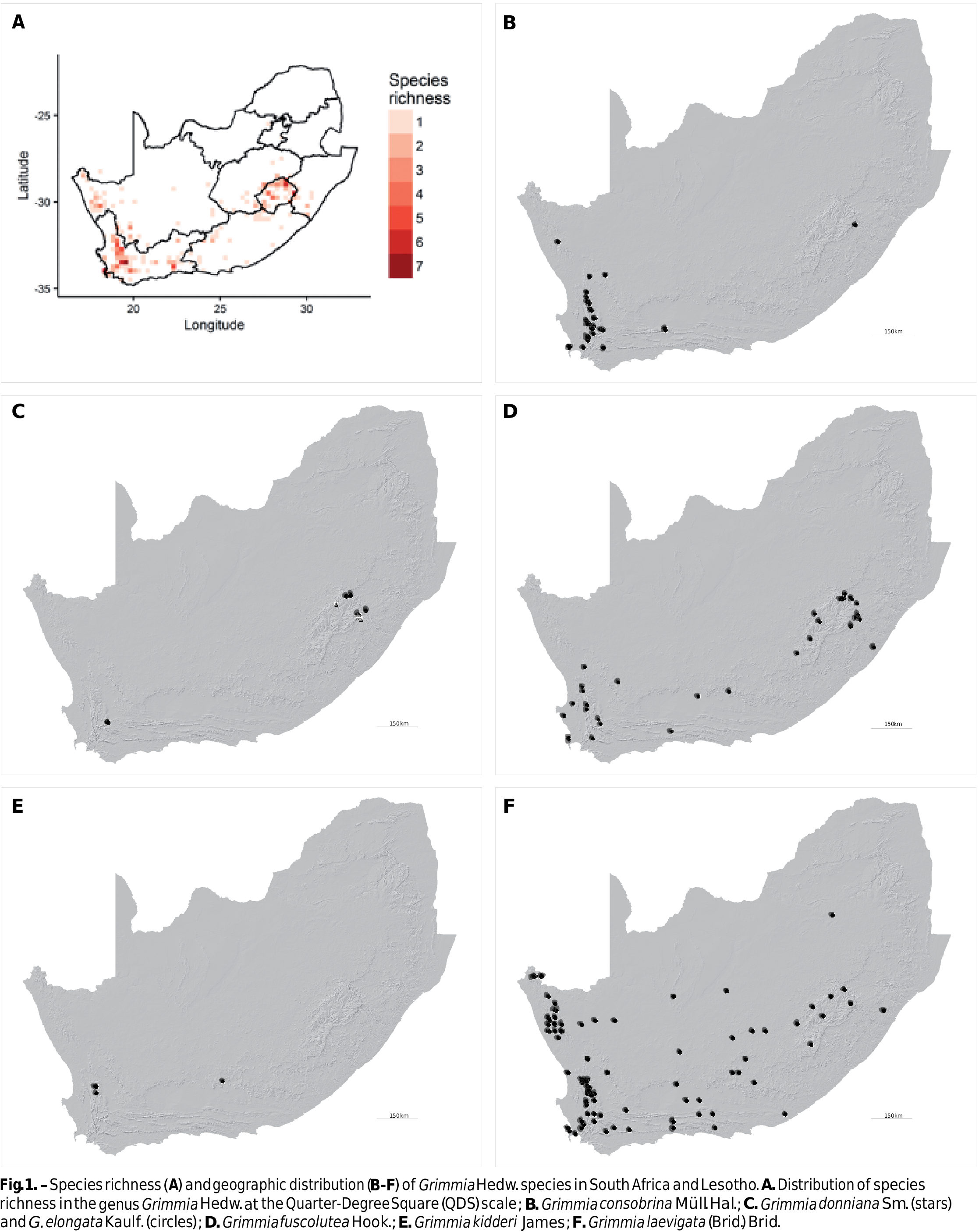
BR · Graciosa Island · São Jorge Island · Madeira Island · NO · Flanders · SE · DK · Vermont-US · Grand Duchy of Luxembourg
Synonyms
Dryptodon brevifoliusDryptodon campestrisDryptodon leucophaeusGrimmia belliiGrimmia calotrichaGrimmia campestrisGrimmia glaucaGrimmia laevigata var. elongataGrimmia leiocarpaGrimmia leucophaeaGrimmia leucophaea var. elongataGrimmia leucophaea var. latifoliaGrimmia murinaGrimmia oertzenianaGrimmia sarcocalyxGrimmia subfuscaGrimmia subleucophaeaCampylopus laevigatusGrimmia senilisGuembelia laevigataGuembelia leucophaeaGrimmia albidaGrimmia campestris var. elongataGrimmia campestris f. latifoliaGrimmia campestris f. longirostrataGrimmia campestris var. lutescensGrimmia campestris subsp. sarcocalyxGrimmia laevigata f. funaliformisGrimmia laevigata f. latifoliaGrimmia laevigata var. longirostris