Grimmia dissimulata
Grimmia dissimulata E.Maier

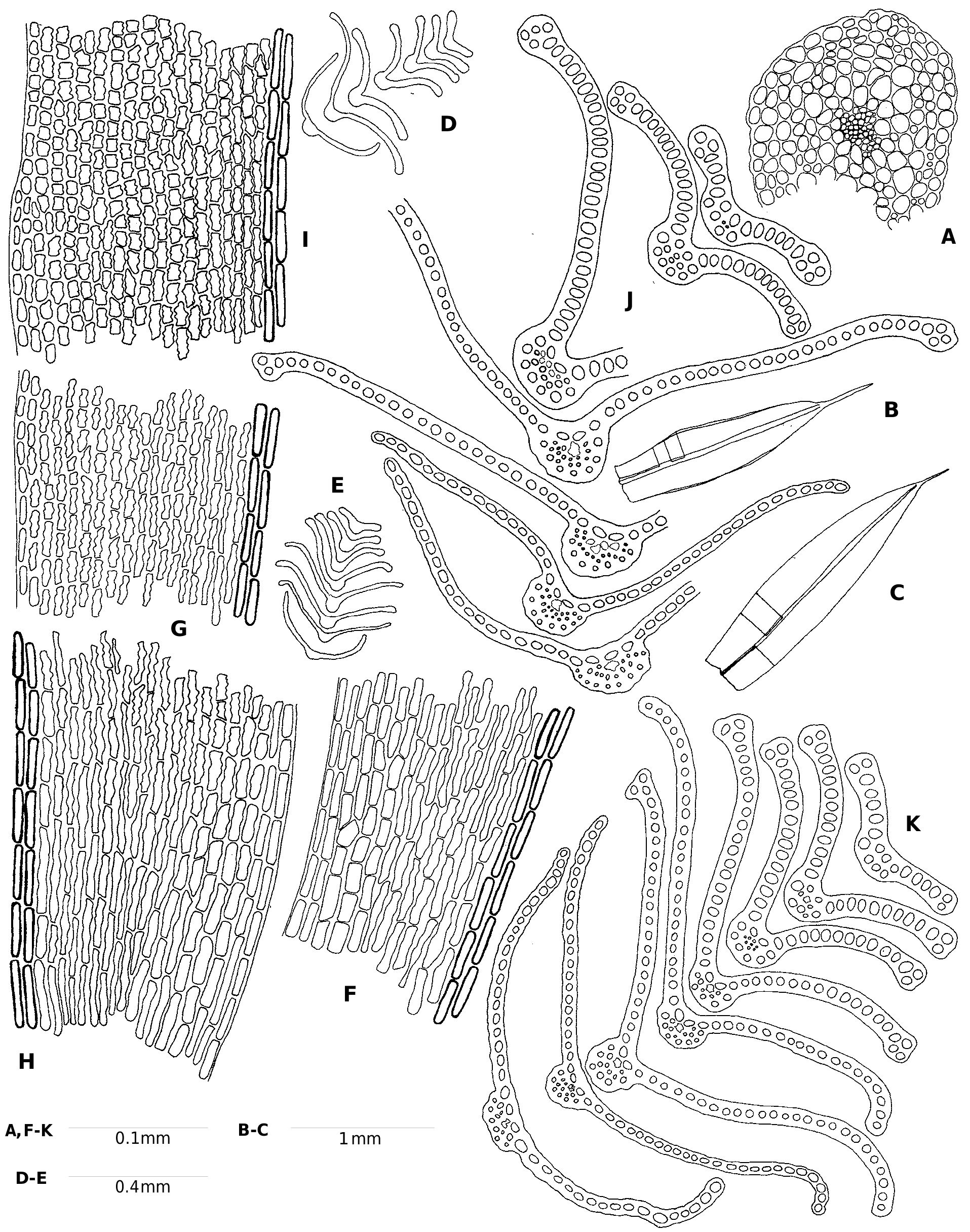
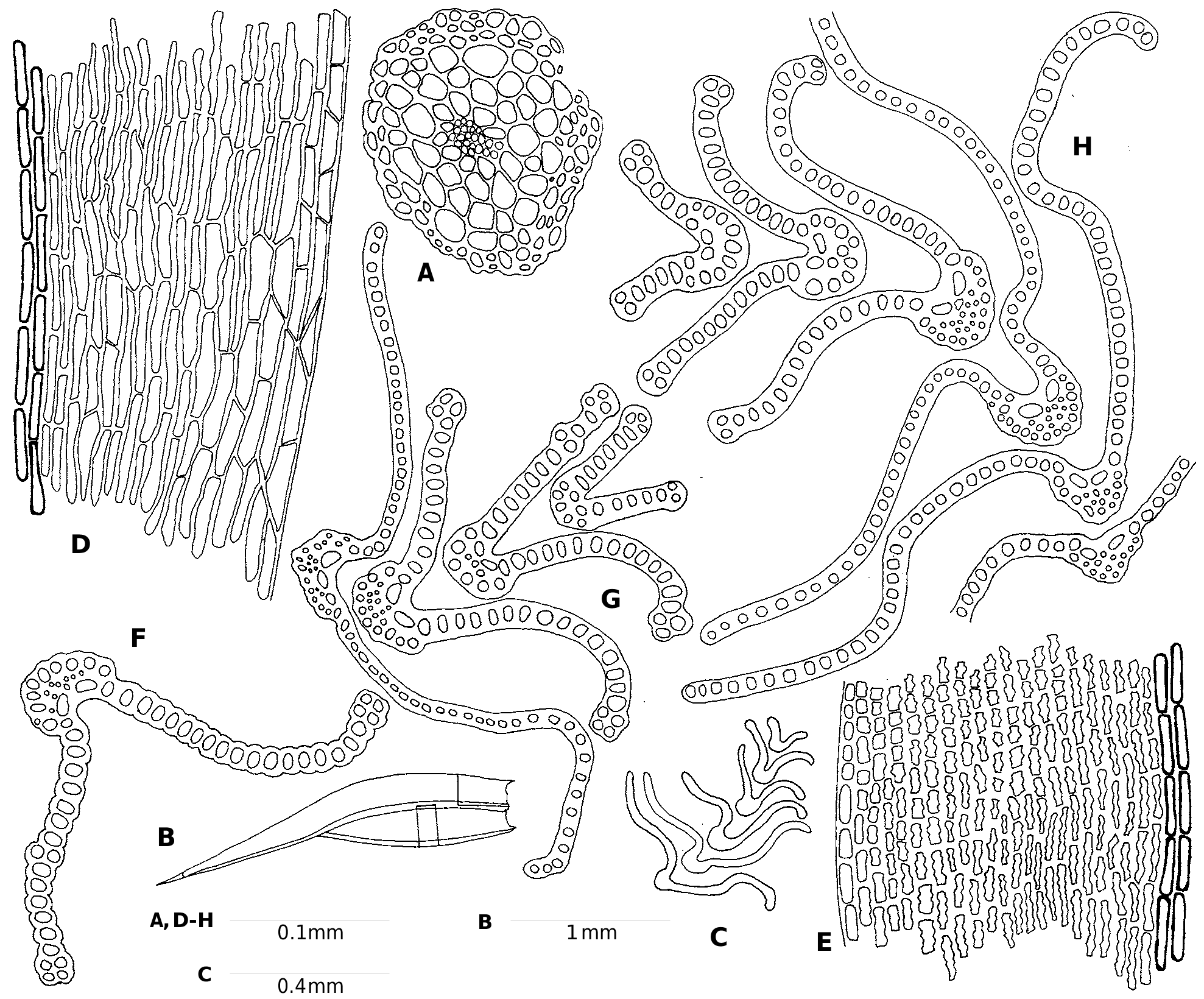
Grimmia dissimulata is a species of moss in the family Grimmiaceae, first described by E. Maier in 2002. It is primarily found in calcareous habitats, including scree and rocky areas, and has been recorded in regions such as Flanders, the Grand Duchy of Luxembourg, and Belgium. In Tunisia, it has been observed in natural and artificial substrates, including limestone walls and tombstones. The species is closely related to other Grimmia species but can be distinguished by specific anatomical features, particularly the number and arrangement of guide cells in the leaf nerve.
Description
Grimmia dissimulata is a calcicolous moss species that grows on calcareous rocks, scree, and in semi-wooded valleys, often in association with olive and pistachio mastic trees. It has been documented in natural habitats such as rupicolous communities and cultivated slopes, as well as on artificial substrates like tombstones. The species is most similar to Grimmia meridionalis, G. lisae, and G. trichophylla, but can be differentiated by the presence of four guide cells in a single layer at the leaf base. Unlike G. meridionalis, the guide cells in G. dissimulata are not elliptical or oblique. It is a southern-temperate species native to the Mediterranean and has a scattered distribution across Europe.
Distribution
Flanders · SE · NO · Grand Duchy of Luxembourg · Belgium · Flemish Region
Synonyms
Dryptodon dissimulatus