Golden trumpet tree
Handroanthus chrysotrichus (Mart. ex DC.) Mattos

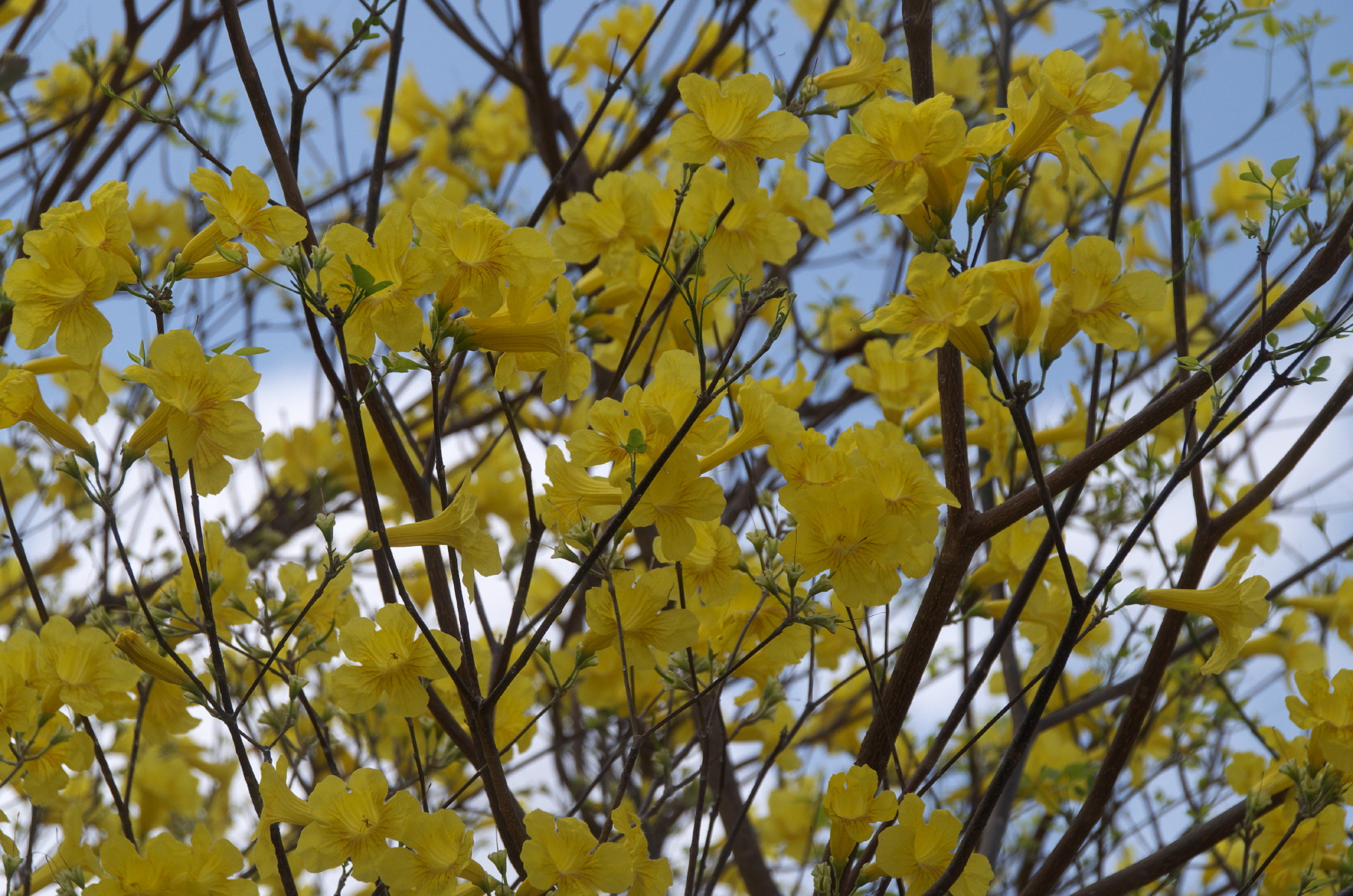
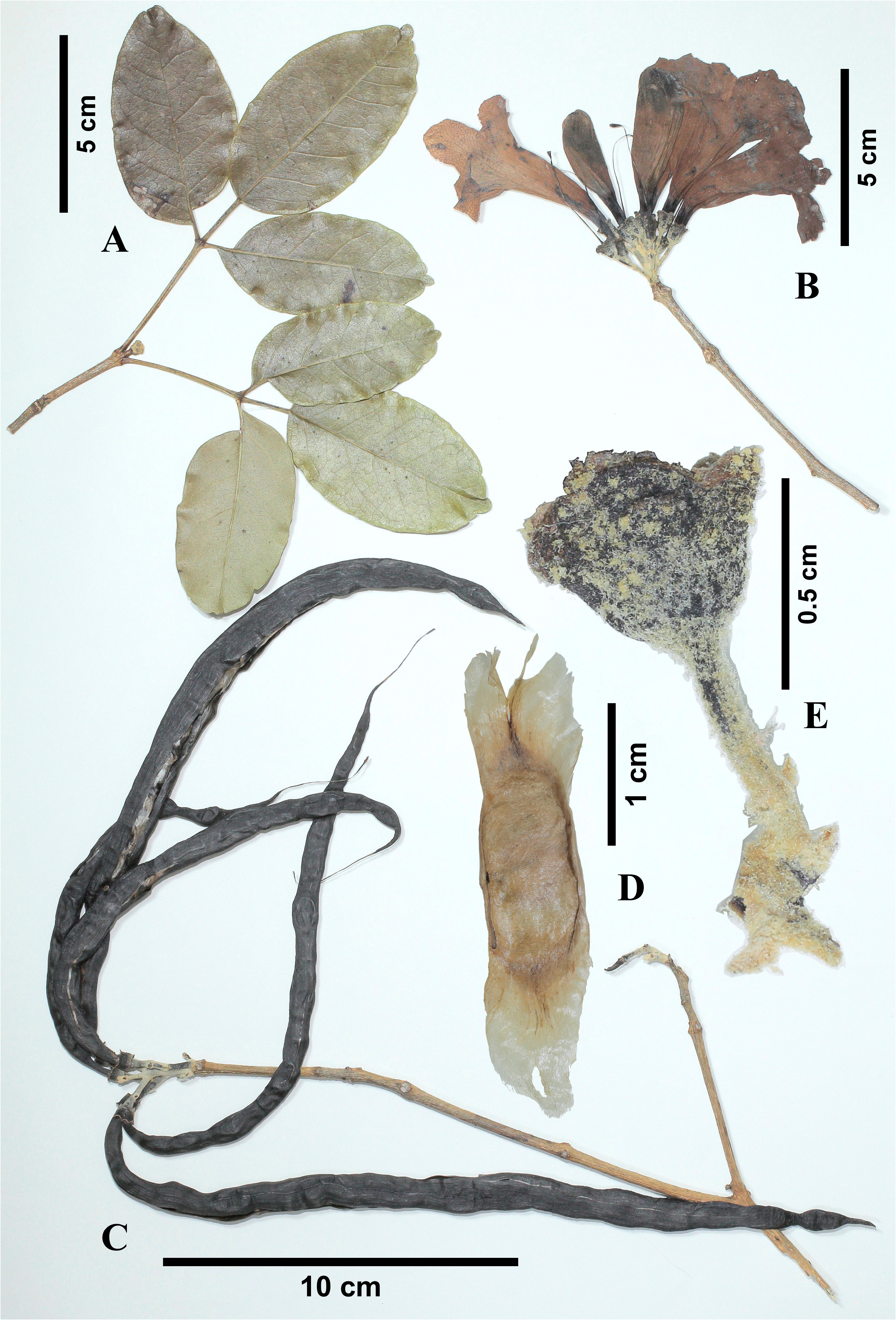
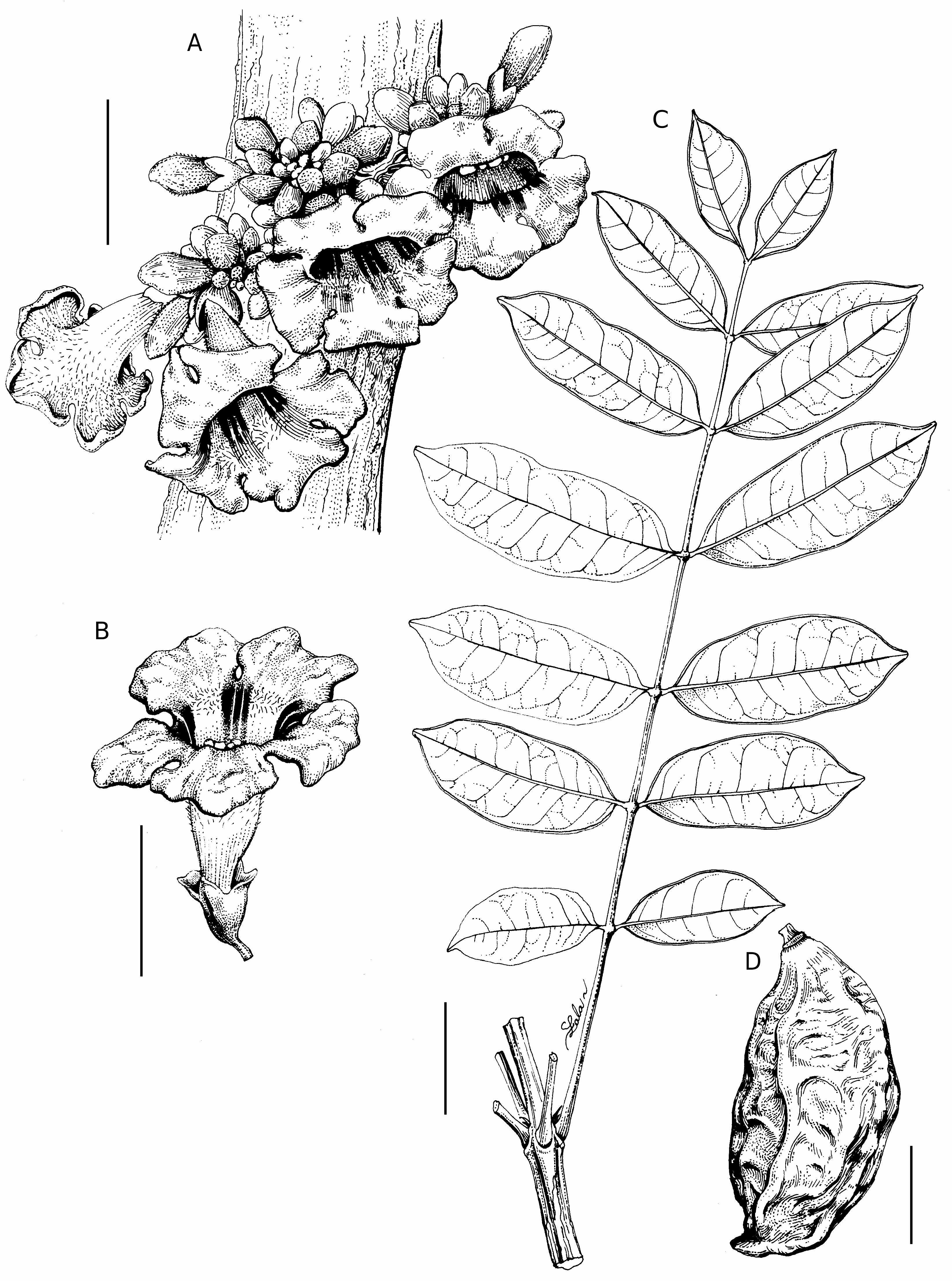
Handroanthus chrysotrichus, known as the golden trumpet tree, is a semi-evergreen/semi-deciduous tree native to Brazil. It belongs to the Bignoniaceae family and is recognized by its hirsute (hairy) calyces and fruits, distinguishing it from other species in the genus. It flowers in September and October, with fruiting occurring in October. The species is distributed in northeastern, southeastern, and southern Brazil, as well as in Argentina, India, and other regions. Previously classified under the genus Tabebuia, it is sometimes confused with H. ochracea. In Portuguese, it is called ipê amarelo and is considered the national flower of Brazil.
Description
Handroanthus chrysotrichus is a member of the Bignoniaceae family and is native to Brazil, with additional occurrences in Argentina, India, and other locations. It is characterized by its hirsute calyces and fruits, a key diagnostic feature that differentiates it from other species in the genus. The tree is semi-evergreen or semi-deciduous and is known for its yellow flowers, which are collected in September and October, followed by fruiting in October. Commonly referred to as the golden trumpet tree, it is also known in Portuguese as ipê amarelo and is recognized as the national flower of Brazil. The species was first published in 1970 and has been the subject of floristic studies in the Iguaçu and Iguazú National Parks.
Other common names
Golden trumpet tree
Distribution
BR · ZA · IN · Valle · Argentina Northeast · Brazil Northeast · Brazil Southeast · Brazil South · Manizales
Synonyms
Tecoma obtusataTecoma grandisTecoma flavescensTabebuia chrysotrichaTecoma chrysotrichaTecoma ochracea var. denudataTecoma chrysotricha var. obtusataTabebuia chrysotricha var. obtusataHandroanthus chrysotrichus var. obtusataGelseminum chrysotrichum